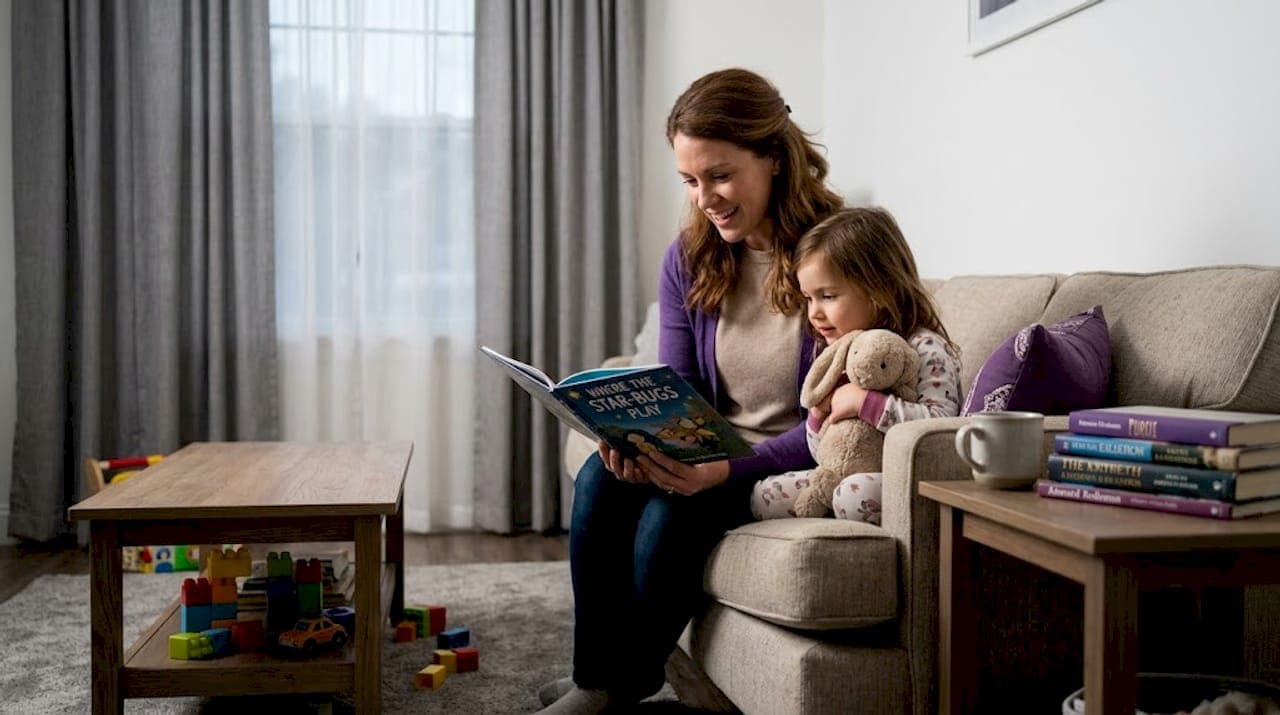
Not all storybooks are created equal. You might assume that as long as your child is sitting with a book, the benefits are the same. But recent research challenges that idea pretty directly. Original and personalized stories, ones built around your child specifically, produce measurably different outcomes than generic books with a swapped-in name. We're talking about real gains in comprehension, confidence, prosocial behavior, and language development. And when you pair those stories with the right reading techniques, the impact grows even further.
Table of Contents
- Why original stories captivate children differently
- Personalization: Driving engagement and comprehension
- How original stories foster confidence and prosocial behaviors
- Maximizing impact: Parent techniques for original storytelling
- The overlooked truth about original stories and interaction
- Discover unique storybooks tailored for your child
- Frequently asked questions
Key Takeaways
| Point | Details |
|---|---|
| Original stories boost engagement | Unique stories capture children’s attention more deeply and support language and emotional growth. |
| Personalization improves comprehension | Tailoring stories to a child’s interests enhances involvement and reinforces memory and learning. |
| Prosocial behavior increases | Personalized storybooks lead to greater sharing, empathy, and confidence in young children. |
| Parent interaction matters most | Dialogic reading—asking questions and encouraging discussion—is key to maximizing outcomes. |
Why original stories captivate children differently
Think about the last time your child asked you to read the same book for the fifteenth time. There's comfort in the familiar, sure. But there's also a ceiling on how much a child can grow from a story they've outgrown emotionally. Original stories break through that ceiling.
Children are drawn to narratives that feel inventive and personally relevant. When a story includes details that match their world, their neighborhood, their favorite animal, their name in a meaningful way rather than just pasted onto a generic character, it signals that this story was made for them. That emotional resonance is powerful. It keeps kids leaning in, asking questions, and thinking beyond the page.
This is where original storytelling separates itself from the standard template book. A template book swaps in a child's name but keeps every other detail the same for every reader. An original book, by contrast, builds the entire narrative around the child. The difference isn't subtle. You can see it in how your child reacts. The personalized vs. template books distinction matters a lot more than most parents initially realize.
Research backs this up. Story time supports early language and literacy development, plus important social-emotional skills, and these benefits grow even stronger when you use dialogic approaches during reading. Dialogic reading means turning story time into a two-way conversation rather than a one-way performance. You ask questions. You pause. You invite your child to guess what comes next.
"The magic of an original story isn't just in the words. It's in how those words make a child feel seen, curious, and ready to engage."
Here's what makes original stories more engaging during read-aloud sessions:
- They reflect details unique to the child, sparking personal connections
- They introduce characters with real motivations, not just placeholder roles
- They support imaginative thinking because the plot doesn't follow a predictable formula
- They hold attention longer, which means more time for language absorption
- They invite questions naturally, making dialogic reading feel effortless
Experts who follow the future of children's publishing are increasingly noting that parents and educators want books that grow with children, not one-size-fits-all products. Original storytelling is leading that shift.
Personalization: Driving engagement and comprehension
The research on personalized books and comprehension is genuinely striking. Studies show that personalized books measurably increase children's engagement and comprehension during shared reading, including measurable improvements in story retelling and overall involvement.
Story retelling is a key literacy benchmark. When a child can recount what happened, who did what, and why it mattered, that shows real understanding. It's not just passive listening. And personalized books consistently outperform generic ones on this measure.
How personalized books compare to generic ones:
| Measure | Generic book | Personalized book |
|---|---|---|
| Story retelling accuracy | Moderate | Significantly higher |
| Verbal engagement during reading | Low to moderate | High |
| Emotional involvement | Variable | Consistently elevated |
| Comprehension after reading | Average | Above average |
| Request to re-read | Occasional | Frequent |
The effect appears especially strong among children of color, where personalized content that reflects cultural identity and physical likeness boosts engagement on multiple dimensions. Representation in storytelling isn't just a feel-good concept. It has measurable outcomes.
📊 Key finding: Children who read personalized books during shared reading sessions show higher rates of spontaneous verbal interaction and story-related questions compared to those reading generic books.
This matters for parents because verbal interaction during reading is one of the strongest predictors of early literacy. Every question your child asks, every comment they make about a character, every moment they point at an illustration and connect it to their own life, those moments build reading readiness and language skills simultaneously.
Pro Tip: After reading a personalized story, ask your child to retell it in their own words. Don't correct small inaccuracies. Focus on praising the effort. This builds narrative confidence, which is a core literacy skill that supports reading comprehension well into elementary school.
Making personalized books doesn't have to be complicated. Modern tools allow you to create a fully original, AI-generated story featuring your child's actual likeness in about five minutes. The barrier is much lower than most parents expect.
You can also explore the broader benefits of e-books for learning alongside print options, especially for families balancing digital and traditional reading habits. Digital versions offer flexibility, while print copies provide the tactile engagement that young children benefit from.
Browsing personalized children's books gives you a starting point for understanding what's available and what level of originality to look for when making your choice.
How original stories foster confidence and prosocial behaviors
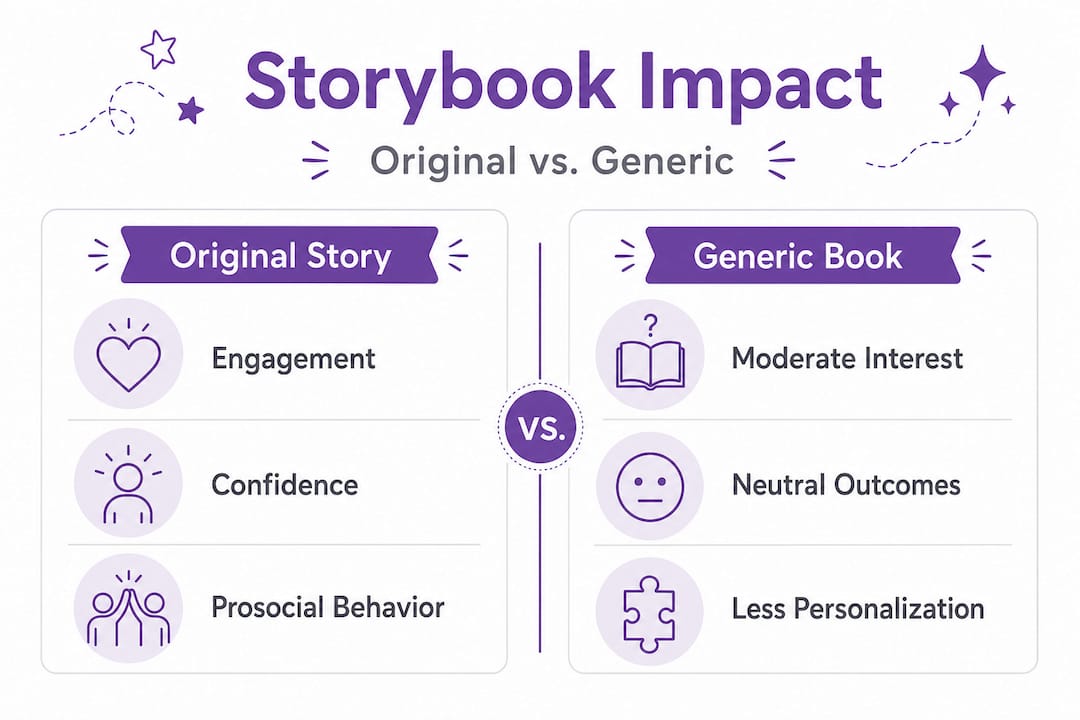
Here's something that might surprise you. The benefits of personalized original stories extend well beyond literacy. Recent research found that personalized picture storybooks increase prosocial outcomes such as altruistic sharing compared with non-personalized and neutral book versions.
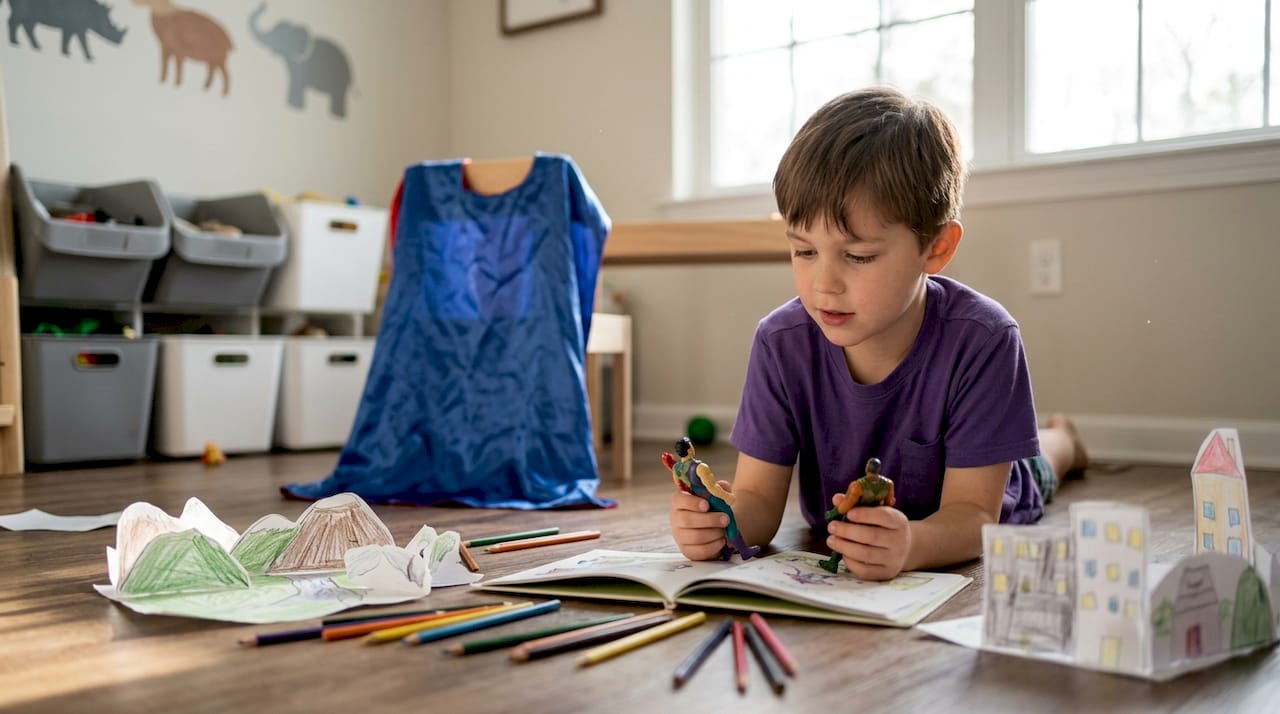
In plain terms, children who read books where they are the hero, and where the story models generous or kind behavior, are more likely to act generously themselves after reading. That's a direct behavioral outcome from story content.
Personalized vs. neutral books: prosocial outcomes
| Behavior measured | Neutral story | Non-personalized story | Personalized original story |
|---|---|---|---|
| Altruistic sharing | Baseline | Slight improvement | Significant increase |
| Empathy expression | Low | Moderate | High |
| Confidence during group activities | No change | Minimal change | Noticeable improvement |
| Peer cooperation | Baseline | Slight improvement | Consistent improvement |
Why does this happen? When a child sees themselves in a story making brave choices or helping others, they internalize that identity. They're not just reading about a character. They're reading about themselves as a capable, caring person. That self-concept sticks.
For parents thinking about school readiness, this is hugely relevant. Children who enter school with a strong sense of their own kindness and competence tend to form friendships more easily and navigate social conflicts more successfully. Original personalized stories are actually a tool for building those foundations.
Here's how you can nurture prosocial growth during story time:
- Pause when a character makes a kind choice and ask, "Why do you think they did that?"
- After reading, talk about a time your child showed similar kindness
- Connect story characters' emotions to real situations your child has faced
- Reinforce positive identity: "You're just like the character in this story"
- Celebrate the child's likeness in the illustrations and how it connects to their values
Custom baby books are especially valuable for younger children, where early identity formation is happening rapidly. Starting this practice early builds a foundation of positive self-image that pays dividends for years.
Pro Tip: If you're choosing a story specifically for a behavioral goal like sharing or managing frustration, pick one where the main character faces that specific challenge. The more closely the story mirrors your child's real experience, the stronger the behavior transfer tends to be.
Exploring a solid gift guide for kids can also help you identify books that balance entertainment with emotional development, especially when buying for milestones like birthdays or starting school.
If you're looking at how storytelling fits into broader family development, e-books and family empowerment is worth reading for additional context on how digital story formats support both child and parent growth.
Maximizing impact: Parent techniques for original storytelling
Choosing an original, personalized book is a great first step. But how you read it matters enormously. The right techniques can turn a good story into a genuinely powerful experience for your child.
Here's a practical framework you can use every time:
- Before reading: Preview the cover and illustrations together. Ask, "What do you think this story is about?" This activates prediction skills and primes comprehension.
- During reading: Pause at key moments to ask open-ended questions. "How do you think the character feels right now?" "What would you do in that situation?"
- At turning points: Invite your child to predict what happens next before you turn the page. This builds narrative reasoning.
- After reading: Ask your child to retell the story. Start with, "Can you tell me what happened from the beginning?" Give them time to think.
- Connection questions: "Has anything like this ever happened to you?" Links the story to personal memory, which dramatically improves retention.
These steps are rooted in dialogic reading, a research-backed approach where story time enhances reading enjoyment, motivation, and parent-child attachment. The approach works with any book, but it's especially effective with original personalized ones because the child already has an emotional stake in the story.
Additional techniques that consistently work well:
- Let your child choose the reading pace. Some kids want to linger on illustrations. Let them.
- Use different voices for characters. It sounds simple, but it deepens engagement significantly.
- Accept tangents. If your child suddenly wants to talk about their own dog because the story has a dog, go with it. Those connections are exactly what you want.
- Revisit stories multiple times. Each reading unlocks new observations and questions.
Pro Tip: Keep a short mental note of questions your child asked during one reading session, and bring them up casually the next day. "Remember when we read about the brave explorer? Why do you think she went into the cave?" This extends the learning beyond story time and shows your child you value their thinking.
Wondering how quickly you can have an original personalized book ready to read? Understanding the custom book timeframe helps you plan ahead for birthdays, bedtime routines, or spontaneous reading moments.
The overlooked truth about original stories and interaction
Here's what most articles about personalized books won't tell you. The story itself is important. But the interaction around the story may matter even more.
A lot of the benefits we attribute to original or personalized content, things like better comprehension, stronger emotional responses, increased prosocial behavior, likely have as much to do with how you read as what you read. Some benefits of unique content may actually stem from the interaction style, specifically the conversation, the questions, and the caregiver responsiveness that naturally flows when a child is more engaged by a story.
In other words, original stories work in part because they make it easier to have richer conversations. You ask better questions because the story is more interesting. Your child gives longer, more enthusiastic answers because they care about the content. The story is the catalyst, but the conversation is the mechanism.
This doesn't mean story quality doesn't matter. It does. The distinction between original and template books is real and worth understanding. But if you're reading a truly original personalized book in silence while your child passively listens, you're leaving most of the benefit on the table.
The practical wisdom here is simple. Don't just focus on finding the best book. Focus equally on being present, curious, and responsive during reading. That combination, an original story plus an engaged parent, is where the real growth happens.
Discover unique storybooks tailored for your child
If this article has you thinking about your current reading routine, you're in a good place to make a real change.
At Adventures Of, we create fully original AI-generated storybooks featuring your child's actual likeness, built from photos you upload and personal details you share. No templates. No generic characters. Every story is one of a kind, ready in about five minutes, and available as a high-quality print-ready digital file. You can explore personalized children's books to see how the process works, or check out custom baby book options if you're shopping for a younger child. Either way, you'll be giving your child a story that's genuinely theirs, which is the foundation for everything we've covered in this article.
Frequently asked questions
What are the key benefits of original stories for children?
Original stories foster deeper engagement, imagination, and emotional growth, especially when personalized and read interactively. Story time supports language, literacy, and social-emotional development at every age.
Do personalized storybooks improve children's reading comprehension?
Yes. Personalized books measurably increase children's engagement and comprehension during shared reading, with especially strong results on story retelling tasks.
Can original storybooks influence kids' confidence and prosocial behavior?
Absolutely. Personalized picture storybooks increase prosocial outcomes like altruistic sharing compared to non-personalized and neutral book versions, with positive effects on confidence as well.
How can parents maximize the benefits of original stories?
Combining dialogic techniques like asking "why" questions and encouraging retelling with original personalized content produces the strongest outcomes. Dialogic reading enhances enjoyment, comprehension, and the parent-child bond all at once.