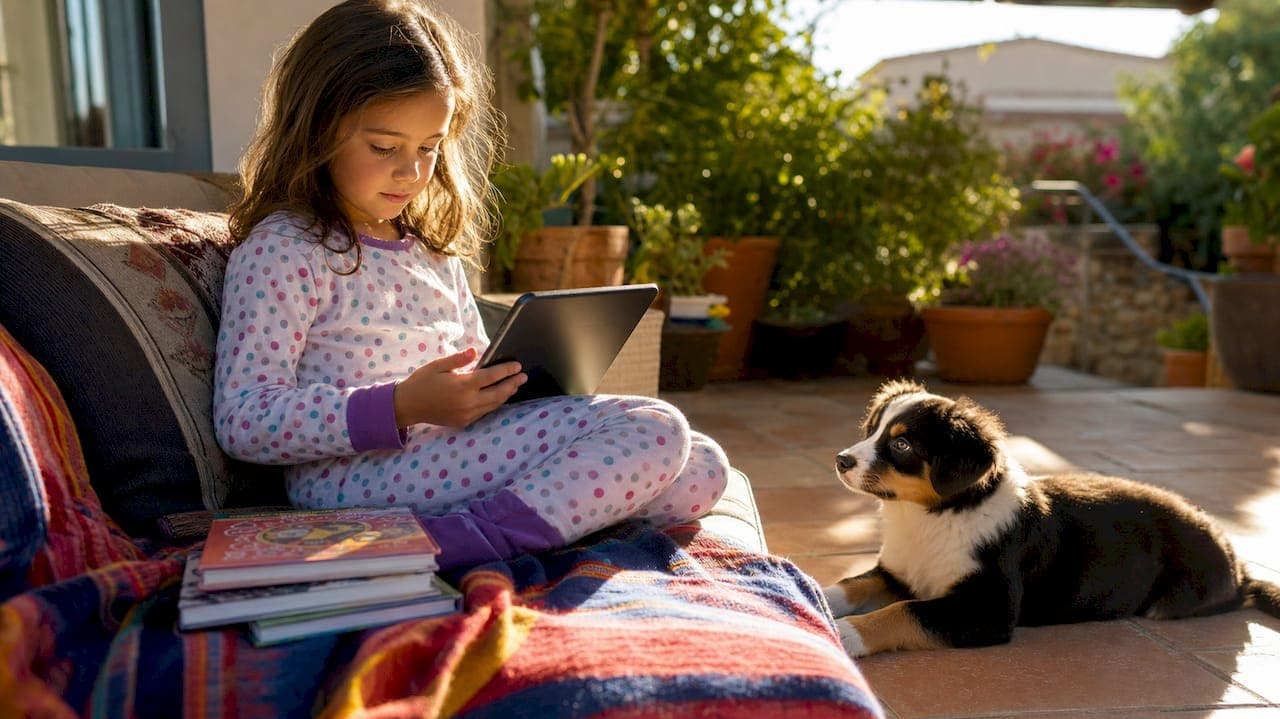
Digital books give children instant access, customizable reading settings, and personalized stories that print simply cannot match. For parents weighing convenience, engagement, and cost, the case for going digital is strong — though print still has a real place in a child's reading life.
Here is what digital reading actually delivers:
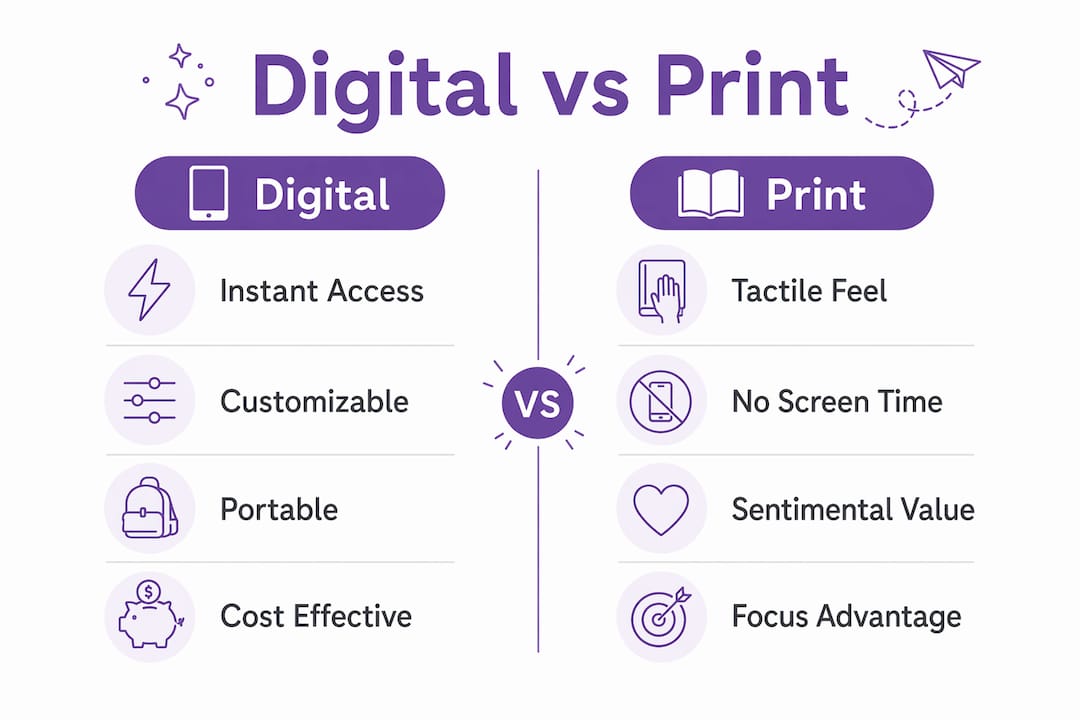
- Instant access: download and start reading in seconds, no shipping wait
- Adjustable settings: font size, brightness, and style adapt to your child's needs
- Portability: an entire library fits on one lightweight device
- Personalization: AI-driven stories can feature your child as the main character
- Lower ongoing cost: digital titles often cost less than print equivalents over time
- Smaller environmental footprint: no paper, printing, or shipping required
Table of Contents
- Why choose digital over print books for children's reading
- How digital reading keeps kids more engaged
- Print still has a real role — here is how to balance both
- How Adventuresofbook creates personalized digital storybooks
- Your child's story, ready in five minutes
- Key Takeaways
- FAQ
Why choose digital over print books for children's reading
The clearest reason to prefer digital books is convenience. Digital books are delivered almost instantaneously, so a child who wants to start a new story at 9 PM on a Tuesday does not have to wait for a delivery or a library trip. That frictionless access matters more than it sounds, because the moment a child is excited about a book is exactly when you want them reading it.
Customization is the second major advantage. Digital formats allow adjustable fonts, styles, and brightness that print books simply cannot offer. For a child with low vision, dyslexia, or attention challenges, being able to enlarge text or switch to a high-contrast display can be the difference between a frustrating experience and an enjoyable one.
Portability rounds out the top three. Thousands of books fit on a single lightweight device, which means no more choosing between three books for a road trip or lugging a heavy bag to school. One device, the whole library.
Pro Tip: If screen time is a concern, look at dedicated e-ink readers like the Kindle Paperwhite or Kobo Clara. E-ink technology mimics paper and emits no blue light, making them far gentler on children's eyes than tablets or phones.
Cost adds up over time, too. E-books eliminate many physical production, storage, and shipping costs, so individual titles are often priced lower than their print counterparts. Print books do hold resale value, which digital titles do not, but for families who buy frequently, the savings on digital editions often exceed that advantage. On the environmental side, e-books carry a significantly lower footprint than print, which requires paper, ink, and transportation at scale.
How digital reading keeps kids more engaged
Engagement is where digital books genuinely pull ahead for children. Digital reading engagement can be tracked, giving publishers and educators data to refine content and keep it aligned with what actually holds a child's attention. That feedback loop does not exist with print.
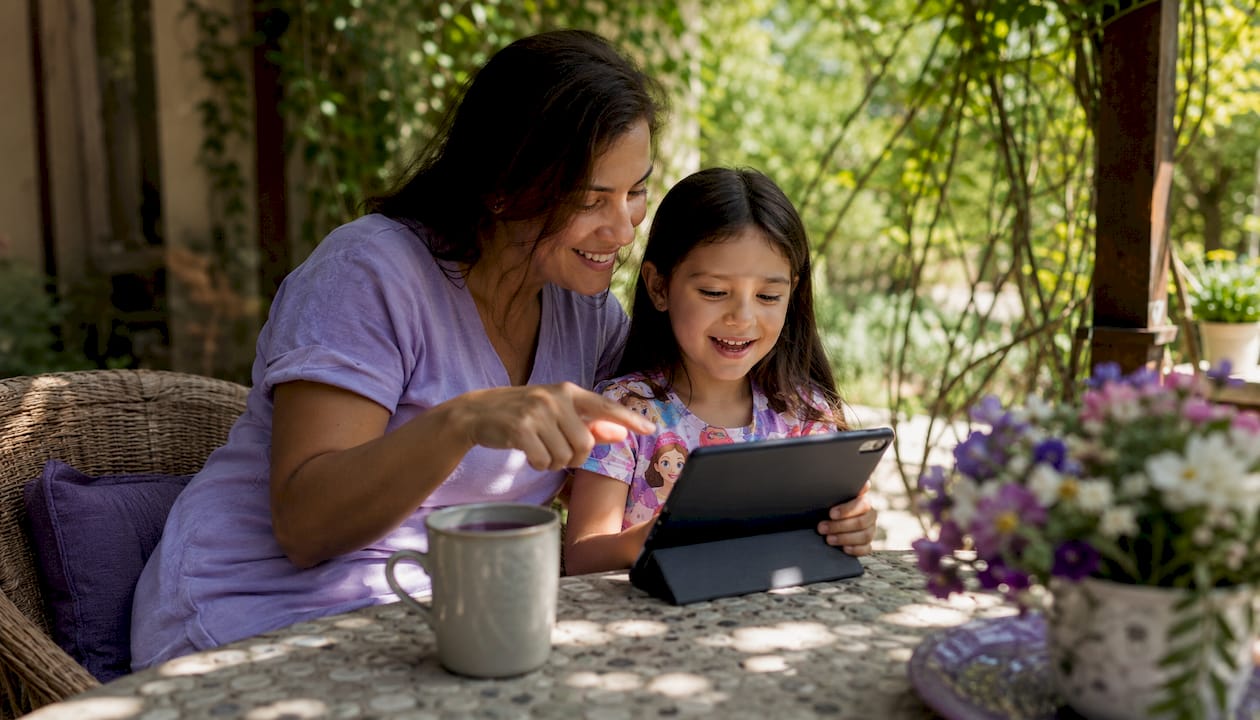
Built-in dictionaries are a quiet but powerful feature. On most e-readers, a child taps an unfamiliar word and gets an instant definition without leaving the page. With a print book, the same child either skips the word or breaks their reading flow to grab a dictionary. Over hundreds of reading sessions, that difference compounds into real vocabulary growth.
Personalization takes engagement a step further. AI-driven personalized storybooks integrate a child's photos and preferences to create stories where the child is the actual hero, not a placeholder name dropped into a template. That emotional connection, seeing your own face in the illustrations, motivates reluctant readers in a way that generic content rarely does.
Adventuresofbook builds exactly this kind of book. Upload a photo of your child, add a few details about their interests, and the AI generates an original story with illustrations that look like your kid. The whole process takes about five minutes. For parents who want personalized children's books that go beyond swapping a name into a pre-written script, this is a meaningfully different product.
Pro Tip: Pair a personalized digital storybook with a bedtime reading routine. Children who see themselves as the main character tend to ask for the same book repeatedly, which builds reading stamina without any pressure.
Thoughtful digital storytelling also makes for a memorable gift. If you are curious how storytelling shapes meaningful gifts, the connection between narrative and emotional resonance is well documented in the gifting space.
Print still has a real role — here is how to balance both
Neither format wins every situation. Educators find print preferred for deep, focused reading, while digital supports quick reference, vocabulary building, and interactive learning. For a child working through a long chapter book at a steady pace, print often feels more comfortable and less distracting.
Here is a practical breakdown of where each format tends to work better:
Digital books work well for:
- Bedtime reading on an e-ink device (no lamp needed, no blue light)
- Travel and on-the-go reading
- Children who need larger text or high-contrast displays
- Quick reference, vocabulary lookup, and interactive content
- Personalized stories that put your child in the story
Print books work well for:
- Long, immersive reading sessions
- Very young children who benefit from the tactile experience of turning pages
- Books with detailed illustrations that benefit from physical reproduction
- Sharing, gifting, and building a physical collection
Screen time is a legitimate concern, and it deserves a straight answer. Tablets and phones do emit blue light, which can disrupt sleep and cause eye fatigue. Dedicated e-ink readers solve this problem almost entirely, since they simulate paper rather than projecting light. If your child reads on a tablet, enabling night mode and reducing brightness in the evening is a practical middle ground.
Print books do carry sentimental weight that digital files do not. A physical book can be handed down, signed by an author, or pulled off a shelf years later. That is a real advantage, not a nostalgic one. The honest answer for most families is that both formats belong in a child's reading life, chosen by situation rather than ideology.
How Adventuresofbook creates personalized digital storybooks
Adventuresofbook uses digital technology to create personalized storybooks, delivering a print-ready file you can hold in your hands.
The process involves uploading a photo of your child, adding some details, and receiving a uniquely generated story and illustrations tailored to your child. This personalized output distinguishes it from services that only swap names in a pre-written template. The process includes privacy protections and a money-back guarantee. One book, one child, one original story.
For parents who want to understand how the creation process works before committing, the full walkthrough is available on the Adventuresofbook blog.
Your child's story, ready in five minutes
Most personalized book services give you a template. Adventuresofbook gives you an original. For $14.99, you get a 13-page AI-generated storybook with illustrations built from your child's actual photo, delivered as a print-ready PDF you can download immediately or send to a printer.
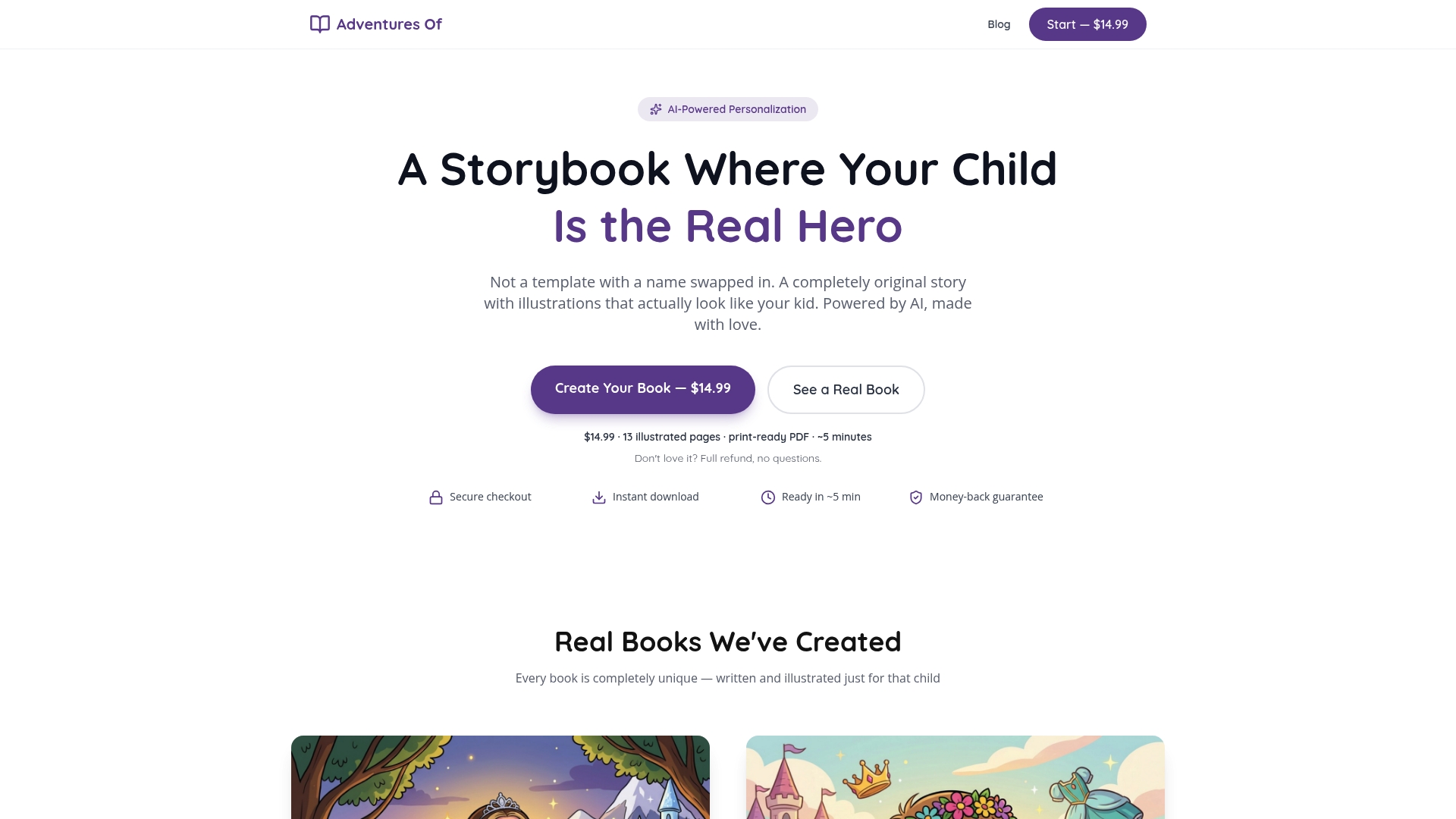
That combination of digital speed and print-quality output is the practical version of everything this article covers: instant access, real personalization, and a story your child will actually want to read again. If you want to see what your kid's book looks like, create your book in about five minutes.
Key Takeaways
Digital books offer the strongest combination of convenience, personalization, and accessibility for children's reading, though print remains valuable for deep, focused sessions.
| Point | Details |
|---|---|
| Instant access | Digital books download in seconds, removing wait times that kill reading momentum. |
| Customizable settings | Adjustable font, brightness, and style support children with visual or attention challenges. |
| Balanced approach | Print suits deep reading; digital excels for quick reference, travel, and personalized content. |
| Eye strain solution | E-ink readers emit no blue light, making them safe for extended children's reading. |
| Adventuresofbook | Generates an original 13-page personalized storybook from your child's photo in about five minutes for $14.99. |
FAQ
Are digital books better than print books for children?
Digital books offer clear advantages in convenience, customization, and personalization, but print remains preferred for long, focused reading sessions. Most families benefit from using both formats depending on the situation.
Do digital books hurt children's eyes?
Reading on tablets or phones can cause eye strain from blue light, but dedicated e-ink readers like the Kindle Paperwhite emit no blue light and closely mimic paper, making them suitable for extended reading.
How do personalized digital books help kids engage with reading?
When a child sees their own face and name in a story, the emotional connection is stronger than with generic content. Adventuresofbook uses AI to generate original stories and illustrations from a child's photo, which motivates reluctant readers more effectively than template-based books.
Are digital books cheaper than print books over time?
Generally, yes. Digital titles cost less because they carry no printing or shipping expenses. The main upfront cost is the e-reader device itself, typically $100–$200, after which per-book costs are consistently lower than print.
Can a digital book also be printed?
Yes. Adventuresofbook delivers a print-ready PDF, so parents who want a physical copy can print it at home or through a local print shop, combining digital speed with a tangible result.
Recommended
- How to Make a Personalized Children's Book (Without Losing a Saturday) | Adventures Of
- Personalized Children's Books — Starring Your Kid | Adventures Of
- How Long Does It Take to Make a Custom Children's Book? | Adventures Of
- Custom Baby Books — First Adventure Starring Your Little One | Adventures Of