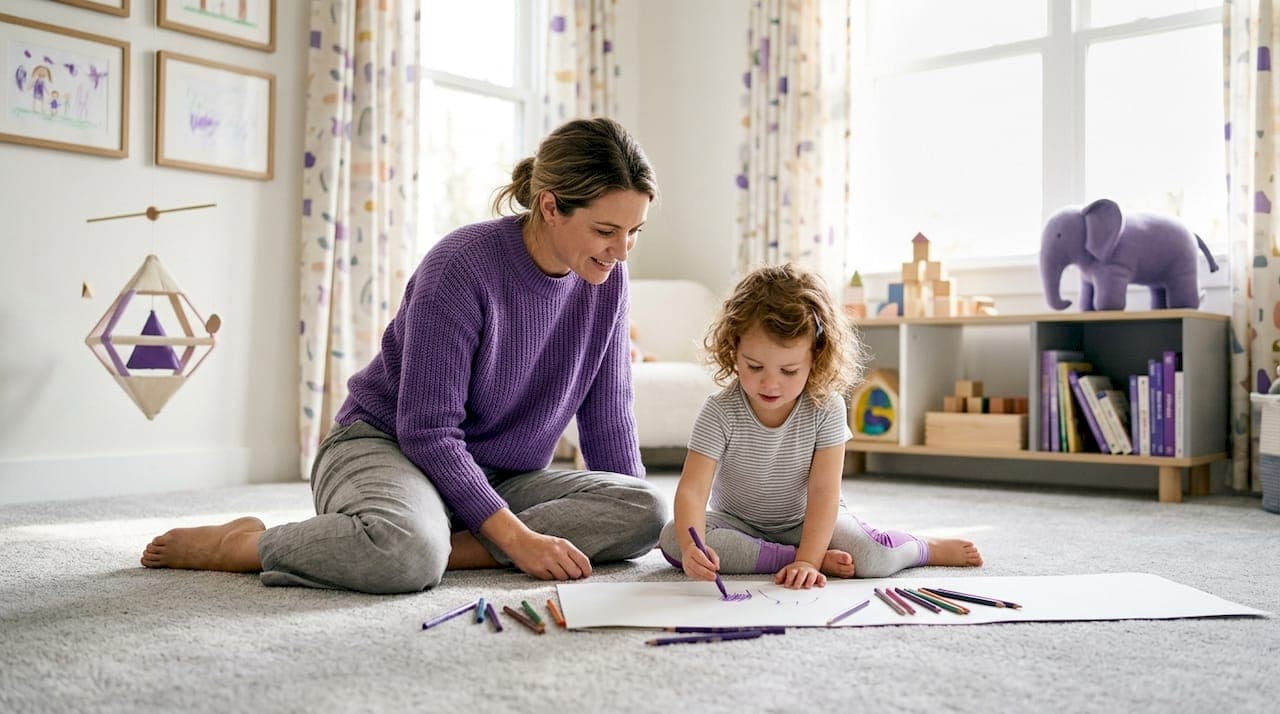
Custom illustration for kids is the creation of original, story-specific artwork designed around a child's likeness, personality, and narrative, used in personalized books, gifts, or educational materials. Unlike stock art or template-based characters, these illustrations are built from scratch to visually represent one specific child. Providers like Kidillus (a human illustration studio), AI tools like Neolemon, and platforms such as Adventuresofbook each approach this differently. Understanding those differences saves you time, money, and a lot of back-and-forth before you commit to a project.
What is custom illustration for kids, exactly?
Custom illustration for kids, known in the publishing industry as bespoke children's book illustration, refers to artwork created specifically for one child rather than adapted from a generic template. The industry term matters because it separates truly original work from "personalized" books that simply swap a name into pre-drawn scenes.
Original, story-specific artwork for children typically includes the child's character look, scene compositions, and interior spreads built around the story's specific events. Some providers offer books with up to 12 customization options and 18 to 24 pages with color art on every spread. That level of detail is what separates a genuinely custom product from a fill-in-the-blank book.
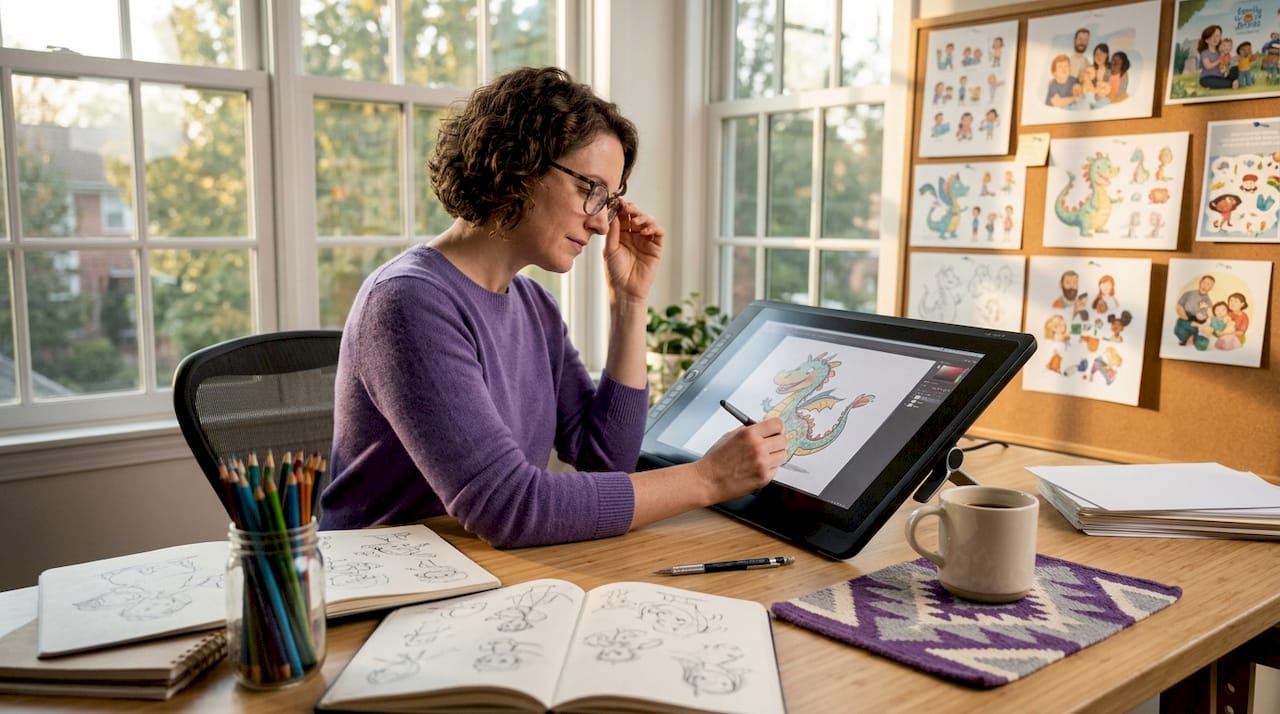
The three main uses parents pursue are personalized storybooks (where the child is the main character), custom gifts like framed portraits or illustrated cards, and educational materials where a familiar face helps a child connect with the content. Each use case has different requirements for style, turnaround time, and budget.
What are the main methods for creating custom kids illustrations?
Three primary methods exist for creating custom illustrations for children: commissioning a human illustrator, working with a template-free production studio, or using a photo-to-illustration AI tool. Each has a distinct trade-off between cost, time, and how closely the final artwork resembles your child.
Human illustrators
A human illustrator creates every image by hand or digitally from your brief. You get the highest artistic control and the most nuanced result, but the process takes weeks and costs significantly more. This is the right choice if you are producing a book for publication or want a truly one-of-a-kind heirloom piece.
Template-free production studios
Studios like Kidillus sit between fully custom and fully automated. They use professional illustrators but follow a structured production process with defined stages and approval checkpoints. The result is high quality, and the workflow is more predictable than hiring a freelancer independently.
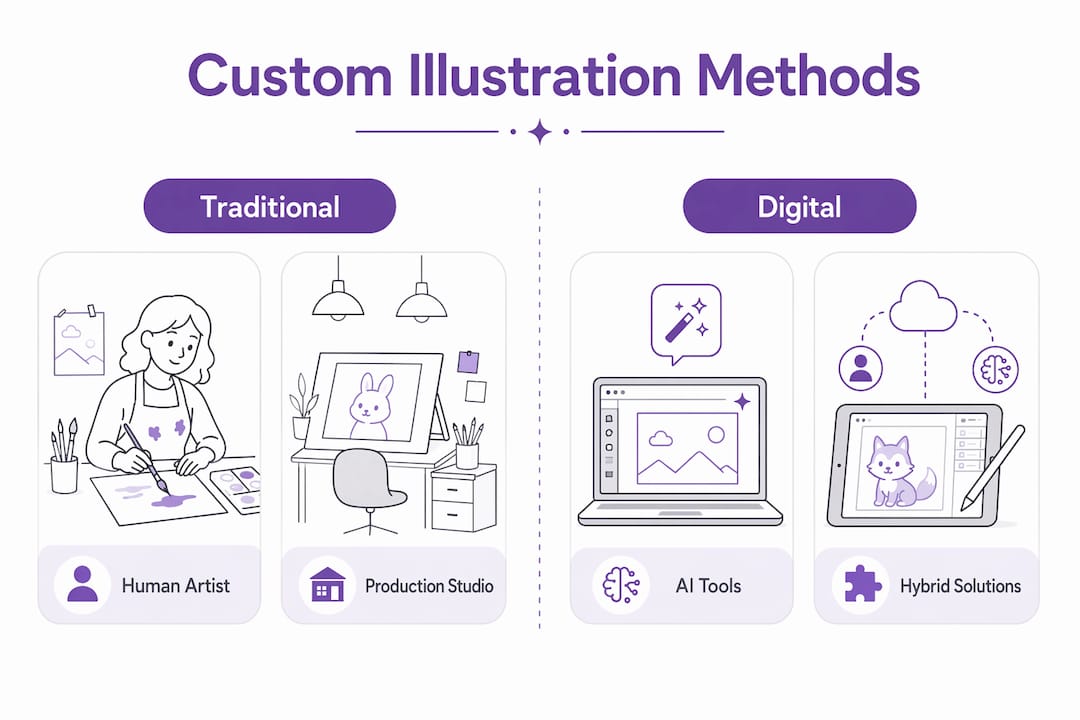
Photo-to-illustration AI tools
AI tools like Neolemon take an uploaded photo of your child and generate a consistent cartoon character across multiple scenes. The photo-to-cartoon workflow involves uploading the photo, selecting an art style, and generating illustrations that maintain the same base character throughout the book. This is the fastest and most affordable route, though the artistic range is narrower than human illustration.
Here is a direct comparison of the three methods:
| Method | Typical cost | Turnaround | Likeness accuracy | Best for |
|---|---|---|---|---|
| Human illustrator | $1,500 to $8,000+ | 4 to 10 weeks | High, with revisions | Publication, heirlooms |
| Template-free studio | $300 to $1,500 | 2 to 6 weeks | Medium to high | Gifts, self-publishing |
| Photo-to-AI tool | $10 to $50 | Minutes to days | Consistent, photo-based | Quick gifts, digital books |
Pro Tip: Before committing to any method, ask to see examples where the illustrator or tool has depicted a child with similar features to yours. Generic portfolio samples do not tell you how well the artist handles specific hair textures, skin tones, or facial structures.
How long does it take and what does it cost?
Timeline and cost are the two things parents most often underestimate, and the gap between methods is significant.
For human illustration projects, stage durations break down roughly as follows: storyboarding takes 3 to 7 days, character and environment design takes 5 to 10 days, pencil sketches take 7 to 14 days, and final painting takes 10 to 21 days. Add approval time between each stage and a realistic total is 4 to 6 weeks for illustrations alone, longer if the project includes educational content or app conversion. That timeline assumes you respond to proofs quickly.
On cost, custom illustration pricing ranges from $300 to $1,500 for standard projects, up to $8,000 for detailed, full-color picture books. Fiverr-based illustrators typically charge $1,500 to $3,500 for 12 to 16 spreads. Starting prices for a 32-page picture book from a professional studio run around $2,700, with per-page add-ons for additional spreads. These are real numbers, not estimates, and they reflect 2026 market rates.
Revisions are where budgets quietly expand. Changes after illustration starts can add $150 to $300 per re-illustrated spread, and they push delivery dates back. This is not a penalty clause buried in fine print. It reflects the actual labor involved in redrawing finished artwork.
For AI-generated books, the timeline collapses entirely. Adventuresofbook generates a complete 13-page illustrated story in approximately five minutes. The cost is $14.99 as a one-time fee. That is not a comparable product to a hand-illustrated 32-page picture book, but for a personalized gift that genuinely looks like your child, it is a different category of value.
Pro Tip: For human illustration projects, treat the sample page proof as the most important moment in the entire process. This is when illustrators verify character likeness and emotional tone. Approve nothing until the child's face, expression, and coloring match what you envisioned. Changes after this point cost real money.
You can also read more about custom book timelines if you want a deeper breakdown of production stages.
How do illustration styles affect children's engagement?
Illustration style is not purely aesthetic. It directly affects how a child reads, processes, and emotionally connects with a story. Choosing the wrong style for a child's age or the story's tone can reduce engagement even when the artwork is technically excellent.
The most common styles used in children's personalized books, and when to use each:
- 2D flat illustration: Clean lines, solid colors, minimal shading. Works best for toddlers and early readers (ages 2 to 5) because the visual simplicity reduces cognitive load and keeps attention on the character and action.
- Watercolor or painterly style: Soft edges, textured backgrounds, warm tones. Suits picture books with emotional or imaginative themes. Particularly effective for bedtime stories and adventure narratives.
- Lifelike or semi-realistic illustration: More detailed rendering of faces and environments. Better suited for older children (ages 7 and up) and stories with complex plots or educational content.
- Cartoon or comic style: Bold outlines, exaggerated expressions, high contrast. Ideal for humor-driven stories and children who already love animated content.
Style selection should match the child's age, the story's emotional tone, and the color palette you want. A mismatch, like a lifelike style for a silly toddler story, creates visual tension that pulls a young child out of the narrative.
Character consistency across all pages is equally important. When the main character looks slightly different from page to page, children notice, and it breaks the sense that this is their story. AI tools that use a base character reference maintain the same face, hair, and clothing across different poses and backgrounds, which is one of their genuine advantages over inconsistent freelance work.
You can explore creative coloring techniques as a way to understand how color choices in illustrations shape a child's emotional response to the artwork.
How to choose the right custom illustrations for your child
Choosing well comes down to four factors: budget, timeline, style fit, and how much the final product actually looks like your child. Here is a practical process for making that decision:
- Set a real budget before you browse. Knowing whether you have $15 or $1,500 to spend immediately narrows your options to the right category of provider.
- Define your deadline. A birthday gift needed in three days rules out human illustration entirely. A keepsake book for a first birthday six weeks away opens up studio options.
- Collect reference photos. Whether you are working with a human illustrator or an AI tool, clear, well-lit photos of your child's face from multiple angles produce better results. Blurry or low-resolution images lead to generic-looking characters.
- Request samples that match your child's features. Ask illustrators specifically for examples showing children with similar hair, skin tone, and age range to yours. This is the most reliable predictor of final quality.
- Understand the revision policy before you start. Know exactly how many rounds of changes are included and what additional revisions cost. For AI tools, check whether you can regenerate if the first result misses the mark.
For parents who want a personalized children's book without the complexity of a multi-week illustration project, Adventuresofbook's photo-based approach is worth understanding. The process uses uploaded photos to generate illustrations that reflect one specific child, not a generic character with a name attached.
Pro Tip: Prepare your story elements before you contact any illustrator or start any AI tool. Knowing the child's name, age, key personality traits, and the story's setting in advance speeds up every part of the process and produces more coherent illustrations.
Key takeaways
Custom illustration for kids produces the most meaningful results when the method, style, and timeline are matched to the child's age, the project's purpose, and the parent's actual budget.
| Point | Details |
|---|---|
| Definition matters | Custom illustration means original artwork built for one child, not a template with a name swapped in. |
| Three methods exist | Human illustrators, template-free studios, and AI photo tools each offer different cost, speed, and likeness trade-offs. |
| Timelines vary widely | Human projects take 4 to 6 weeks minimum; AI tools like Adventuresofbook generate results in about five minutes. |
| Style affects engagement | Match illustration style to the child's age and story tone. 2D flat works for toddlers; painterly suits emotional narratives. |
| Proof approval is critical | For human projects, the sample page proof is the moment to confirm likeness before costly full production begins. |
Why the "personalized" label deserves more scrutiny
I have looked at a lot of children's books marketed as personalized, and the honest truth is that most of them are not. They are template books. The character was drawn once, the name field was left blank, and your child's name gets dropped into a pre-existing story. That is a fine product. It is just not custom illustration.
What I find genuinely interesting is how children respond differently to the two. A child who sees a character that actually looks like them, with their hair color, their face shape, their specific expression, reacts in a way that a name-in-a-template book does not produce. It is not subtle. They point at the page and say "that's me." That moment is what custom illustration is actually for.
The cost gap between methods is real and worth being honest about. A $14.99 AI-generated book from Adventuresofbook is not the same product as a $3,000 hand-illustrated studio book. But for most parents buying a birthday gift or a keepsake for a child under seven, the AI-generated version delivers the core thing that matters: a story where the child is the hero and the illustrations actually look like them. The studio book is for parents who want a publication-quality heirloom. Both are legitimate goals. They just require different budgets and timelines.
My advice: be honest with yourself about which goal you actually have before you spend money or time on either path.
— Jason
Create your child's personalized storybook with Adventuresofbook
If you want a book where the illustrations genuinely look like your child, not a stock character with their name attached, Adventuresofbook is built for exactly that.
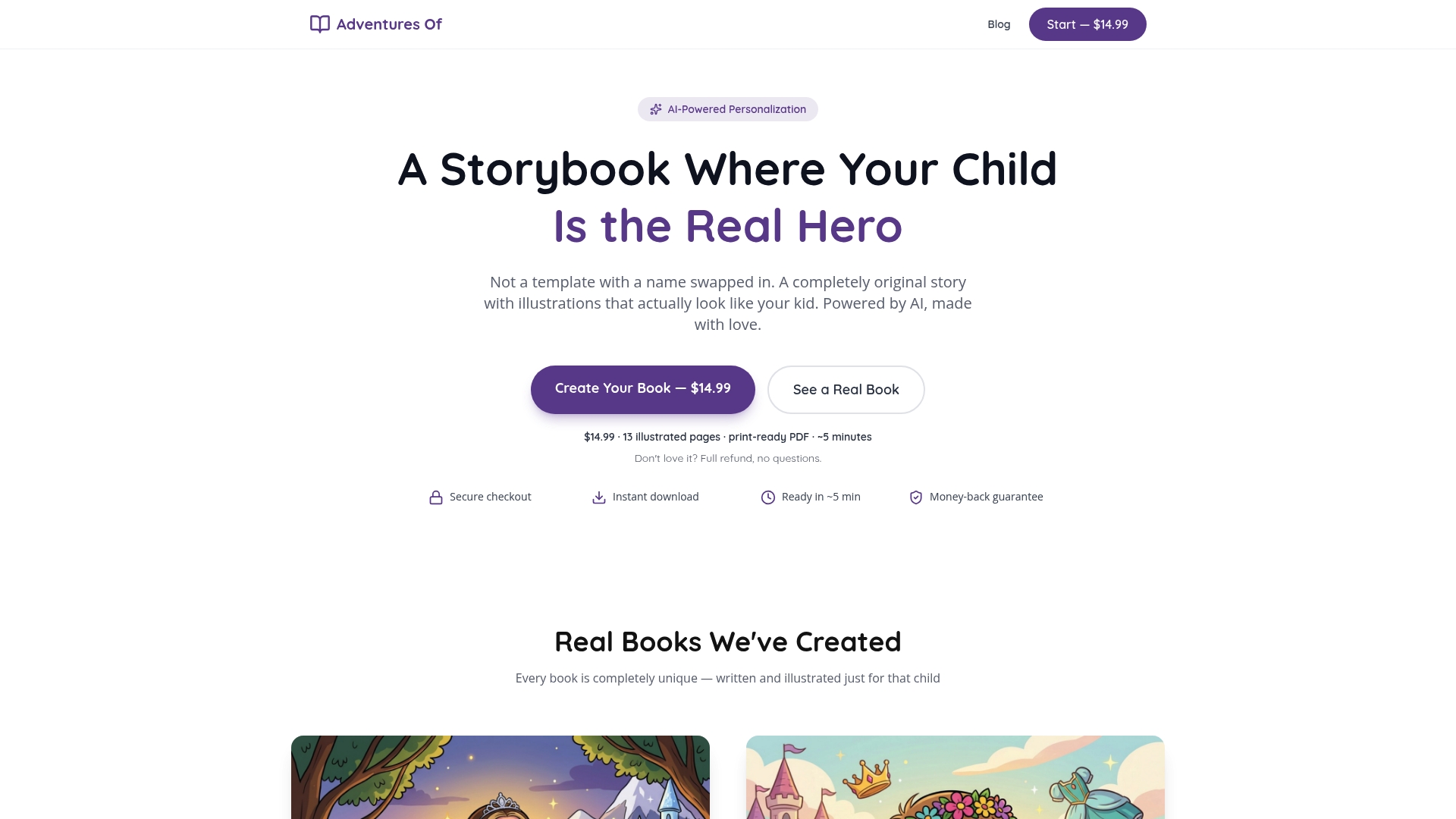
Upload a photo of your child, add a few details about their personality and interests, and Adventuresofbook's AI generates an original story with 13 custom illustrated pages in about five minutes. The result is an 8.5x8.5 print-ready PDF you can download immediately or send to a local printer. The price is $14.99 as a one-time fee, with a 7-day refund policy if the result does not meet your expectations. There are no templates, no generic characters, and no subscription. Start your child's story and see what the illustrations look like before you commit.
FAQ
What is the difference between custom and personalized kids illustrations?
Custom illustration means original artwork created specifically for one child from scratch. Personalized illustration often refers to template-based books where a child's name is inserted into pre-drawn scenes, which is a different product entirely.
How much does custom illustration for kids typically cost?
Costs range from $14.99 for AI-generated books to $300 to $1,500 for studio projects and up to $8,000 for fully hand-illustrated picture books, depending on page count, style, and the provider's process.
How do I know if an illustration actually looks like my child?
Request a sample page proof before full production begins. This approval step is standard in professional illustration workflows and is the point where character likeness is confirmed before the remaining pages are completed.
What illustration style works best for young children?
2D flat illustration with clean lines and solid colors works best for toddlers and early readers because the visual simplicity keeps focus on the character and story action rather than complex backgrounds.
Can I make a personalized book without hiring an illustrator?
Yes. Photo-to-illustration AI tools generate consistent illustrated characters from an uploaded photo without any illustration expertise required. Adventuresofbook completes this process in approximately five minutes for a single child.