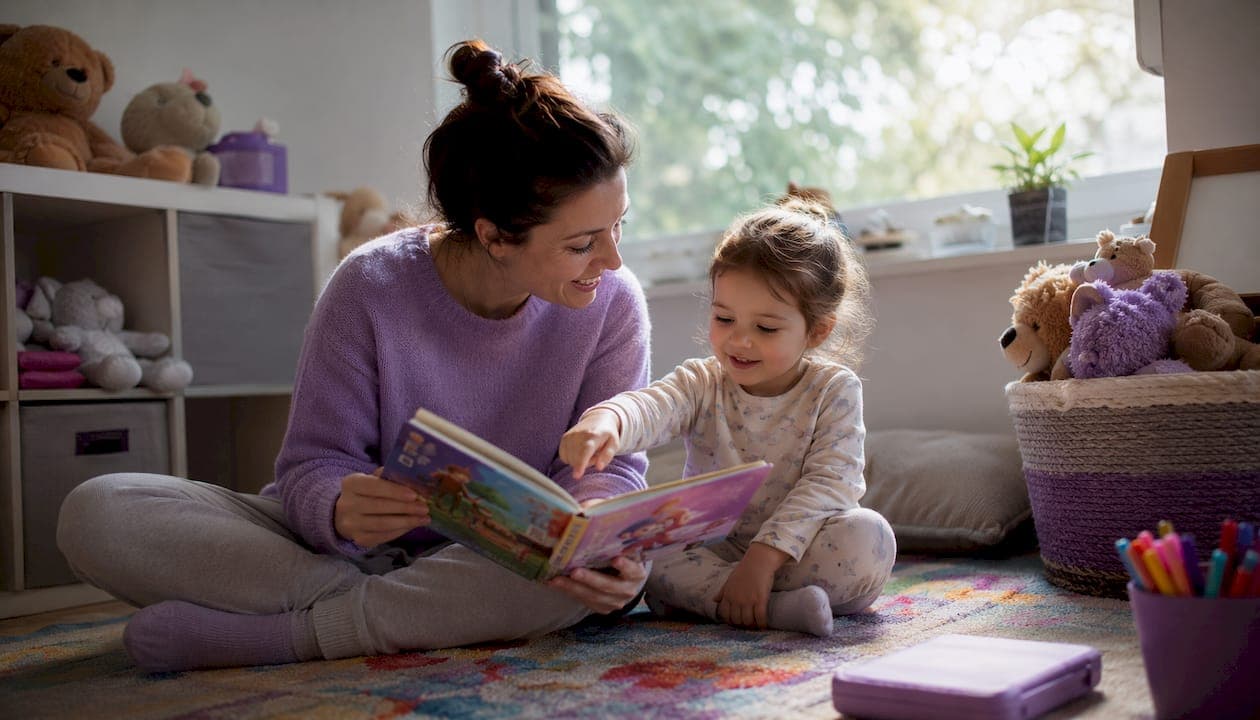
Personalized books, used together with caregiver-supported paired reading and trauma-informed selection, are a practical tool to strengthen bonding, improve literacy, and preserve continuity for children in U.S. foster care. The Letterbox Club RCT found no measurable literacy gains from delivery-only book programs, pointing directly to caregiver involvement as the missing piece. Programs like RISE at HopeWell and Adventuresofbook show what works when books are matched to the child and supported by an adult who reads alongside them.
Two actions you can take right now:
- Pick one trauma-safe, interest-matched personalized book and present it as a wrapped gift addressed to the child by name.
- Schedule three paired-reading sessions over the next two weeks and note the child's reactions in your case notes.
Table of Contents
- Why do personalized books help children in foster care?
- How do you choose a trauma-informed personalized book for a foster child?
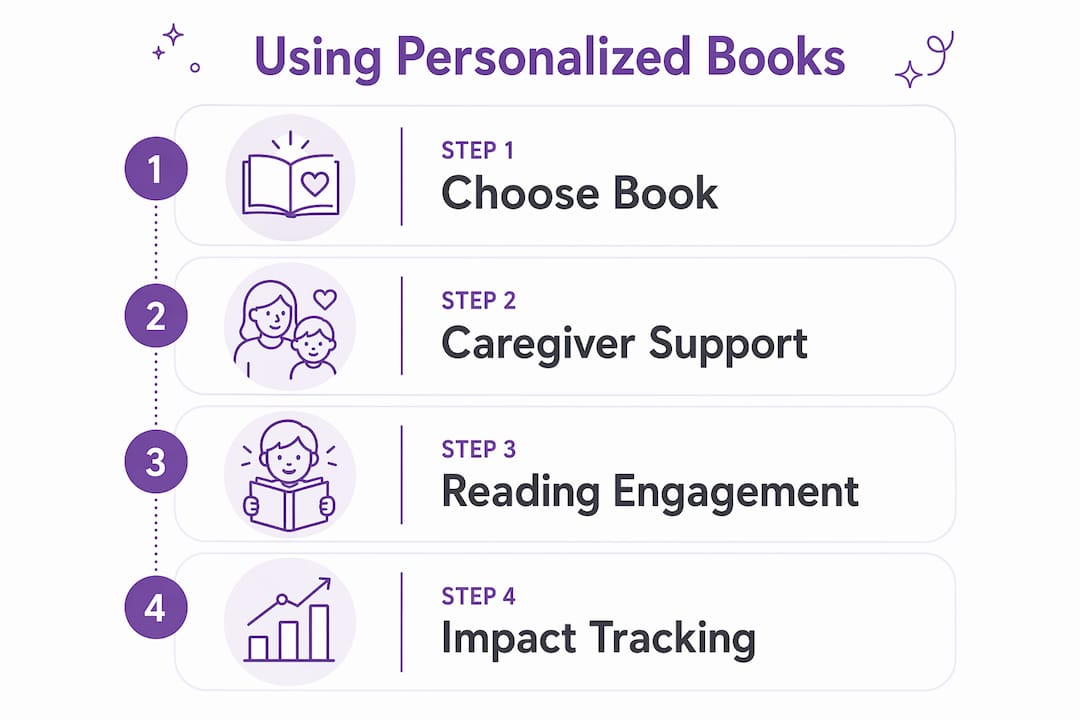
- Step-by-step implementation for using personalized books in foster care
- Caregiver scripts and reading prompts that actually work
- Privacy, consent, and data security for photo-based books in U.S. foster care
- How do you measure impact and document outcomes?
- How do you source or order personalized books for a foster child?
- How to involve biological families and previous caregivers in the personalization process
- Key Takeaways
- What actually matters when you put a book in a child's hands
- Adventuresofbook is a practical vendor option for foster care placements
- Useful sources and further reading
- FAQ
Why do personalized books help children in foster care?
A book that features a child's own name, face, and interests does something a generic story cannot: it tells the child they exist and that someone noticed. For children who have experienced placement transitions, that message carries real weight.
Lifebooks have long served as therapeutic, chronological records helping children process grief and build a stable sense of identity. Personalized storybooks work alongside that function. Where a Lifebook documents what happened, a personalized story places the child as the hero of something new, which can feel safer for kids who are not ready to revisit the past.
"Book-gifting programmes are popular and well-received. There is also clear evidence that paired reading, when delivered with fidelity, is effective in improving reading skills amongst children." — Reading Together final report, Queen's University Belfast / ESRC
The Letterbox Club RCT of 116 children in Northern Ireland found that books sent without caregiver support produced no measurable reading gains. The Anglicare Book Club reached a similar conclusion from the practice side: caseworkers reported improved connection and reading habits specifically when books were matched to the child's interests and delivered as wrapped, intentional gifts during home visits. The wrapping matters. It signals ownership to a child who may have arrived with very little.
How do you choose a trauma-informed personalized book for a foster child?
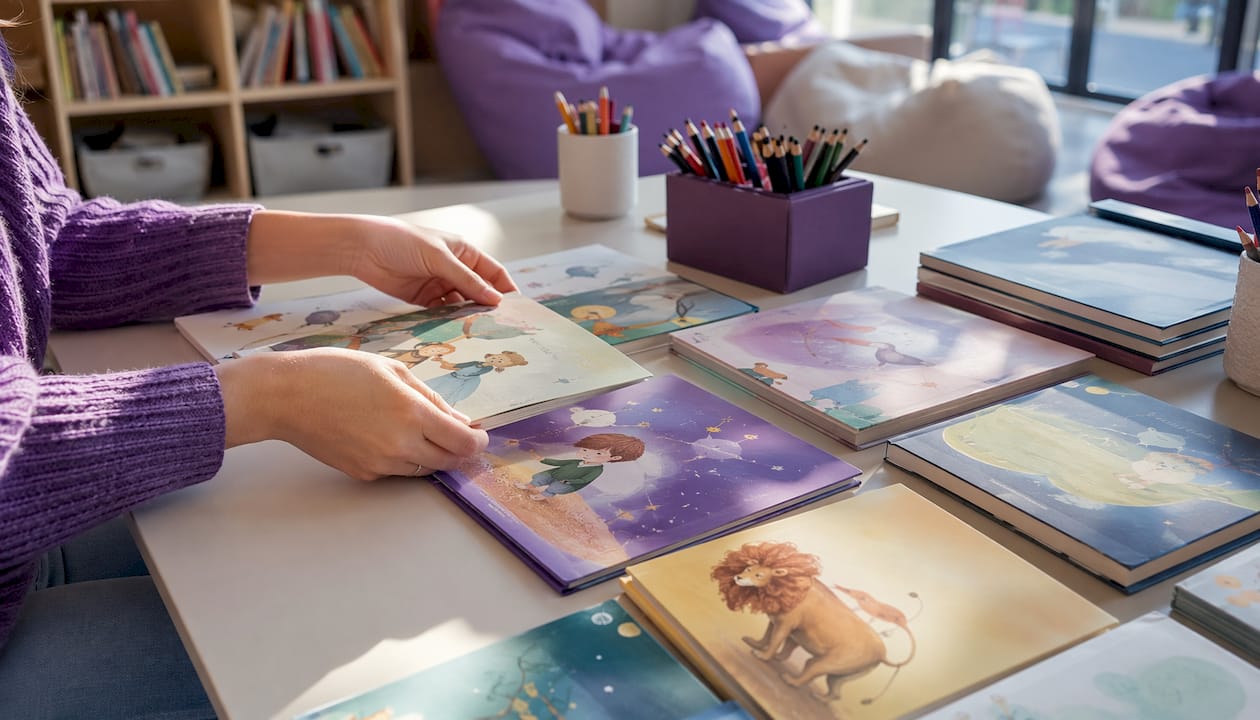
Start with three filters: emotional safety, reading level, and the child's current interests. A book pitched above a child's reading level creates frustration; one that touches on themes they are not ready for can retraumatize. Get both right and the book becomes a non-threatening bonding tool.
Format comparison: PDF vs. printed copy
| Format | Portability | Durability | Cost | Privacy notes |
|---|---|---|---|---|
| Digital PDF | High — travels with any device | Depends on device | Lower upfront | No physical copy to lose at placement; back up to cloud |
| Printed softcover | Moderate | Good for daily handling | Moderate | Can be lost during moves; keep a digital backup |
| Printed hardcover | Lower | Best for long-term keepsake | Higher | Same as softcover; consider a second copy for case file |
Programs like RISE at HopeWell emphasize portable, home-based resources precisely because foster youth change placements frequently. A digital PDF that lives in a caregiver's email or a shared agency folder travels with the child regardless of where they move.
Vendor evaluation checklist
Before ordering any photo-based personalized book, confirm:
- Photos are deleted after generation (not retained for model training)
- The story is original per child, not a template with a name swapped in (see personalized vs. template books for what that distinction actually means)
- One child per book only
- Refund or money-back policy is clearly stated
- Production time fits your placement timeline
Pro Tip: Keep a digital backup of every personalized or Lifebook file. FosterVA guidance notes that children in distress sometimes destroy physical books and later regret the loss. A cloud copy costs nothing and can be reprinted.
Step-by-step implementation for using personalized books in foster care
The sequence is: select the book, get documented consent, prepare the presentation, introduce it as a gift, read together, and record observations.
- Caseworker (Week 1): Confirm consent from the appropriate guardian or agency. Collect photo and personal details per agency policy. Order or create the book with a production lead time in mind.
- Caseworker (Week 1–2): Confirm the book matches the child's current reading level and that no sensitive themes are included. FosterVA recommends avoiding explicit details of abuse or trauma in any child-facing book.
- Foster caregiver (Day of introduction): Wrap the book. Present it directly to the child by name. Say clearly: "This book is yours to keep." Per CASA BR guidance, the act of wrapping and deliberate presentation signals that the book belongs solely to the child.
- Foster caregiver (Week 1–2): Schedule three paired-reading sessions of 10–15 minutes each. Sit beside the child, not across from them. Let the child set the pace.
- Foster caregiver (Ongoing): Note in case records: date of each session, child's engagement level, any emotional reactions, and whether the child initiated interaction with the book independently.
- At placement transition: Transfer the physical book and a digital backup with the child. Record the book title, consent status, and observation notes in the handoff summary.
Casefile handoff fields to copy: child's name, book title, date ordered, who gave consent, consent scope and expiration, session dates, observation summary, digital backup location.
Caregiver scripts and reading prompts that actually work
The goal is to introduce the book in a way that affirms ownership without pressure. A few lines that work across age groups:
"I got this made just for you. Your name is in it, and it's yours to keep — nobody else's."
Then open to the first page and read aloud. Let the child respond however they need to.
Age-adapted prompts
Ages 3–5 (toddlers and preschoolers): Keep it sensory and simple. Point to the illustrated character and say, "That looks like you, doesn't it?" Pause after each page. Let them touch the pictures. Questions like "What do you see?" work better than "How does that make you feel?"
Ages 6–8 (early readers): Invite them to read a line with you. "Want to try this page together?" works well. Ask about the story: "What do you think happens next?" Connecting the character's choices to the child's own preferences builds engagement without pressure.
Ages 9–12 (school-age): Older kids may feel self-conscious about a picture book. Frame it differently: "I had this made because I wanted you to have something that's actually about you." Let them read independently first, then talk about it afterward.
Age-adapted prompt table
| Age group | Prompt length | Complexity | Sample opener |
|---|---|---|---|
| 3–5 | 1–3 words | Sensory, pointing | "What do you see?" |
| 6–8 | One sentence | Predictive, collaborative | "Want to read this part with me?" |
| 9–12 | 2–3 sentences | Reflective, choice-based | "What part felt most like you?" |
When a child withdraws or shuts down: Don't push. Say: "That's okay — we can come back to it whenever you want. It's not going anywhere." Close the book, leave it visible, and move to a neutral activity. Forcing engagement with a book about their identity can backfire.
Privacy, consent, and data security for photo-based books in U.S. foster care
Always obtain documented, age-appropriate consent and follow your agency's policy before using a child's photos or personal details with any vendor.
Consent checklist for caseworkers:
- Who gave consent (legal guardian, agency, or both) and their relationship to the child
- Scope of consent: what data is covered (name, photo, age, interests)
- Expiration date or review trigger (e.g., at next placement review)
- Where the consent form is stored in the case file
Vendor privacy checklist before uploading any photo:
- Does the vendor delete photos after the book is generated?
- Are images used to train AI models? (Ask directly.)
- Is there a clear data-deletion-on-request policy?
- Is there a refund or money-back window?
Exclude sensitive content: avoid birth family names, placement addresses, school names, or any detail that could identify the child's location. If a child's history includes trauma you are unsure how to handle in a story context, consult with the child's therapist before proceeding. FosterVA guidance specifically recommends keeping Lifebook-style work in a therapeutic setting when difficult past events are involved.
How do you measure impact and document outcomes?
Measure engagement and attachment signals first. Long-term reading scores matter, but they take time to move and require standardized testing. What you can observe and document right now is more useful for case notes and program reporting.
Metric tracking table
| Metric | How to measure | Frequency |
|---|---|---|
| Paired-reading sessions completed | Caregiver log | Weekly |
| Child-initiated book interactions | Caregiver observation note | Per session |
| Reading confidence indicators | Caregiver report (reads aloud, asks questions) | Bi-weekly |
| Emotional response during reading | Case note (calm, engaged, withdrawn, upset) | Per session |
Sample case note entry: "March 14 — 12-minute paired reading session. Child pointed to character and said 'that's me.' Initiated turning pages independently. No signs of distress. Positive engagement."
For program-level reporting, a three-item caregiver micro-survey works well: (1) How often did you read together this week? (2) Did the child interact with the book on their own? (3) Did you notice any change in the child's comfort or engagement? Aggregate responses across caregivers monthly to track program trends.
The Reading Together report found book-gifting programs are consistently well-received, but measurable literacy gains are variable. Tracking engagement and bonding signals gives you meaningful data even when standardized reading scores have not yet shifted.
How do you source or order personalized books for a foster child?
Pick DIY when you need complete narrative control and have the time. Pick a vendor when you need speed, consistent quality, and documented privacy assurances.
Sourcing options:
Agency budget purchases work for programs ordering multiple books across a caseload. Caregiver-funded purchases are common for individual placements. Donated program books (such as through the Ohio Imagination Library's foster care initiative, which automatically enrolls Ohio foster children from birth to age five) cover age-appropriate general titles but not personalized ones.
Adventuresofbook product facts: $14.99 one-time fee, 13 illustrated pages, 8.5x8.5 print-ready PDF, AI-generated original story and illustrations from uploaded child photos, approximately five minutes to generate, seven-day refund policy. One child per book. The story and illustrations are generated from scratch for each child, not adapted from a template. Check sample formats and story styles before ordering to confirm the content fits the child's age and interests.
Ordering checklist:
- Confirm agency consent is documented before uploading any photo
- Use a clear, recent photo with good lighting
- Note the child's age, interests, and any topics to avoid
- Download and back up the PDF immediately after generation
- Confirm the vendor's privacy policy covers photo deletion
How to involve biological families and previous caregivers in the personalization process
Biological families and previous caregivers often hold details about a child's early life, preferences, and history that current foster caregivers simply do not have. Involving them thoughtfully can make a personalized book far more meaningful and accurate.
The most practical approach is a structured information-gathering conversation before ordering or creating the book. Ask a birth parent or previous caregiver: What does this child love? What are they afraid of? What nickname do they use? What memory makes them smile? Even a five-minute phone call can surface details that transform a generic story into something the child recognizes as genuinely theirs.
Families United Network guidance on memory books recommends starting with present-day documentation when earlier records are missing, and inviting child contributions at every stage. The same principle applies here: if birth family contact is limited or complicated by court orders, focus on what the child can tell you directly about their own interests and identity.
When birth family involvement is appropriate and permitted, consider asking them to contribute a photo, a short message, or a favorite story detail to include. This positions the book as a continuity object rather than a replacement narrative. For children who have experienced abrupt separations, seeing their birth family's input in a book they own can be quietly stabilizing.
Always confirm with the caseworker and legal team what contact and information-sharing is permitted before reaching out. Document any birth family contributions in the consent record.
For personalized audio stories as a complement to print books, some families find audio formats useful when a child is not yet ready to sit with a physical book.
Key Takeaways
Personalized books work in foster care when they are trauma-informed, interest-matched, and supported by a caregiver who reads alongside the child — delivery alone is not enough.
| Point | Details |
|---|---|
| Caregiver involvement is the key variable | The Letterbox Club RCT found no literacy gains from delivery-only programs; paired reading changes the outcome. |
| Presentation signals ownership | Wrapping the book and addressing it to the child by name communicates stability and belonging. |
| Privacy and consent come first | Document consent, confirm photo deletion policy, and exclude sensitive details before ordering. |
| Track engagement, not just scores | Log session frequency, child-initiated interactions, and emotional responses for case notes and program reporting. |
| Adventuresofbook for single-child orders | At $14.99 with a seven-day refund and original AI-generated story from real photos, it fits individual placement budgets and agency procurement. |
One-week starter plan:
- Day 1: Confirm consent, gather child's interests, and order or create the book.
- Day 2–3: Receive or download the book; wrap it.
- Day 4: Present the book as a gift. First paired-reading session (10–15 minutes).
- Day 6: Second paired-reading session. Note observations.
- Day 7: Third session. Complete initial case note entry using the metric table above.
What actually matters when you put a book in a child's hands
The conventional wisdom in foster care literacy programs focuses heavily on book selection and delivery logistics. What gets underestimated is the relational moment itself. A child who has moved placements multiple times has learned, often the hard way, that possessions disappear. Handing them a book that is literally about them, wrapped, addressed to them by name, and presented by an adult who then sits down and reads it with them — that sequence does something a curriculum cannot replicate.
The Reading Together research is honest about this: results were inconclusive partly because COVID disrupted the trial, but the underlying hypothesis remains sound. Paired reading with fidelity improves reading outcomes. The book is the vehicle. The caregiver is the intervention.
What I'd push back on is the tendency to over-engineer the selection process. A well-chosen book that arrives two weeks late is less useful than a good-enough book presented warmly on day three of a placement. Consistency and warmth in those early sessions matter more than finding the perfect title. Small, repeated reading interactions build trust faster than a single elaborate presentation.
Adventuresofbook is a practical vendor option for foster care placements
When you need a single-child, photo-based original storybook with rapid turnaround and a print-ready PDF you can back up to a case file, Adventuresofbook is a straightforward choice. The story and illustrations are generated from scratch using uploaded photos, not adapted from a template with a name swapped in. That distinction matters for children who have seen enough generic things with their name on them.
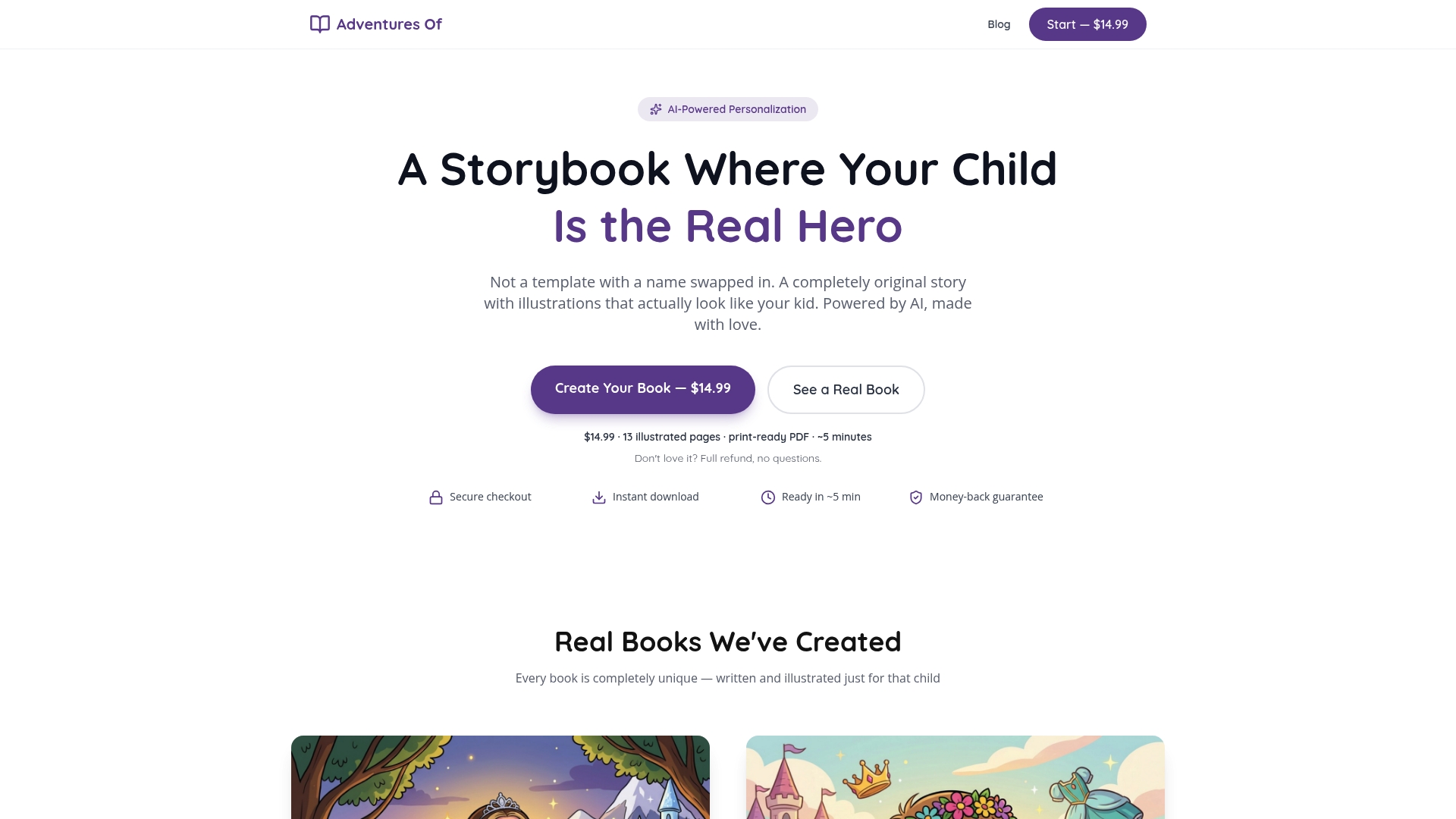
The product: $14.99 one-time, 13 illustrated pages, 8.5x8.5 print-ready PDF, approximately five minutes to generate, seven-day refund. One child per book. Download the PDF immediately and save a copy to your agency's case file system.
Before uploading any photo, confirm your agency's consent documentation is complete and verify Adventuresofbook's current privacy policy covers photo deletion after generation. Then create the book and wrap it before you hand it over.
Useful sources and further reading
| Source | What it covers | How to use it |
|---|---|---|
| Reading Together final report (ESRC/QUB) | Largest RCT on book-gifting plus paired reading for children in care | Paired-reading training rationale; program design |
| Letterbox Club RCT, Northern Ireland | RCT showing delivery-only book programs produce no literacy gains without caregiver support | Justifies caregiver involvement requirement in program design |
| FosterVA Lifebook guidance | Trauma-informed content selection; therapeutic context for Lifebook work | Consent language; content exclusion guidance |
| Families United Network memory book guide | Practical memory book and keepsake box creation for foster children | DIY Lifebook templates; child contribution prompts |
| CASA BR Lifebook availability | Presentation and ownership practices for Lifebooks | Wrapping and gift-presentation protocol |
| Anglicare Book Club | Program example: matching books to interests, wrapped delivery, caseworker observations | Implementation model; matching and presentation practice |
| RISE at HopeWell | Home-based, portable literacy support for K–3 foster children | Portability rationale; caregiver support model |
| Ohio Imagination Library foster care initiative | Automatic monthly book enrollment for Ohio foster children birth–age 5 | State-level program model; general book delivery for young children |
| Adventuresofbook | AI-generated personalized storybooks from child photos | Vendor option for single-child, photo-based original books |
FAQ
What makes personalized books different from regular books for foster children?
Personalized books feature the child's own name, likeness, and interests, which reinforces identity and ownership in a way generic titles cannot. For children who have experienced placement disruptions, that specificity carries real emotional weight.
Does caregiver involvement actually change reading outcomes?
Yes. The Letterbox Club RCT found no measurable literacy gains from delivery-only book programs, while paired reading delivered with fidelity has a solid evidence base for improving reading skills.
How do I handle privacy when ordering a photo-based personalized book?
Obtain documented consent before uploading any photo, confirm the vendor deletes images after generation, and exclude sensitive details like placement addresses or birth family names from the book content.
Can Adventuresofbook be used in a foster care setting?
Adventuresofbook generates an original story and illustrations from a single child's uploaded photos at $14.99 with a seven-day refund, making it a practical option for individual placements. Confirm your agency's consent and photo-handling policy before ordering.
How do I involve a birth family in creating a personalized book?
Ask birth parents or previous caregivers for the child's interests, nicknames, and favorite memories before ordering. Always confirm with the caseworker what contact and information-sharing is permitted, and document any contributions in the consent record.
Recommended
- Personalized Children's Books — Starring Your Kid | Adventures Of
- Personalized Books vs. Template Books: What's the Actual Difference? | Adventures Of
- How to Make a Personalized Children's Book (Without Losing a Saturday) | Adventures Of
- Birthday Gift Books for Kids — Custom Storybook Gifts | Adventures Of