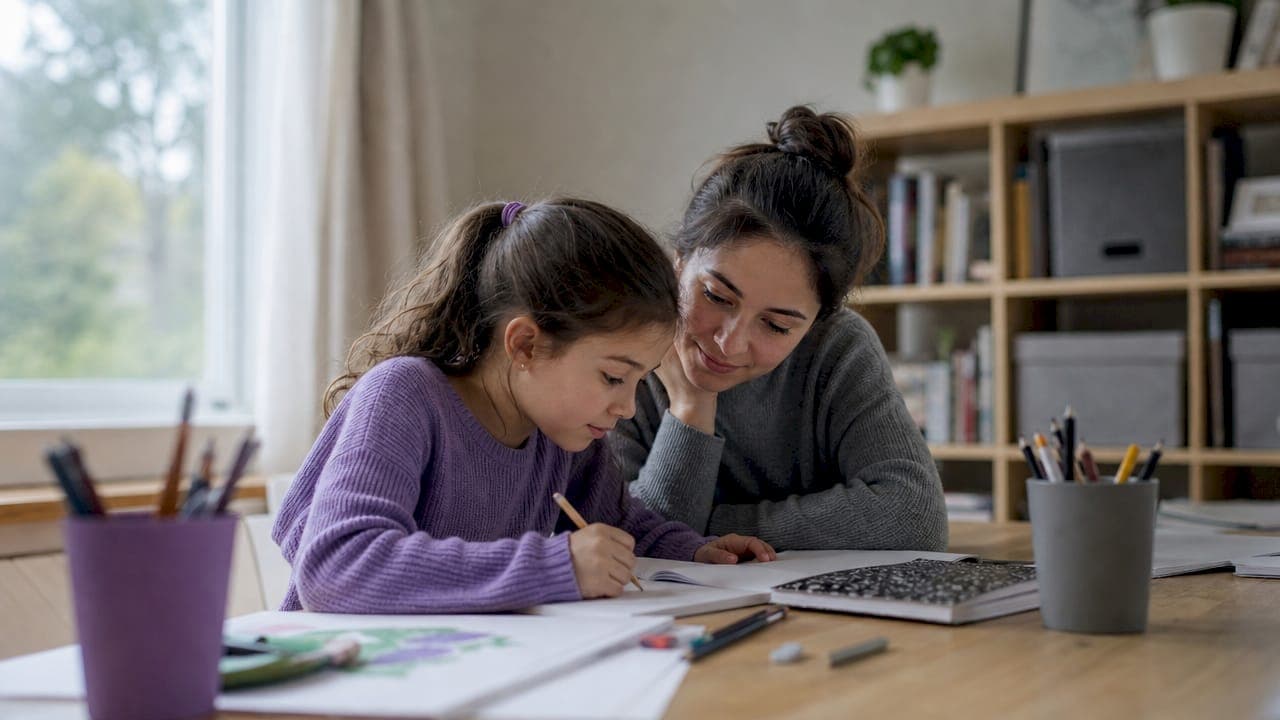
Child-focused storytelling is defined as any narrative method that places a child's imagination, agency, and active participation at the center of the story experience. This is the recognized field term in early childhood education, sometimes called child-centric storytelling in pedagogical research. Organizations like ZERO TO THREE and the National Association for the Education of Young Children confirm that storytelling builds language, empathy, and social skills when children are participants rather than passive listeners. The types of child-focused storytelling you choose shape how much a child actually grows from the experience. This guide breaks down the most effective methods, with practical tips for parents, educators, and caregivers.
1. Adventure and hero-driven storytelling
Adventure storytelling puts the child in the lead role. The child is not watching a hero from the outside. The child is the hero, making choices and driving the plot forward.
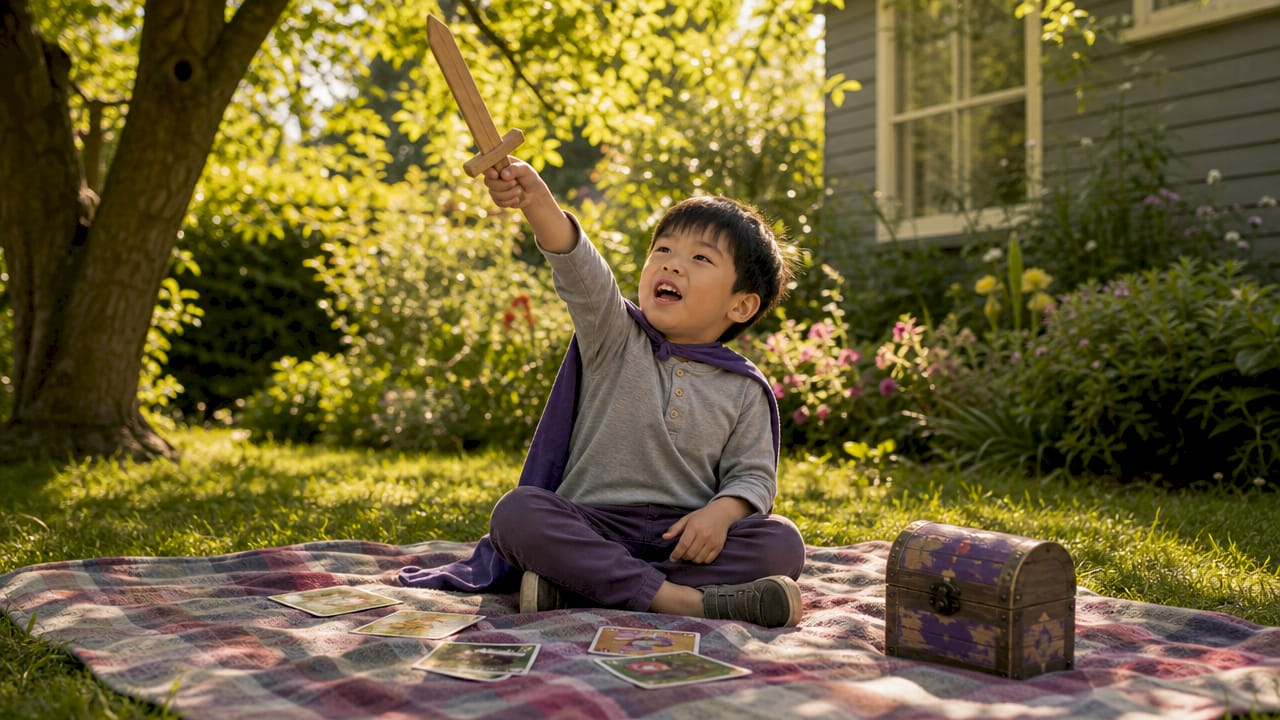
This approach has measurable results. Leadership confidence gains were reported by 91% of participants in a 2024 study of over 1,000 students engaged in personal agency adventure programs. That figure shows that when children own the narrative, they build real self-belief, not just entertainment.
Formats that work well for this style include:
- Branching books: The child chooses what happens next at key decision points, making each read-through different.
- Interactive audio stories: Apps and audio programs pause to ask the child what the hero should do, then continue based on the answer.
- Role-play games: The child acts out the story with props or costumes, physically inhabiting the hero role.
- Personalized storybooks: Books where the child's name, appearance, and interests are woven into the plot from page one.
Pro Tip: Match story complexity to your child's developmental stage. A 3-year-old needs simple two-option choices. A 7-year-old can handle branching plots with three or four possible paths.
2. Oral narrative techniques for language and social skills
Oral storytelling is the oldest child storytelling technique, and research confirms it still delivers some of the strongest developmental results. Oral narrative skills in children ages 5–8 predicted reading comprehension outcomes 3–4 months ahead in a longitudinal study of 253 children. That lead time matters because it means oral practice today directly shapes literacy tomorrow.
Educators and caregivers can use these structured oral methods:
- Narrative circles: Children sit together and each contribute one sentence to build a shared story. This builds sequencing skills and peer confidence.
- Story dramatization: Children act out a familiar tale, then retell it in their own words. The physical movement anchors the narrative in memory.
- Call-and-response storytelling: The adult leads with a phrase and children respond with a repeated refrain. This is common in African and African-American oral traditions and builds rhythm and recall.
- Sequencing cards: Visual cards showing story events are shuffled and then reordered by the child. This builds narrative logic and memory without requiring writing.
2026 pedagogical research confirms that drama, narrative circles, sequencing cards, and call-and-response are core methodologies in early childhood development. These are not supplementary activities. They are foundational.
Pro Tip: Children need oral storytelling experience to internalize story rhythm and structure before written literacy begins. Spend time on spoken stories before you ever introduce a pencil.
3. Co-created stories and collaborative storytelling
Co-created storytelling means building the story together, with the child as a genuine contributor rather than an audience member. Educator-guided story co-construction is documented to build creativity and language development when adults scaffold children's contributions rather than simply narrate for them.
The key techniques for co-creation include:
- Turn-taking: Adult says one sentence, child says the next. This keeps both parties invested and models good narrative structure naturally.
- Sentence-building prompts: Start a sentence and let the child finish it. "The dragon looked at the castle and decided to..." gives the child a launching pad without full pressure.
- Guided storytelling with open questions: Asking "What happens next?" or "How does your character feel?" turns children into co-constructors of the story. Repeated strategic questions improve both engagement and narrative retention.
- Sociodramatic play: Children assign roles, negotiate the plot, and act it out together. This is co-creation at its most natural and is especially powerful in preschool settings.
The adult's job in co-creation is to model, not perform. When you show children how a story can grow from a single idea, they start doing it on their own.
4. Talk for Writing and oral-first literacy methods
The Talk for Writing approach, developed by educator Pie Corbett, uses oral recitation of classic tales before any written literacy work begins. Children learn a story by heart through speaking, movement, and visual story maps. Visual story maps and sequence boards allow children to anchor stories mentally even when they cannot yet write.
This method works because it separates the cognitive load of storytelling from the physical act of writing. A child who knows a story in their body and voice can later transfer that structure to the page. Educators using this approach in Pre-K settings report that children develop stronger narrative confidence and more varied vocabulary than peers who go straight to written exercises.
The practical steps are straightforward. Read a classic tale aloud multiple times. Create a simple picture map of the story's key events. Have children retell the story using the map as a guide. Then invite them to change one element, a character, a setting, or an ending, and retell the new version. Classic tales and oral recitation help children internalize story structure before writing begins.
5. Technology and AI-supported personalized storytelling
AI-supported storytelling is the newest category of child-centric narrative methods, and the early research is striking. A 2026 experimental study of 40 children found that AI-personalized stories reduced the creativity gap between children by 83.5%. That means children who previously showed lower creative output performed much closer to their peers when the story was built around their own input and identity.
Here is a comparison of key storytelling technology formats:
| Format | Interactivity | Best age range | Key benefit |
|---|---|---|---|
| AI-generated personalized books | Low to medium | 2–8 years | Child sees themselves as the hero |
| Interactive audio apps | High | 4–10 years | Real-time choice and response |
| Digital sequencing tools | Medium | 5–9 years | Builds narrative logic visually |
| Immersive audiobooks with sound design | Low | 3–8 years | Deepens imagination and focus |
Technology works best when an adult is present. An AI-generated book read together creates conversation. An app used alone creates screen time. The difference is adult participation, not the technology itself.
Pro Tip: Combine any digital storytelling tool with at least one follow-up question after the story ends. "What would you have done differently?" keeps the child's mind active long after the screen is off.
6. Comparing storytelling methods by setting and goal
Not every narrative style fits every situation. Choosing the right approach depends on your setting, the child's age, and what you want to build.
| Method | Best setting | Developmental focus | Materials needed |
|---|---|---|---|
| Hero-driven adventure stories | Home or classroom | Confidence, decision-making | Branching books or personalized storybooks |
| Oral narrative circles | Classroom or group care | Language, sequencing, peer skills | No materials required |
| Co-created storytelling | Home or small group | Creativity, vocabulary, bonding | None or simple props |
| Talk for Writing | Pre-K classroom | Literacy foundation, story structure | Picture story maps |
| AI-personalized storybooks | Home | Identity, engagement, imagination | Device or printed book |
| Story dramatization | Classroom or play group | Memory, empathy, social skills | Props or costumes optional |
Child-centered storytelling focuses on children as capable learners and builds empathy through concrete, strength-based narratives. That framing matters when you choose a method. Avoid approaches that position the child as a passive recipient of a lesson. The best narrative styles for kids treat them as capable, creative people from the first page.
Balancing technology with traditional methods is not complicated. Use oral and co-created storytelling as your daily foundation. Add technology as a supplement, not a replacement. A child who hears three oral stories a week and reads one personalized digital book a week gets the full range of benefits.
Key takeaways
Child-focused storytelling works best when children are active participants, not passive listeners, across oral, co-created, and personalized narrative formats.
| Point | Details |
|---|---|
| Hero-driven stories build confidence | 91% of students in adventure programs reported leadership confidence gains in a 2024 study. |
| Oral narrative predicts literacy | Oral skills in ages 5–8 predicted reading outcomes 3–4 months ahead in a 253-child study. |
| Co-creation needs adult scaffolding | Repeated questions like "What happens next?" turn children into active story co-constructors. |
| AI storytelling narrows creativity gaps | A 2026 study found AI-personalized stories reduced creativity differences between children by 83.5%. |
| Balance technology with tradition | Use oral and co-created methods daily; add digital tools as a supplement, not a substitute. |
What I've learned from watching kids own their stories
The biggest mistake I see parents and educators make is treating storytelling as a performance. They prepare the story, deliver it well, and expect the child to absorb it. That model works for entertainment. It does not work for development.
The children who grow the most from storytelling are the ones who feel like the story belongs to them. That happens when you stop and ask what they think should happen next. It happens when you let them change the ending, even if it makes no logical sense. It happens when the character in the book looks like them, talks like them, and faces the same kind of day they just had.
Storytelling that focuses on strengths and agency produces better outcomes than storytelling that positions children as needing to be taught a lesson. Kids know when they are being lectured through a story. They tune it out. But when a story treats them as capable and interesting, they lean in.
Imperfect storytelling beats polished storytelling every time. A parent stumbling through a made-up story at bedtime, asking their child to fill in the gaps, does more for that child's imagination than a perfectly produced audiobook listened to alone. The relationship is the medium. The story is just the vehicle.
— Jason
Your child as the hero, not a placeholder
Every method covered here shares one core idea: the child belongs at the center of the story. Adventuresofbook takes that idea literally. Upload a photo of your child, add their name and a few personal details, and the platform generates an original 13-page illustrated storybook where your child is the actual hero, with illustrations built from their real likeness, not a generic character with a name swapped in.
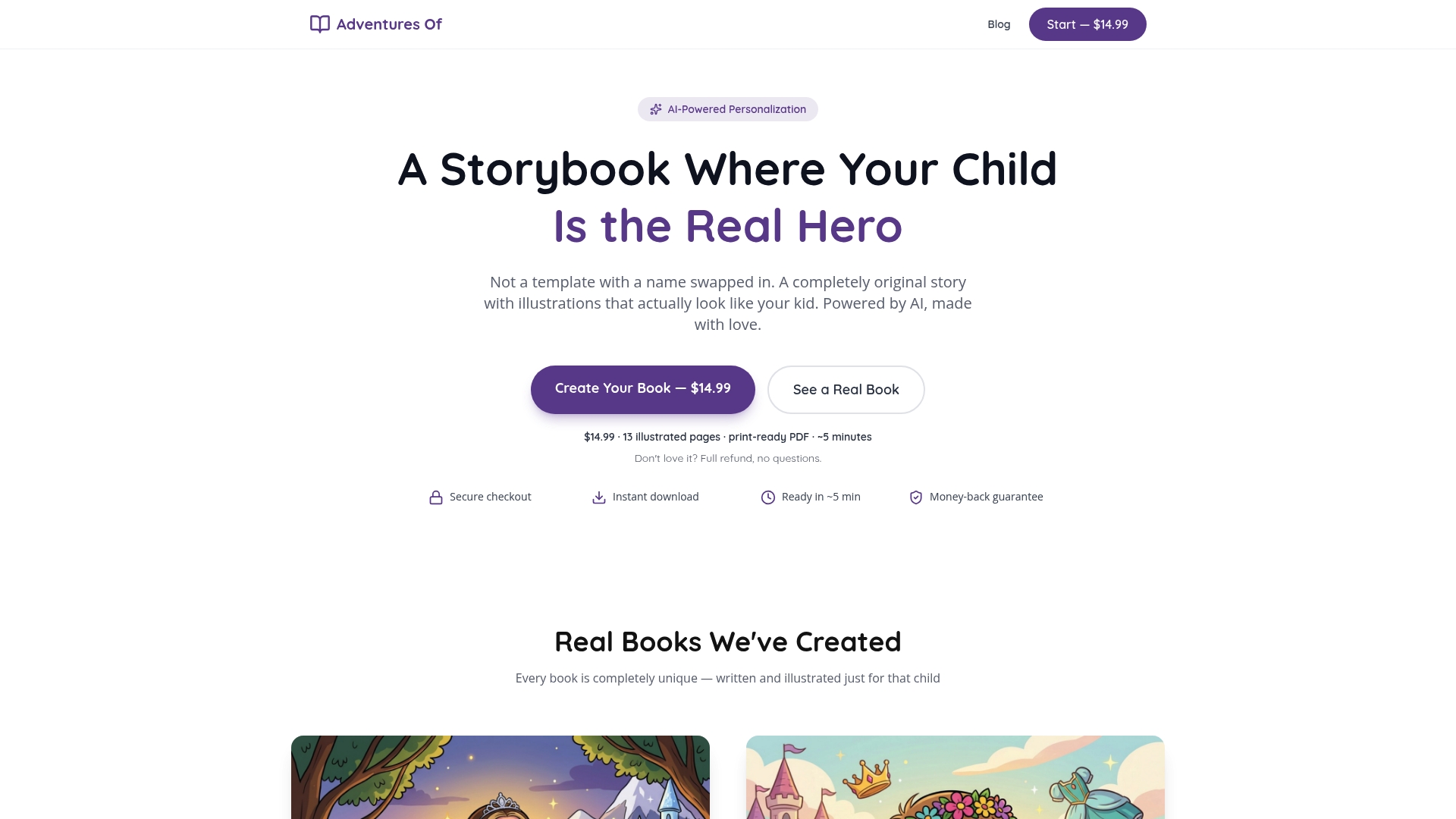
The whole process takes about five minutes and costs $14.99 as a one-time purchase. You get an 8.5x8.5 print-ready PDF you can download immediately or send to print. There are no templates and no recycled plots. Every story is original. If you want to see what a personalized children's book built around your specific child looks like, Adventuresofbook is worth five minutes of your time. A 7-day refund policy means there is no risk in trying it.
FAQ
What is child-centric storytelling?
Child-centric storytelling is a narrative approach that centers the child's agency, strengths, and imagination rather than positioning them as a passive audience. It treats children as capable participants who shape the story, not just receive it.
What types of child-focused storytelling work best for toddlers?
Oral narrative techniques like call-and-response, simple sequencing cards, and co-created turn-taking stories work best for toddlers. These methods require no materials and build language and memory through repetition and participation.
How does interactive storytelling for children support literacy?
Oral narrative skills in children ages 5–8 predicted reading comprehension outcomes 3–4 months ahead in a longitudinal study of 253 children. Active participation in storytelling builds the phonological awareness and sequencing logic that reading requires.
Can AI storytelling tools genuinely help children's creativity?
A 2026 study of 40 children found that AI-personalized stories reduced the creativity gap between children by 83.5%. The key is pairing the technology with adult participation rather than using it as a solo screen activity.
What is the Talk for Writing method?
Talk for Writing is an oral-first literacy approach where children learn stories through speaking, movement, and visual story maps before any written work begins. It separates the cognitive challenge of storytelling from the physical act of writing, building stronger narrative confidence in early learners.