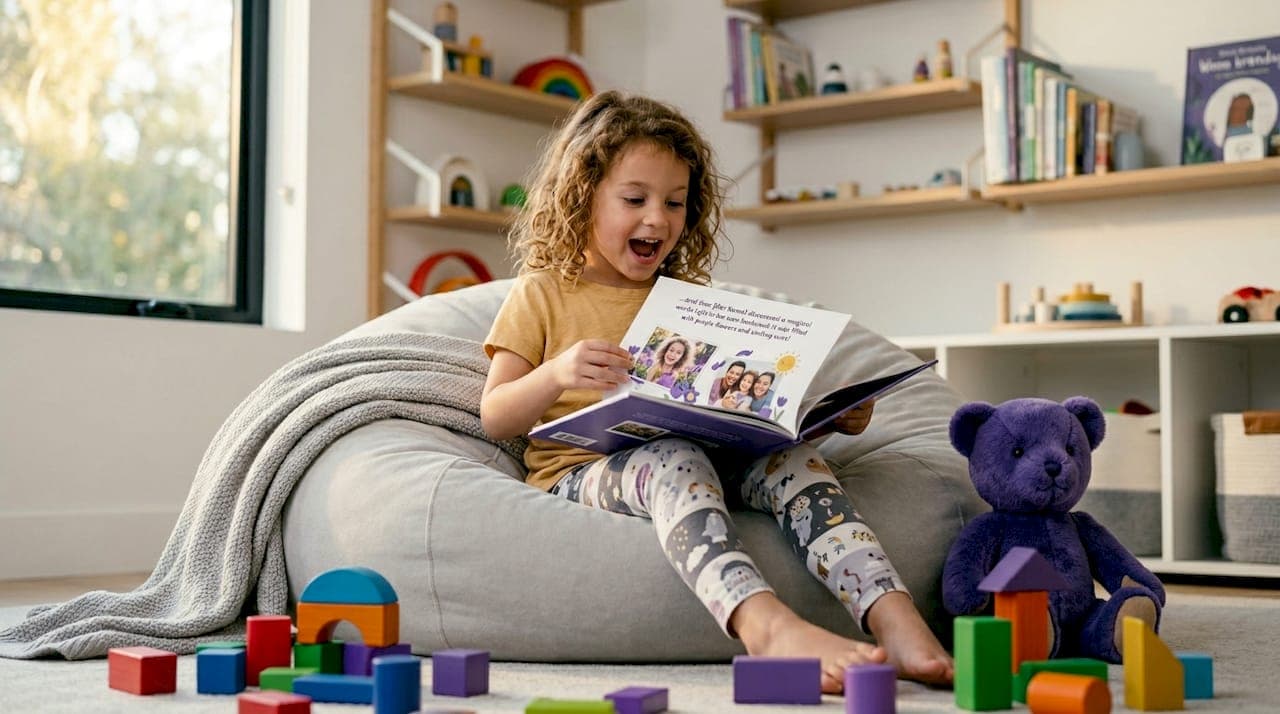
Most parents think personalization means typing in a child's name and calling it done. That's not personalization. That's mail merge. The actual role of photo personalization in storybooks goes far deeper: it puts your child's real face, real likeness, and real sense of self into a story where they genuinely belong. The difference between a name swapped into a template and a book built around your child's actual photos is the difference between being mentioned and being seen. This article breaks down what real photo personalization does for children's imagination, confidence, and reading engagement.
Table of Contents
- Key Takeaways
- How photo personalization shapes imagination and engagement
- Photo-personalized books versus name-only template books
- What makes photo personalization actually work in storytelling
- Tips for parents and educators using photo storybooks
- My take: what most people still get wrong about photo personalization
- Create your child's personalized storybook with Adventures Of
- FAQ
Key Takeaways
| Point | Details |
|---|---|
| Photo personalization goes beyond names | Using real photos creates genuine self-recognition, not just name familiarity. |
| Engagement and literacy both improve | Personalized reading can boost comprehension scores by 40% compared to non-personalized books. |
| Template books have real limits | Name-swap books rarely improve emotional connection the way photo-based books do. |
| Story quality matters as much as photos | Original narratives built around a child's personality outperform generic plots with a photo dropped in. |
| AI can speed creation without losing likeness | AI-generated illustrations from real photos produce unique images that match the child's actual appearance. |
How photo personalization shapes imagination and engagement
There is a psychological concept called "self-recognition," and it kicks in early. Children as young as 18 months can identify themselves in a mirror. When a storybook reflects that same recognition back to them, something clicks. Personalized books act as mirrors where the child feels seen and understood, which strengthens self-confidence and deepens their connection to the narrative.
This is not just feel-good theory. The impact of personalized photos in books shows up in how long children stay engaged, how often they request the book again, and how much of the story they actually retain. A child reading about "Emma" solving a problem is one experience. A child seeing their own face on the character solving that problem is a completely different level of investment.
"Visual storytelling works best when images reflect the viewer's own world, making stories relatable and meaningful." — Piktochart, on visual storytelling
The storytelling depth that comes from photo personalization also builds empathy. When children see familiar settings, their own expressions, and their actual appearance woven into a narrative, they process the story differently. They project themselves into the character's decisions. They feel what the character feels. That emotional immersion is what turns a bedtime book into a confidence-building experience.
Pro Tip: When selecting a photo-personalized book, choose one that uses your child's photos throughout the story rather than only on the cover. The role of images in storytelling is greatest when they appear consistently across the narrative arc, not just as decoration.
Photo-personalized books versus name-only template books
This is where a lot of parents get tripped up, so it is worth being direct about the difference.
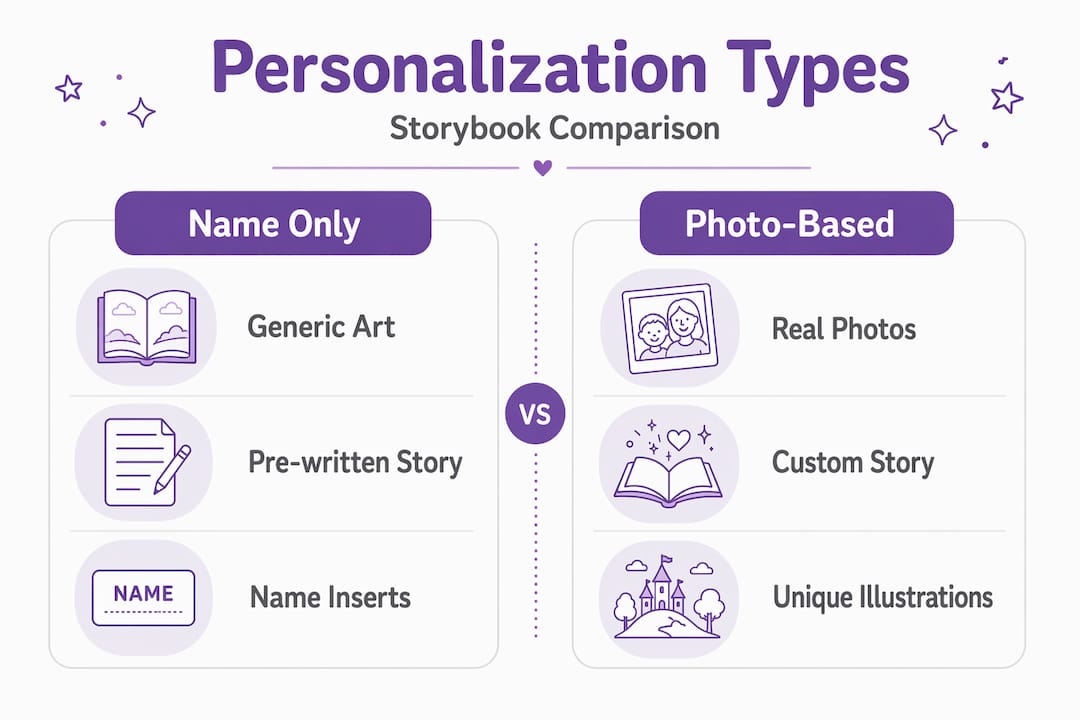
A name-only template book takes a pre-written story and pre-drawn characters, then swaps in a name at certain points. The character does not look like your child. The story was not written for your child. The art was created for a fictional average kid, not yours. Template books that only swap names generally do not improve engagement or emotional connection as effectively as photo-personalized books.
Photo-personalized storybooks work differently. The illustrations are created from or directly reflect your child's actual photos. The story is built around their details. The result is a book where your child is genuinely the hero, not a placeholder character wearing their name tag.
Here is a side-by-side comparison:
| Feature | Name-only template book | Photo-personalized book |
|---|---|---|
| Character appearance | Generic illustrated character | Based on child's real photos |
| Story originality | Pre-written, reused plot | Original story per child |
| Emotional connection | Moderate | High |
| Reading re-engagement | Lower repeat request rate | Children often request repeatedly |
| Typical price range | $20 to $40 | $15 to $50+ |
| Literacy impact | Limited | Measurable improvement in engagement |
The benefits of photo personalization are most obvious when you watch a child flip through each type. With a template book, they may smile at their name. With a photo-personalized book, they stop on every page and say, "That's me."
A few things to look for when evaluating any photo-personalized storybook:
- Does the story use the child's photos in illustrations throughout, not just on one page?
- Was the story written specifically for this child, or is it a shared plot with photos dropped in?
- Does the art style match and integrate the real photo, or does the photo feel pasted on top?
- Do parents report higher engagement and repeated reading with this product?
These questions cut through the marketing quickly.
What makes photo personalization actually work in storytelling
Not all photo-personalized books are equal. The quality of the storytelling technique matters as much as the photos themselves. Here is what separates a genuinely effective personalized storybook experience from one that just looks good on the cover.
1. The story is original, not borrowed
The best photo-driven narratives are written specifically for your child, based on their details, personality, and interests. Original stories using real photos better encourage reading motivation and imaginative play. A story written for a child named Maya who loves dinosaurs and lives near the ocean will resonate differently than a generic adventure story with Maya's photo attached.
2. Sensory and emotional details are layered in
Photos alone are not enough. The best customized storybook photos are paired with narrative language that adds depth. Sensory details in captions and text ground the reader in the moment, describing sounds, textures, and emotions that extend what the image shows. A photo of a child at the beach becomes more powerful when the text describes the feel of warm sand and the sound of waves.
3. Illustrations are generated from real photos, not stock art
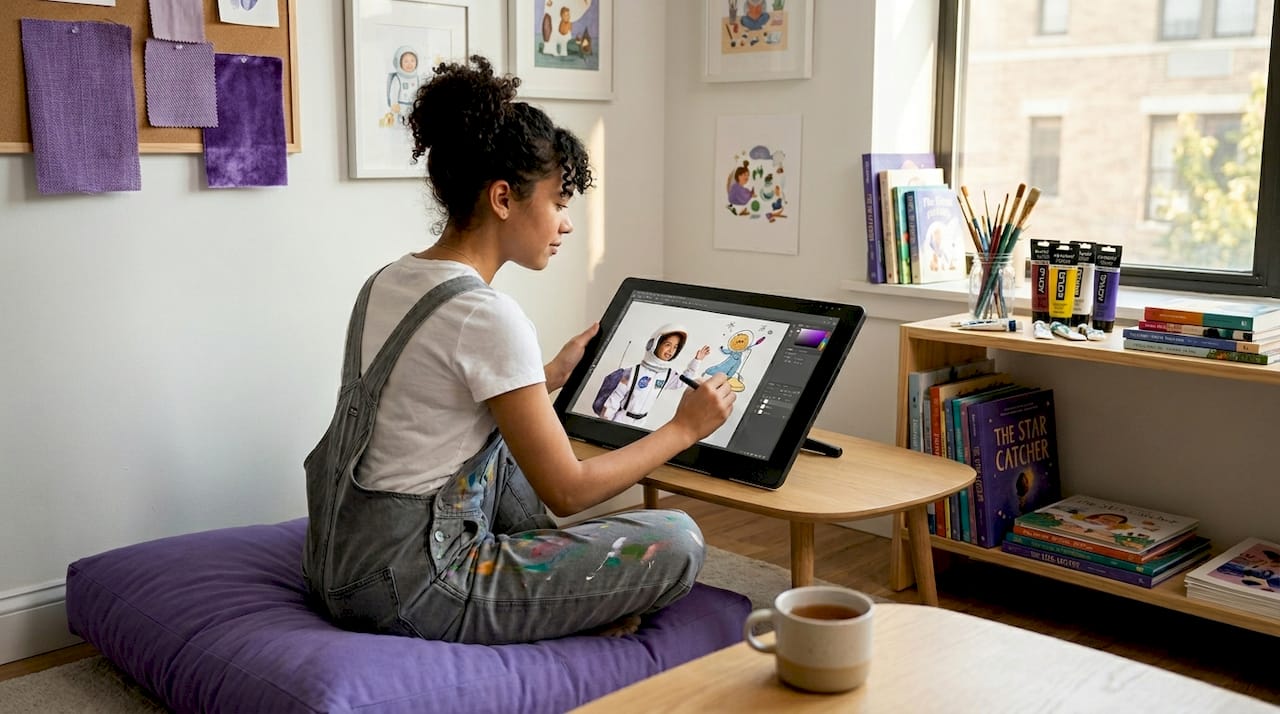
There is a clear production quality divide here. Some services use generic stock characters and paste a child's face onto them. Others use AI-generated art from uploaded photos to create unique illustrations that actually resemble the child. The latter produces a book where the character looks like your kid, moves like your kid, and fits naturally into the visual story.
4. The photo narrative has internal logic
Photographic narratives rooted in real experience carry emotional specificity that resonates with child readers. When the story arc uses the child's actual details in a meaningful way rather than as surface decoration, children feel the story was made for them. Because it was.
Pro Tip: If you are evaluating an AI-powered personalized book service, ask to see sample pages from a completed book before purchasing. Strong services will show you how the illustrations integrate real photo features rather than just offering a generic preview.
Tips for parents and educators using photo storybooks
Once you understand what to look for, the next step is knowing how to use personalized photo storybooks effectively. Here is what actually moves the needle for children's engagement and confidence:
-
Pick books where your child is the true hero. Not a side character, not a companion to a pre-existing mascot. The story should revolve around your child, using their photos as the basis for the main character's look and personality.
-
Involve your child in the creation process when possible. Some services let you input details about your child's interests, favorite places, or personal quirks. The more specific those inputs, the more your child will recognize themselves in the story.
-
Use the book as a reading confidence tool. Children who struggle with reading motivation often engage more readily with books that feature themselves. Photo personalization in children's literature gives reluctant readers a reason to pick up the book.
-
Time it for milestones. A personalized photo storybook gifted at a birthday, first day of school, or a major life transition carries extra weight. The story becomes associated with that memory.
-
Read it together more than once. Children often request these books repeatedly, enjoying seeing familiar faces and settings featured. Each re-read deepens comprehension and builds positive associations with reading as an activity.
-
For educators: A personalized book can serve as a classroom icebreaker or an empathy tool. Sharing a child's personalized storybook with a class teaches other children to recognize and value individual stories.
My take: what most people still get wrong about photo personalization
I have seen a lot of parents buy a name-swap template book, hand it to their kid, and describe it as a personalized book. The child smiles politely. The book gets shelved after two reads. That is not a knock on those parents; the marketing around template books is genuinely misleading. But the result is predictable.
What I have seen go differently is when a child opens a book and sees their own face looking back at them from page one. Not a cartoon approximation. Not a character with their name in a speech bubble. Their actual face, rendered into an illustration that fits naturally into a story written about them. That reaction is not subtle. Kids will carry that book around for days.
The thing most people miss is that the illustration quality and story originality are not bonus features. They are the whole point. A photo dropped onto a generic character is not photo personalization. It is photo decoration. True photo personalization means the story and the art were both built from the child up, using their photos as the actual source material.
Adventures Of takes this seriously. Their approach generates both the story and the illustrations from the photos you upload, so the character in the book actually looks like your child. That distinction matters more than most product pages will tell you.
— Jason
Create your child's personalized storybook with Adventures Of
If this article has clarified what real photo personalization looks like, Adventures Of is worth checking out. It is one of the few services that generates both the story and the illustrations from your child's actual uploaded photos. No templates. No shared characters. Every book is original.
You upload photos of your child along with some details about their interests and personality. The AI builds an original story and creates 13 illustrated pages where the character actually looks like your kid. The whole process takes about five minutes. The result is an 8.5x8.5 print-ready PDF you can download immediately or have printed. One book, one child, one original story. The price is $14.99 as a one-time purchase, and there is a seven-day refund policy if you are not satisfied. You can start creating your book right now or browse examples of books starring real kids to see what the final product looks like.
FAQ
What is the role of photo personalization in storybooks?
Photo personalization places a child's real likeness into a book's illustrations and story, making them the genuine hero rather than a named placeholder. This creates stronger emotional connection, better reading engagement, and measurable gains in self-confidence.
How is a photo-personalized book different from a name-swap book?
A name-swap book inserts your child's name into a pre-written story with generic art. A photo-personalized book uses your child's actual photos to generate custom illustrations and an original story built specifically around them.
Do personalized photo storybooks actually improve reading engagement?
Yes. Personalized aspects in reading books have been shown to improve comprehension scores by 40% compared to non-personalized books, driven by increased motivation and personal connection to the text.
What should I look for when choosing a photo-personalized storybook?
Look for a service that creates original stories per child, generates illustrations from the actual uploaded photos rather than stock characters, and shows consistent use of the child's likeness throughout the book rather than only on the cover.
Can photo storybooks help children who are reluctant readers?
Absolutely. Photo personalization in children's literature gives reluctant readers a direct personal reason to engage with the book. When children see themselves as the main character, they are far more likely to request the book again and stay focused during reading.