
Personalization in literacy is defined as the practice of tailoring reading content, format, and instruction to match each child's individual interests, strengths, and learning needs. Research published in 2026 confirms that this approach does more than make reading feel fun. It creates what researchers call a "symbolic mirror," a story or learning experience that reflects the child back to themselves, producing measurably stronger emotional engagement and motivation. For parents and educators looking to build real reading habits, understanding how personalized learning in literacy works is the most direct path to results.
How does personalization improve emotional engagement in reading?
Personalized content produces stronger emotional responses in children than generic content. A 2026 study published in F1000Research found that children who read personalized fables scored significantly higher on emotional engagement measures than children who read non-personalized versions. The personalized group averaged a score of 34.24 compared to 29.56 for the non-personalized group, a statistically significant difference with a moderate effect size (d=0.41). That gap matters because emotional engagement is the gateway to sustained reading practice.
The mechanism behind this is the symbolic mirror effect. When a child sees their name, their interests, or their physical likeness in a story, the brain processes the narrative as personally relevant. That relevance triggers deeper attention and stronger memory encoding. The child is not just reading a story. They are reading about someone who feels like them.
"Minimal personalization suffices to increase emotional involvement. Excessive detail can feel artificial to children." — F1000Research, 2026
This finding has a practical implication that most parents miss. You do not need a highly elaborate, hyper-detailed custom story to get results. A child's name, a favorite animal, or a familiar setting is often enough to create that mirror effect. Piling on too many personal details can actually make the story feel forced rather than genuine.
Pro Tip: When choosing or creating a personalized book for your child, prioritize one or two meaningful personal details over a long list of customizations. Specificity beats quantity every time.
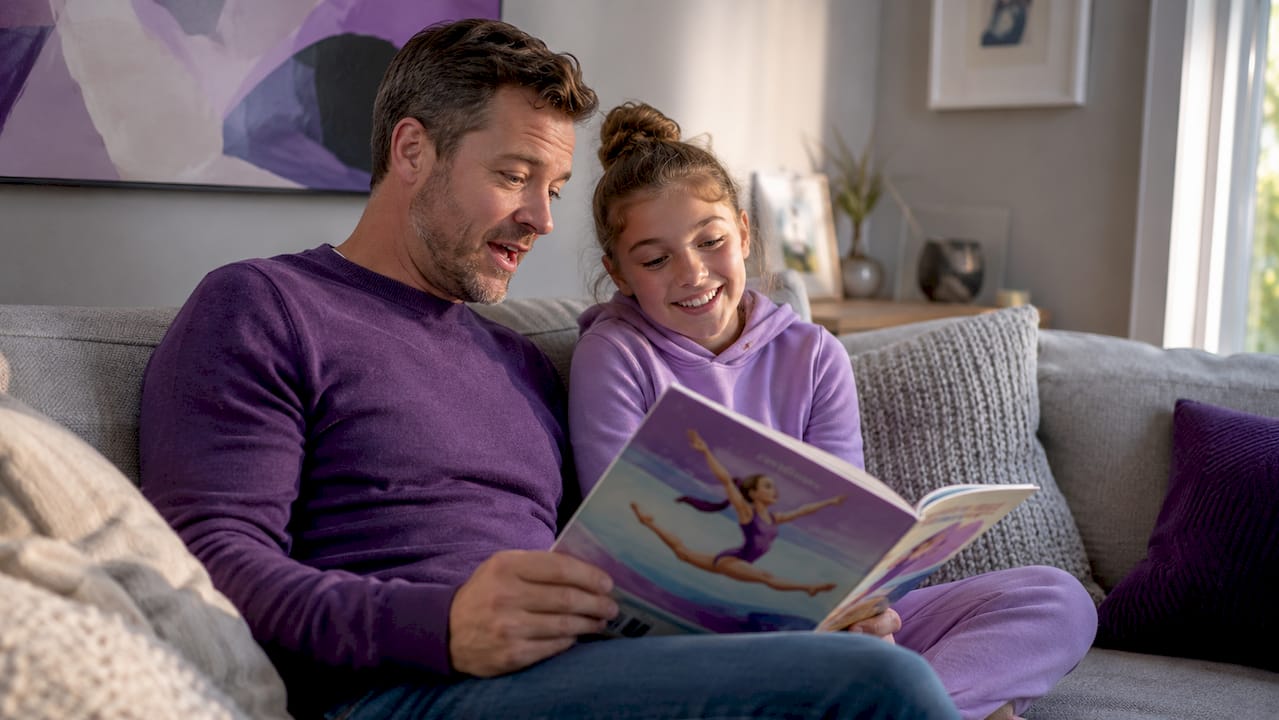
The impact of personalization on reading goes beyond a single session. Children who feel emotionally connected to a story are more likely to ask to read it again, to talk about it, and to seek out similar books. That cycle of re-engagement is where real literacy growth happens.
How does personalization support neurodivergent readers?
Personalization addresses more than content. It also covers the physical experience of reading itself. A 2026 Amazon Kindle survey found that 30% of neurodivergent readers read for longer periods when given access to personalized reading tools, and 32% reported gaining confidence. Nearly two-thirds of neurodivergent readers reported abandoning books without such tools. That is a significant dropout rate driven by a solvable problem.
Format personalization for neurodivergent readers typically includes:
- Adjustable font size and typeface to reduce visual crowding
- Background color options to lower contrast sensitivity and eye strain
- Flexible reading pace controls for audio-supported text
- Low-visibility settings that allow children to adjust without drawing attention from peers
That last point matters more than it might seem. An accessibility director quoted in the 2026 Kindle survey noted that format barriers addressed quietly give neurodivergent readers independence without social exposure. A child who can adjust their reading settings privately is far more likely to actually use those settings. Removing the social cost of accommodation removes a major barrier to reading.
Personalization in this context is not about lowering expectations. It is about removing the friction that prevents a capable reader from accessing the text in the first place. Once the format barrier is gone, the child can focus on comprehension and vocabulary growth.
Pro Tip: If your child avoids reading without a clear reason, try adjusting the format before assuming the content is the problem. Font, background color, and pacing adjustments can make a bigger difference than switching books.
What personalization strategies actually build literacy skills?
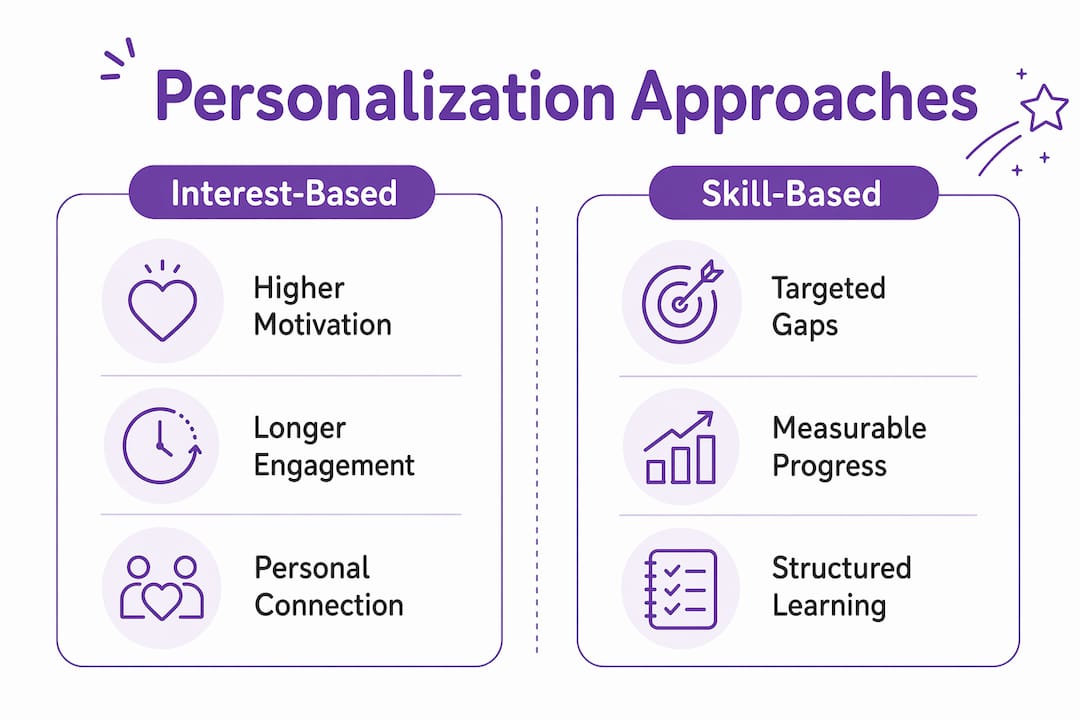
The most effective personalized literacy strategies combine genuine interest with genuine challenge. Interest-based content can include complex vocabulary to promote growth. A child obsessed with dinosaurs can read a text about paleontology that stretches their vocabulary. The interest keeps them in the seat long enough for the hard words to stick. Simplifying content to match interest is a common mistake. Matching interest while maintaining rigor is the goal.
Programs aligned with the Science of Reading take this further. Effective personalization targets specific skill gaps and adapts pathways in real time rather than applying a single approach to all children. A child struggling with phonemic awareness needs a different path than a child who decodes fluently but reads without comprehension. Personalization without this diagnostic layer is just preference, not instruction.
The table below summarizes four common personalization approaches and what each one delivers in practice.
| Approach | Expected literacy outcome |
|---|---|
| Interest-matched text selection | Higher motivation and longer reading sessions |
| Adaptive skill-gap targeting | Faster progress on specific decoding or comprehension gaps |
| Format personalization (font, pace, color) | Reduced avoidance, improved confidence for diverse learners |
| One-on-one tutoring with tailored feedback | Greater reading gains over time versus group instruction |
One-on-one tutoring deserves specific attention. An analysis of 16,629 tutoring sessions found that one-on-one instruction delivers more personalized motivation and engagement than two-on-one formats, leading to higher reading gains over time. The difference is not just about attention. It is about the tutor's ability to read the child's responses in real time and adjust immediately.
Pro Tip: When evaluating a personalized literacy program, ask whether it tracks skill gaps or just tracks preferences. Preference tracking alone will not close reading gaps.
Dynamic personalization goes one step further. Combining stated interests with observed engagement data creates a reading profile that evolves with the child. A child who loved space stories at age five may be ready for science fiction with complex themes at age eight. The best customized literacy programs update their approach as the child grows rather than locking in an early profile.
Practical ways to bring personalized literacy home
Parents and educators do not need a formal program to apply these principles. The most practical starting point is observation. Watch what your child gravitates toward, what questions they ask, and what topics they bring up unprompted. Those signals tell you where their genuine curiosity lives, and that is where personalized reading should begin.
Here are concrete ways to put personalized strategies for literacy into practice:
- Match books to current obsessions. If your child is fixated on sharks, find nonfiction and fiction titles about ocean life. The topic pulls them in. The reading does the work.
- Use personalized storybooks for emotional connection. Books that feature your child's name, appearance, or interests create the symbolic mirror effect that research links to stronger engagement. Adventuresofbook generates original AI-created stories with illustrations based on uploaded photos of your child, producing a book that genuinely looks like them rather than a generic character with a name swap.
- Offer format choices. Let your child choose between reading independently, listening to an audiobook, or following along with text and audio together. Format autonomy increases buy-in.
- Rotate difficulty intentionally. Alternate between books slightly above your child's current level and books they can read with ease. The easier books build fluency and confidence. The harder ones build vocabulary and comprehension.
- Track what they finish versus what they abandon. Completion is a signal. If your child consistently stops a book partway through, the content or format may not be the right fit yet.
For parents who want to start with a personalized children's book that goes beyond a name-swap template, Adventuresofbook creates each story from scratch using the child's actual photo and personal details. The process takes about five minutes and produces a print-ready PDF. It is a direct application of the symbolic mirror principle in a format children can hold and revisit.
Key takeaways
Personalization in literacy works because it connects reading to what a child already cares about, then builds skill within that connection rather than despite it.
| Point | Details |
|---|---|
| Symbolic mirror effect | Minimal personalization, like a name or interest, significantly boosts emotional engagement. |
| Neurodivergent readers benefit most | 32% gain confidence and 30% read longer with personalized format tools. |
| Rigor must accompany interest | Interest-based content should still include vocabulary and comprehension challenges. |
| One-on-one instruction outperforms group | Analysis of 16,629 sessions shows individual tutoring produces higher reading gains. |
| Personalization should evolve | Combining stated preferences with observed behavior creates a reading profile that grows with the child. |
What I've learned about personalization after watching it work and fail
I have seen personalization used as a genuine teaching tool and as a shortcut that actually slows kids down. The difference is almost always intent.
When a parent picks a book because their child loves robots, and then sits with that child and asks real questions about the story, that is personalization working as a motivational gateway. The interest got the child to the table. The conversation did the literacy work. That combination is hard to beat.
Where I see it go wrong is when personalization becomes a substitute for challenge. A child who only ever reads books perfectly matched to their current level and current interests never gets the productive struggle that builds real reading skill. Personalization that fosters independence is the goal. Personalization that removes all friction is a crutch.
The other pitfall I want to name directly is over-reliance on any single tool. A personalized book, an adaptive app, or a one-on-one tutor each plays a role. None of them replaces the adult in the room who knows the child well enough to notice when something is clicking and when it is not. Technology and tailored content are inputs. The relationship is the engine.
My honest advice: start with what your child loves, push slightly past their comfort zone with the content, and keep adjusting as they grow. Personalization is not a setting you configure once. It is an ongoing read of who your child is becoming as a reader.
— Jason
A personalized book your child will actually recognize themselves in
Generic picture books have their place. But when you want a child to feel the symbolic mirror effect that research links to stronger reading engagement, the book needs to actually look like them.
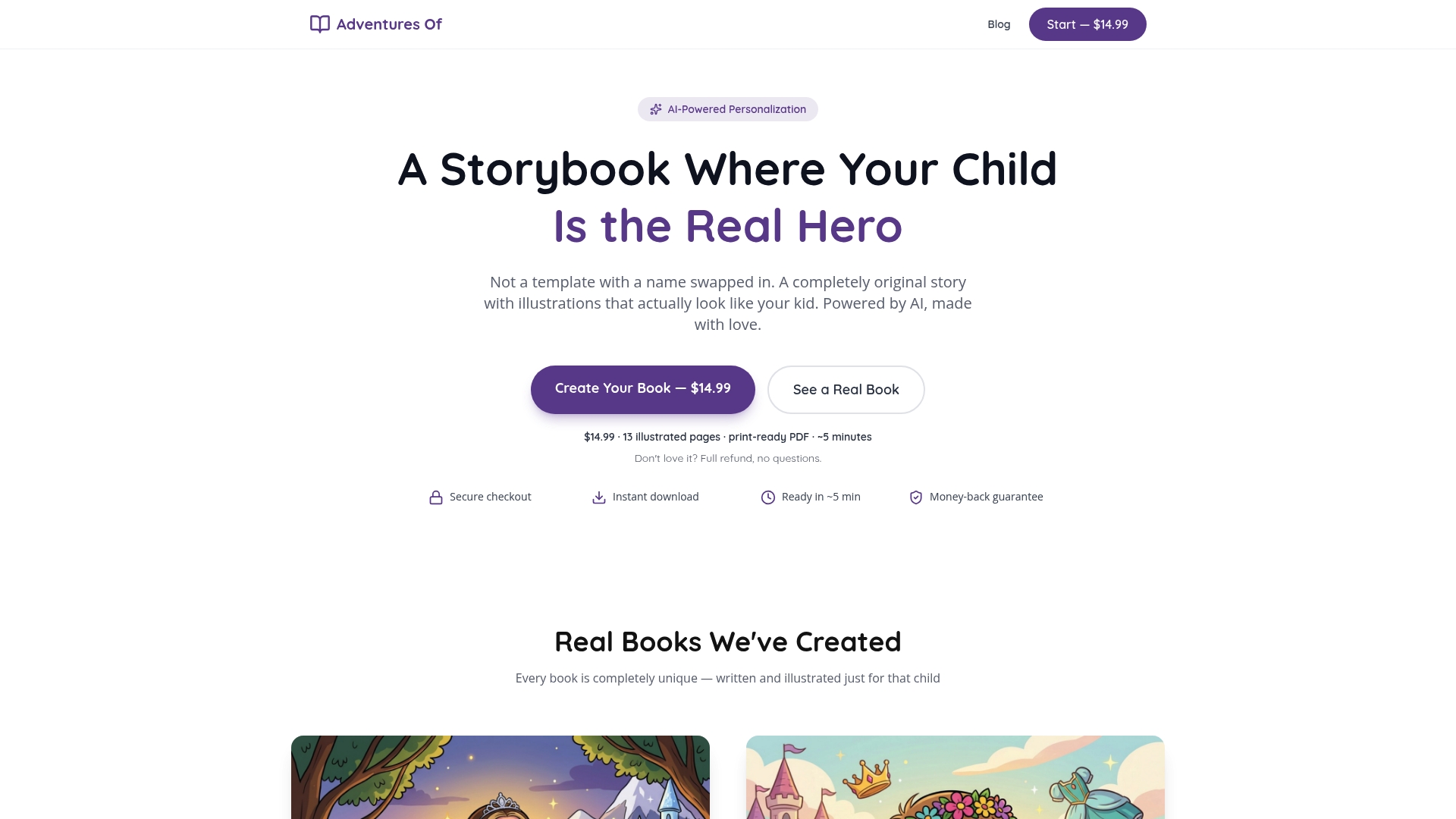
Adventuresofbook creates original storybooks using AI, built from your child's uploaded photos and personal details. Each book is a completely original story with 13 illustrated pages where the main character looks like your child, not a template character with a swapped name. The process takes about five minutes, costs $14.99, and delivers a print-ready 8.5x8.5 PDF you can download immediately or send to print. There is a 7-day refund policy if it is not what you expected. See the full range of personalized storybooks or go straight to create your child's book.
FAQ
What is the role of personalization in literacy development?
Personalization in literacy matches reading content, format, and instruction to each child's individual interests and skill level. Research shows this approach produces stronger emotional engagement and higher reading motivation compared to generic instruction.
How does personalized reading help neurodivergent children?
A 2026 Amazon Kindle survey found that 30% of neurodivergent readers read longer and 32% gain confidence when given personalized format tools like adjustable fonts and background colors. Nearly two-thirds abandon books without these accommodations.
Can personalization replace structured literacy instruction?
Personalization works best alongside structured instruction, not instead of it. Programs aligned with the Science of Reading use personalization to target specific skill gaps while maintaining grade-level rigor and vocabulary expectations.
How much personalization does a child actually need?
Research on the symbolic mirror effect shows that minimal personalization, such as a child's name or a favorite interest, is enough to significantly increase emotional engagement. Excessive detail can feel artificial and reduce the effect.
What is the difference between interest-based and adaptive personalization?
Interest-based personalization selects content around a child's preferences. Adaptive personalization adjusts the difficulty and format in real time based on observed performance. The most effective customized literacy programs combine both approaches.