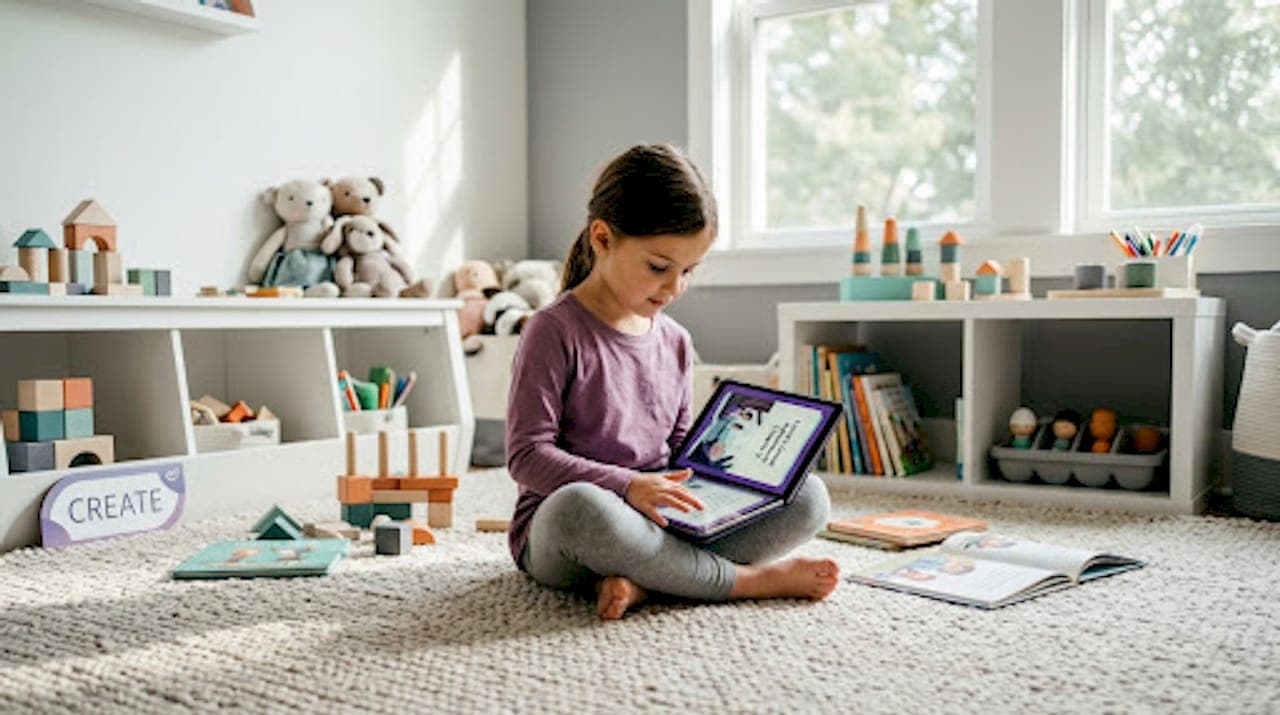
Digital art in storybooks is defined as the use of computer-generated or digitally rendered illustrations that work alongside text to build narrative meaning, support comprehension, and sustain a child's engagement across every page. This is also called digital illustration or computational visual storytelling in academic and publishing contexts. The role of digital art in storybooks goes far beyond decoration. Research published in 2026 shows that cross-page visual consistency in character, time, space, event, style, and theme is what separates a genuinely immersive storybook from one that simply looks good on a single page. For parents, educators, and anyone choosing books for children, understanding what good digital illustration actually does changes how you evaluate and use these books.
How does digital art ensure narrative coherence in storybooks?
Narrative coherence is the thread that holds a story together across pages. When a child turns from page three to page four, the character should look the same, the setting should feel continuous, and the mood should carry forward. A 2026 Springer Nature review introduced a six-dimensional framework for evaluating storybook consistency: time, space, character, event or plot, style, and theme. That framework matters because most readers and parents only notice style inconsistency, the obvious kind where a character's hair color changes. The deeper failures, like a scene that contradicts the established timeline or a theme that shifts without narrative reason, are just as damaging to a child's comprehension.
Maintaining all six dimensions is genuinely difficult, especially in AI-generated storybooks. A character's face might look consistent in isolation but shift subtly in expression, proportion, or clothing across a 13-page arc. Event continuity is even harder: the story must show cause and effect visually, not just in the text. According to the same Springer Nature survey, AI-illustrated storybooks require explicit editorial checks on all six dimensions, not just stylistic consistency, to deliver high-quality narrative coherence. That is a design and editorial problem, not just a technology problem.
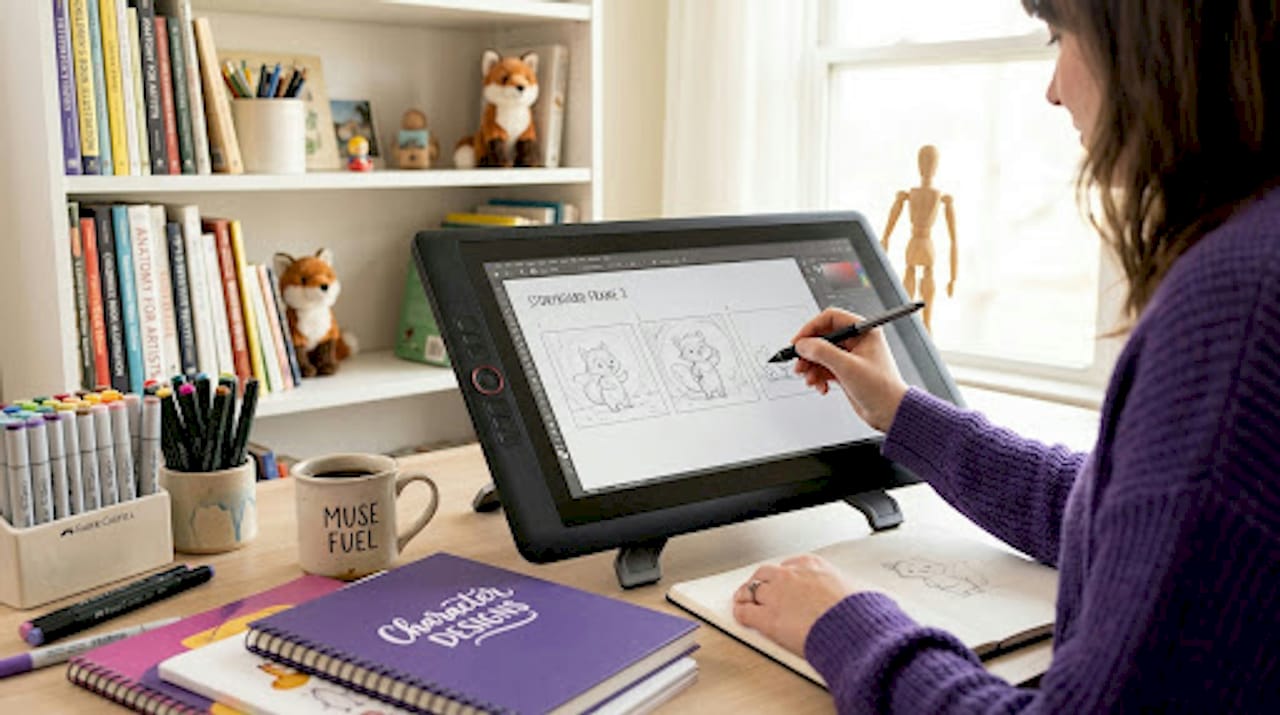
For parents evaluating digital storybooks, the practical test is simple. Flip through the book without reading the text. Ask whether the character looks like the same person on every page. Check whether the setting makes spatial sense. Notice whether the emotional tone of the illustrations matches the story's arc. If any of those feel off, the book has a coherence problem that will affect how your child processes the story.
Pro Tip: When previewing a digital storybook, cover the text and look only at the illustrations in sequence. If the visual story makes sense without words, the digital art is doing its job. If it feels disconnected, the narrative coherence is weak regardless of how polished individual images look.
What is the impact of digital art on children's comprehension and engagement?
The most effective digital storybooks treat images and text as equal partners, not as decoration layered on top of words. A 2026 multimodal study analyzing Let's Read digital picturebooks found that the most common and effective image-text coordination strategies are elaboration and causal enhancement. Elaboration means the image expands on what the text says, adding spatial or emotional detail the words do not provide. Causal enhancement means the image shows the reason or consequence of a narrative event, making cause-and-effect relationships visible to young readers.
This matters for vocabulary and comprehension. When a child reads the word "frightened" and simultaneously sees a character's wide eyes and hunched posture, the word gains meaning that text alone cannot deliver. The same multimodal study identifies "equal-complementary" image-text relations as the design principle behind this effect. Neither the image nor the text dominates. Both carry part of the meaning, and the child constructs the full picture by connecting them.
The table below shows how this differs from traditional illustration approaches.
| Feature | Digital art with text integration | Traditional illustration with text |
|---|---|---|
| Image-text relationship | Equal-complementary; both carry narrative meaning | Text-dominant; images often decorative or redundant |
| Vocabulary support | Visual context reinforces unfamiliar words in real time | Limited; relies on reader's prior vocabulary |
| Cause-effect clarity | Images show consequences and reasons visually | Rarely depicted; left to text or imagination |
| Narrative continuity | Designed for cross-page coherence in character and theme | Varies widely by illustrator and editorial process |
| Reader engagement | Active meaning-making across both modes | Passive reception; images confirm rather than extend |
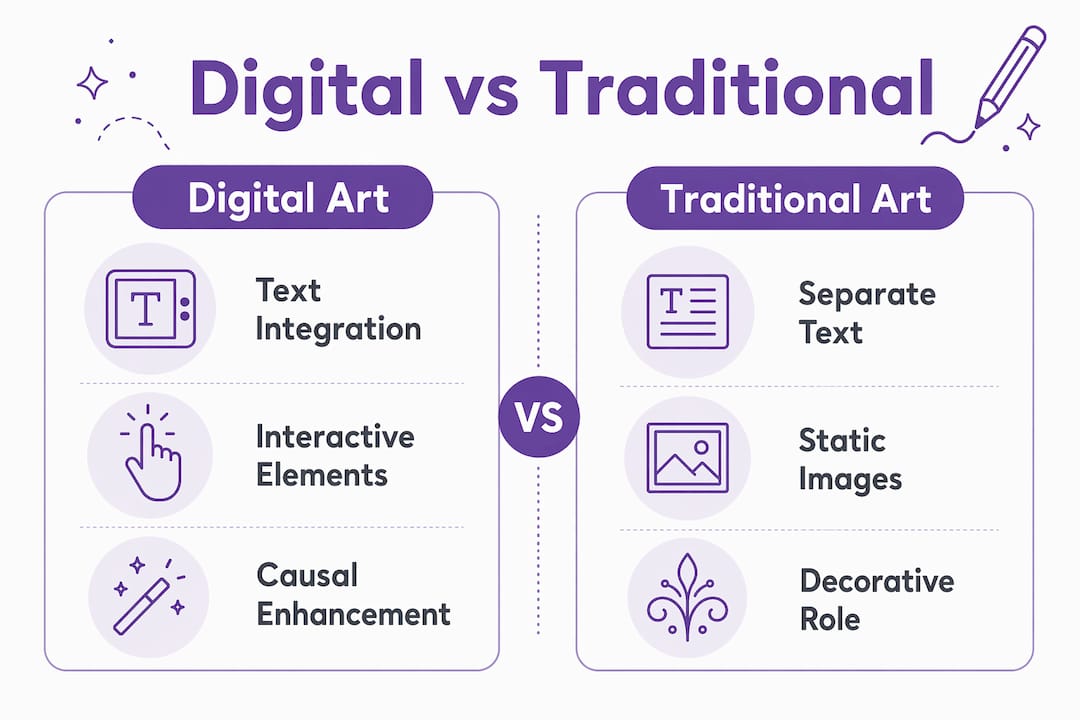
The practical implication is that a well-designed digital storybook is a vocabulary development tool, not just an entertainment product. The visual-verbal coordination does cognitive work that benefits early readers in measurable ways.
How do interactive multimedia features enhance learning and creativity?
Static digital illustrations are only the starting point. When sound, animation, and interactive hotspots enter the picture, the learning benefits increase significantly. A 2025 study with 80 children found that multimedia transformations of drawings, specifically adding sound effects and animation, increased positive emotions and supported cause-effect reasoning and story elaboration compared to static images. Children were more immersed, more willing to extend the story, and less likely to hit creative blocks. That is not a small effect. It suggests that the medium itself shapes how creatively a child engages with narrative.
The research on interactive digital storybooks is equally specific. A 2025 study with 120 children showed statistically significant language gains after 16 weeks of using highly interactive digital picturebooks featuring synchronized animation, congruent sound, and hotspots. The key word is "synchronized." Generic interactivity, where a child taps a button that does something unrelated to the story, does not produce the same gains. The animation and sound must align with the narrative moment to reinforce comprehension.
Augmented reality adds another layer. A 2026 Frontiers in Psychology study demonstrated statistically significant improvements in learning motivation, attentional focus, and emotional regulation in children aged 9 to 11 after a two-week AR picture book intervention, with particularly strong results for children with ADHD. That finding is significant for educators. AR digital picture books are not just engaging for neurotypical readers. They offer structured, visually grounded interaction that supports children who struggle with sustained attention.
Here is what to look for when choosing interactive digital storybooks for maximum learning benefit:
- Synchronized animation. Movement should happen at the moment the text or narration describes it, not as a background loop.
- Congruent sound. Sound effects and music should match the emotional tone and events of the story, not just add noise.
- Narrative hotspots. Tappable elements should reveal story-relevant information or extend the scene, not distract from it.
- Consistent character design. Interactive features should not override visual continuity. The character should look the same whether still or animated.
- Scaffolded difficulty. The best interactive storybooks adjust complexity as the child progresses, supporting comprehension without overwhelming working memory.
Pro Tip: Before buying an interactive digital storybook, watch a short demo or preview with the sound on. If the audio and animation feel like they belong to the story, the design is working. If they feel like add-ons, the educational value drops considerably.
What should parents and educators know before choosing digital storybooks?
Choosing a digital storybook well requires knowing what to look past and what to look for. A visually polished cover is not evidence of narrative coherence inside. A 2026 cognitive skills study using the LakBayan interactive digital storybook showed statistically significant improvements in Grade 1 learners, but the gains came from the combination of multimedia and interactive elements, not from digital art alone. Design quality and educational intent have to work together.
There are also real risks to watch for. Cognitive overload is the most common one. When a storybook has too many simultaneous animations, sounds, and interactive prompts, a child's working memory fills up before the story can land. The solution is scaffolding: features that guide attention rather than compete for it. You can learn more about how AI illustration works in practice, which helps set realistic expectations about what current technology can and cannot do consistently.
Personalization is a separate but related factor. A child who sees a character that looks like them, shares their name, and faces challenges drawn from their own interests is more likely to stay engaged and more likely to connect emotionally with the narrative. That is not a marketing claim. It is a straightforward application of what we know about motivation and self-referential processing in children. The role of illustrations in storybooks becomes even more powerful when the child is the subject of those illustrations.
Finally, consider how you integrate digital storybooks into a reading routine. Reading together and pausing to discuss what the images show, separate from what the text says, is one of the most effective ways to build comprehension. Small group storytelling approaches also apply here: asking children to predict what comes next based on the illustration alone trains visual literacy alongside verbal comprehension.
Key takeaways
Digital art in storybooks produces measurable gains in comprehension, creativity, and engagement only when illustrations maintain six-dimensional narrative coherence and integrate with text as equal partners rather than decoration.
| Point | Details |
|---|---|
| Six-dimensional coherence | Evaluate character, time, space, event, style, and theme across every page, not just visual style. |
| Equal-complementary design | The strongest digital storybooks use images and text to carry different parts of the meaning simultaneously. |
| Synchronized multimedia | Animation, sound, and hotspots must align with narrative moments to produce language and comprehension gains. |
| AR benefits for ADHD | Augmented reality picture books show significant attention and emotional regulation improvements in children with ADHD. |
| Personalization amplifies engagement | Children engage more deeply when the illustrated character reflects their own likeness and interests. |
Why I think we underestimate what digital art actually demands
Most conversations about digital art in children's books focus on whether it looks good. That is the wrong question. The right question is whether it holds together as a story told in pictures across 13 or 20 or 32 pages. I have looked at a lot of AI-generated and digitally illustrated storybooks, and the ones that fall short almost always fail on the same dimension: event continuity. The character looks fine. The style is consistent. But the images do not show what caused what, and a six-year-old reading alone has no way to reconstruct the narrative logic from the text alone.
What I find genuinely interesting about the 2026 research is that it names this problem precisely. The six-dimensional framework from the Springer Nature review is not academic abstraction. It is a checklist that any parent or educator can use in about two minutes. Cover the text, look at the pictures in order, and ask whether the story makes sense. Most books fail that test faster than you would expect.
The other thing I keep coming back to is the difference between interactivity that teaches and interactivity that distracts. Sound effects that match the story moment, animation that shows the consequence of a character's choice, hotspots that reveal story-relevant detail: these are design decisions that require real editorial intent. They do not happen by accident. When you find a digital storybook that gets all of this right, it is worth paying attention to who made it and how.
— Jason
See your child in a story built around them
If you want a digital storybook where the illustrations are built from your child's actual photos and the story is written specifically for them, Adventuresofbook does exactly that. There are no templates and no generic stand-ins. You upload a photo, share a few details about your child, and the AI generates 13 illustrated pages with a story and artwork that looks like your kid.
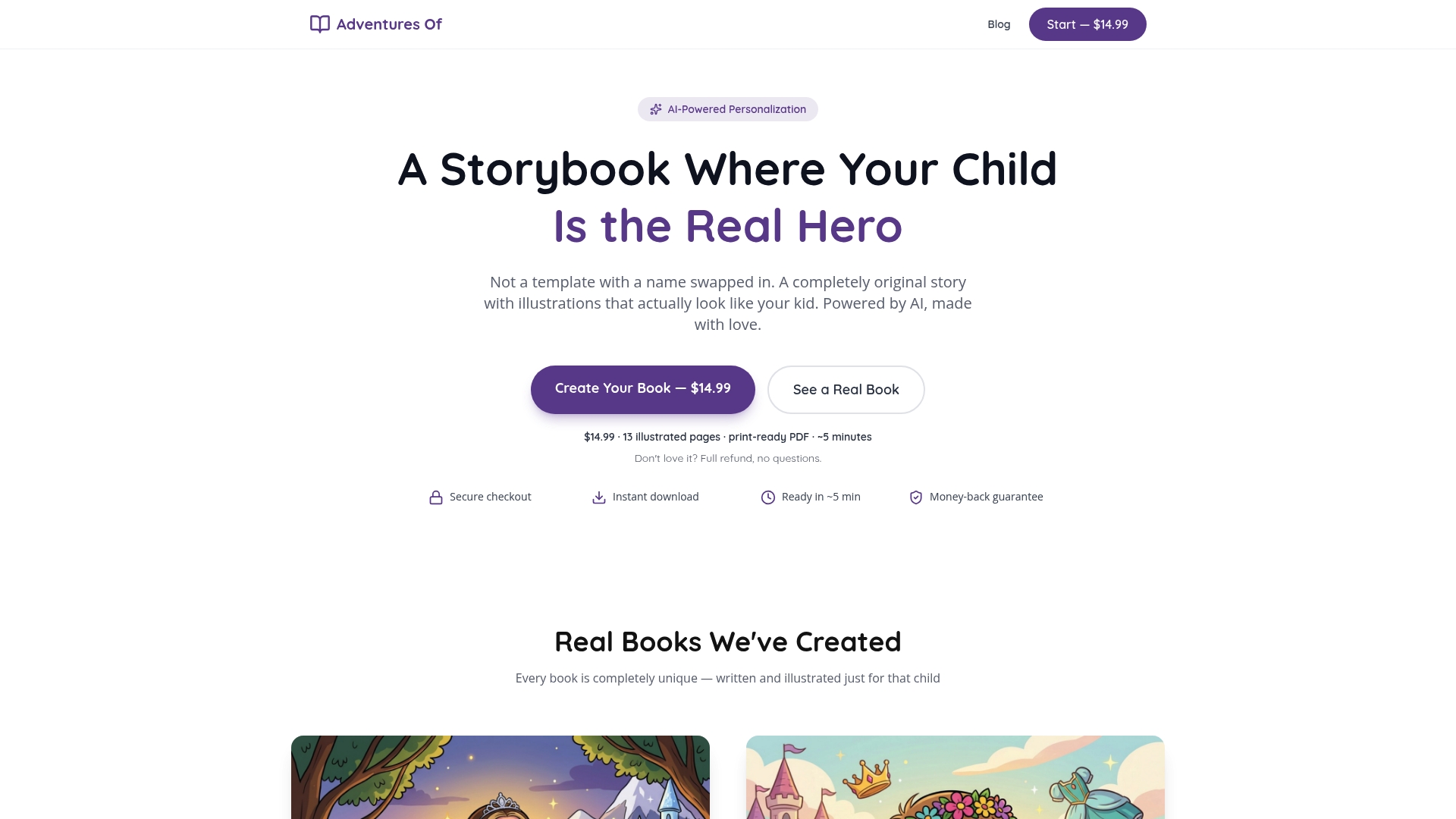
The whole process takes about five minutes and costs $14.99 for an instant-download 8.5x8.5 print-ready PDF. There is a 7-day refund policy if it does not meet your expectations. For parents who want a storybook where the digital art actually serves the child in it, personalized storybooks from Adventuresofbook are worth a look.
FAQ
What is the role of digital art in storybooks?
Digital art in storybooks visually enriches narrative meaning by working alongside text to build character consistency, emotional tone, and cause-effect clarity across pages. Research identifies six dimensions of coherence, including character, time, space, event, style, and theme, that effective digital illustrations must maintain throughout a book.
How does digital art improve children's comprehension?
Digital illustrations that use elaboration and causal enhancement strategies help children connect unfamiliar vocabulary to visual context and understand narrative cause and effect. A 2026 multimodal study of Let's Read digital picturebooks found that equal-complementary image-text relations produce the strongest comprehension outcomes.
Do interactive features in digital storybooks actually help learning?
Yes, but only when the features are synchronized with the story. A 2025 study with 120 children showed statistically significant expressive language and comprehension gains after 16 weeks with highly interactive digital picturebooks using aligned animation, sound, and hotspots.
Are AR digital storybooks beneficial for children with ADHD?
A 2026 Frontiers in Psychology study found that AR digital picture books produced statistically significant improvements in attention, learning motivation, and emotional regulation in children aged 9 to 11 with ADHD after just two weeks of use.
What should I look for in a high-quality digital storybook?
Look for consistent character design across all pages, animation and sound that match the story moment, and interactive elements that extend the narrative rather than distract from it. Check whether the images tell a coherent story on their own, without the text, as a quick test of visual narrative quality.