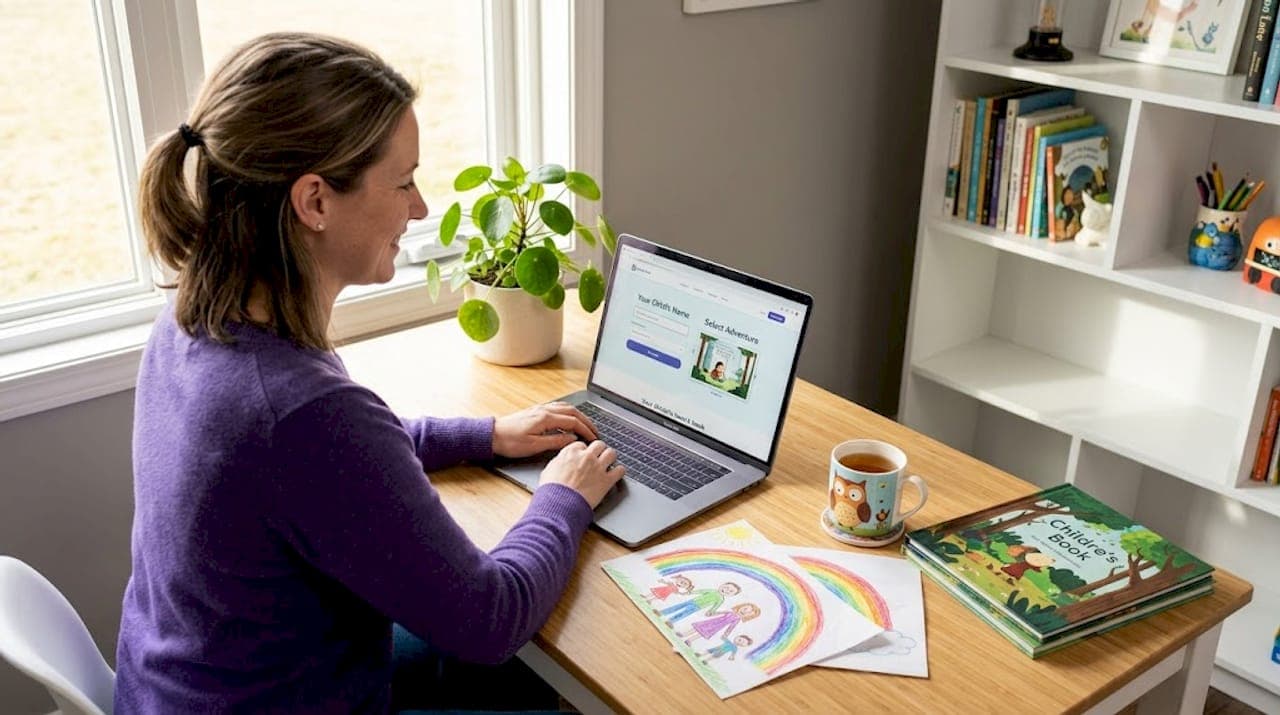
When you order a personalized children's book, you picture your child lighting up at seeing their name on the page. What you probably don't picture is a company storing your kid's photo, home city, and personal interests in a cloud database you have no access to. Privacy in creating personalized books is a real concern, and most parents don't think about it until after they've already submitted their information. This guide walks you through the actual risks, the technical options that reduce them, and the practical steps you can take right now to protect your child's data.
Table of Contents
- Key takeaways
- Common privacy risks in personalized book platforms
- Privacy-enhancing tech for book creation
- Practical privacy steps for parents
- How platform choices compare on privacy
- What AI features mean for your child's privacy
- My honest take on privacy and personalized books
- A personalized book that respects your child's privacy
- FAQ
Key takeaways
| Point | Details |
|---|---|
| Know what data you're sharing | Personalized book platforms commonly collect names, photos, locations, and interests that may be stored or shared. |
| Prefer minimal data platforms | Choose services that collect only what's needed and have clear, short data retention policies. |
| Strip photo metadata first | Photos contain hidden location and device data. Remove EXIF data before uploading any child image. |
| Understand AI data use | Some AI-powered book features use your data for model training without a clear opt-out option. |
| One child per book reduces exposure | Platforms scoped to a single child per order inherently limit the breadth of data collected at once. |
Common privacy risks in personalized book platforms
Most parents assume that ordering a custom children's book is about as private as buying one off a shelf. It isn't. These platforms collect a surprising range of personal data to function, and how they handle that data varies widely.
Here's what platforms typically collect:
- Your child's name and sometimes nickname
- Uploaded photos, which may include facial recognition data after processing
- Geographic details like hometown, school, or neighborhood
- Interests and hobbies entered during the customization form
- Reading or interaction habits on platforms with digital reading apps
- Payment and account information tied to a profile
The photos are where the biggest risk sits. When you upload an image, it often gets processed on remote servers. That processing can generate derived data, such as a facial model, that is different from the original photo and harder to delete. Many platforms lack clear guidelines around collecting or sharing child data for personalized books, which means the rules governing what happens to that derived data are often vague.
Cloud storage is the default for nearly every major service. That means your child's details are sitting on servers you don't control, often in jurisdictions with different privacy laws than your own. Data retained in the cloud can be exposed to breaches, sold to marketing partners, or shared with third-party vendors who power parts of the service.
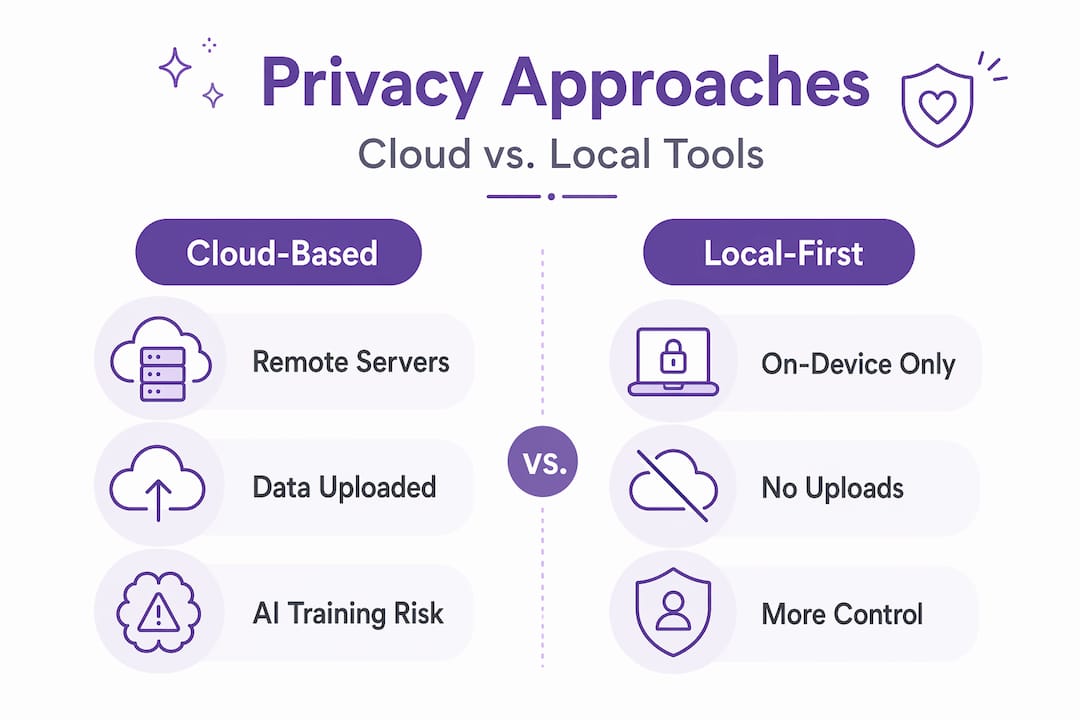
There's also the AI training problem. Some platforms feed user-submitted content, including names, photos, and story preferences, back into their AI models to improve future outputs. Most don't offer an opt-out for this. The terms of service bury it in language about "improving user experience."
Pro Tip: Before submitting any information to a personalized book platform, search their privacy policy for the words "train," "improve," and "third party." If none of those words appear or the language is vague, treat it as a red flag.
Privacy-enhancing tech for book creation
Not all personalized book tools are built the same way under the hood. Understanding a few technical options helps you make smarter choices about where your child's data actually goes.
Cloud-based vs. local-first tools
The majority of consumer personalized book services are cloud-based. You submit your data, their servers process it, and you receive a finished product. The convenience is real. So is the data exposure.
Local-first tools work differently. Processing happens on your own device. Nothing gets uploaded to an external server. Local-first tools avoid recurring subscription fees and don't upload manuscripts or photos, cutting off the main channel through which your data leaves your hands. Cloud platforms typically run about $240 per year in subscription costs, while local tools often use a buy-once model.
Here's a quick comparison of the two approaches:
| Feature | Cloud-based platforms | Local-first tools |
|---|---|---|
| Data storage | Remote servers | Your own device |
| Pricing model | Often subscription ($240/yr avg) | Usually one-time purchase |
| Privacy risk | Higher (third-party data access) | Lower (no external upload) |
| Convenience | High | Moderate |
| AI training risk | Present, often opt-out missing | Minimal to none |
BYOK models and encryption
For parents who want a higher level of control over AI-generated content, Bring-Your-Own-Key (BYOK) encryption is worth knowing about. BYOK models prevent AI providers from using your data for their own model training, because the encryption keys never leave your control. It's a technical approach more common in enterprise software, but it's starting to appear in privacy-focused creative tools.
Local AI processing through tools like Ollama takes this further. Local-only AI processing prevents personal prompts and creations from being transmitted externally at all. For personalized storytelling that involves a child's photo and name, that's a meaningful layer of protection.
Metadata stripping from photos
This one gets overlooked almost universally. Photos uploaded for personalization often contain EXIF metadata holding your GPS location, device model, and timestamp. When you upload an unstripped photo to a book platform, you may be handing over your home address without realizing it.

Free tools like ExifTool or even the export settings in your phone's camera app can strip this data before you upload. Make this a habit before sharing any child photo online.
Pro Tip: On iPhone, go to Settings > Privacy > Location Services > Camera and set it to "Never." This stops location data from being embedded in new photos entirely.
Practical privacy steps for parents
You don't need to be a tech expert to protect your child's data during custom book creation. These steps work regardless of which platform you use.
-
Use a pseudonym or shortened version of your child's first name. A book that says "Leo" instead of "Leonardo James" works just as well for the story and exposes far less identifying information.
-
Disable cloud sync on the device you're using. Experts recommend storing files locally and limiting syncing to reduce external storage of personal book information. Turn off iCloud Drive or Google Drive sync before you start.
-
Read the data retention section of the privacy policy. Look for how long the company keeps your data after the order is complete. Reputable services state a specific timeframe, such as 30 or 90 days. "We retain data as long as necessary" is not a specific timeframe.
-
Strip metadata from photos before uploading. Use a free tool or your phone's export settings. This takes under a minute and removes location, device, and time data from the image.
-
Avoid entering details that aren't required. If a field asking for your child's school or full birth date is optional, leave it blank. The story doesn't need that level of detail to feel personal.
-
Check whether the platform shares data with advertising or analytics partners. This is usually in the "third party" section of the privacy policy. If they share data with advertisers, your child's information could end up in a marketing database.
-
Keep tight control over digital copies. Once you download the finished book, store it in a password-protected folder or a private cloud space. Sharing it widely via public links can inadvertently expose your child's image and story to people you don't know.
If you're wondering how the personalized book creation process works on a practical level before you start, it helps to know the steps in advance so you can apply these privacy measures at the right moments.
How platform choices compare on privacy
Most parents comparing personalized book services focus on price and quality. Privacy rarely appears in the comparison. It should.
Wonderbly and Hooray Heroes are well-known names in this space. They produce good-looking books and have clear order processes. Both use template-based personalization, where your child's name and a few details get inserted into a pre-written story framework. The upside is that this model collects relatively limited data. The downside is that the story isn't actually original. Every child named "Sam who loves dinosaurs" gets the same plot.
Adventures Of takes a different approach. Instead of templates, it uses AI to generate an original story and illustrations based on a real photo of your child. The illustrations resemble your kid, not a generic character with a name label swapped in. It also follows a one-child-per-book policy, which limits the data footprint by design. The one-child per book model means the platform isn't building a large profile of multiple family members.
Here's how the main options compare on key privacy factors:
| Feature | Wonderbly | Hooray Heroes | Adventuresofbook |
|---|---|---|---|
| Story type | Template-based | Template-based | Original per child |
| Photo use | Profile illustration | Photo-matched illustrations | Real photo AI illustrations |
| Data collected | Name, age, some details | Photo, name, details | Photo, name, interests |
| One-time pricing | No (varies) | No (varies) | Yes ($14.99) |
| Privacy policy clarity | Moderate | Moderate | Transparent |
What matters beyond the table is how each platform handles what it collects. Effective privacy in personalized books involves minimal data collection, transparent retention policies, and no sharing for advertising. Parents should ask each platform directly whether submitted photos are deleted after book generation and whether data is ever used for AI training.
What AI features mean for your child's privacy
AI is now embedded in more parts of the personalized book experience than most parents realize. Understanding where it shows up helps you decide where to draw your own lines.
Here are the main areas where AI raises new privacy questions:
- Story generation: AI writes the narrative based on submitted details. The inputs you provide may be logged and used to improve the model.
- Illustration generation: AI creates images from uploaded photos. Facial data derived from those photos may persist even after the original image is deleted.
- Reading companions and chatbots: Some platforms add AI chat features to digital books. Platforms often fail to provide opt-out for AI chat or derivative creation features, retaining content indefinitely.
- Behavioral personalization: AI tracks reading habits within apps to recommend or adapt future content. This creates a behavioral profile of your child over time.
Parents often underestimate how much data AI-powered features collect and reuse. Transparency and opt-out rights are largely absent from most consumer platforms right now. Before using any AI-powered reading feature, check whether you can disable it and whether the platform commits to not training on submitted content. If the policy doesn't say clearly, assume it does.
For parents interested in how AI is being used in children's content more broadly, the question of AI safety in children's publishing is worth reading through separately.
My honest take on privacy and personalized books
I've spent a lot of time reviewing privacy policies for creative platforms, and the honest conclusion is this: most of them are written to protect the company, not the customer.
The phrase "we may share your data with trusted partners" appears in some form in nearly every policy I've read. "Trusted partners" is undefined. It can mean advertising networks, data brokers, or AI training vendors. When a child's photo and personal story details are involved, that kind of language should make you stop and ask harder questions.
What's struck me most, though, is the gap between how personalized a product feels and how generic the underlying data handling actually is. A book that puts your child's face on the cover feels intimate. But if the platform is running templated stories through a mass production pipeline and storing your child's details in a shared database with millions of other users, the intimacy is mostly cosmetic.
True personalization and genuine privacy are related values. A platform that builds one original story per child, charges a one-time fee, and is transparent about what it does with submitted photos is treating your child as an individual, not a data point. That's the alignment I look for. Privacy-first personalized books empower parents to protect their child's digital footprint while still creating something meaningful.
My recommendation: don't accept vague policy language as good enough. Ask the question directly. Request deletion after generation. And always strip your photo metadata before you upload anything.
— Jason
A personalized book that respects your child's privacy
If you've been thinking carefully about where your child's photo and story details end up, Adventuresofbook is worth a close look.
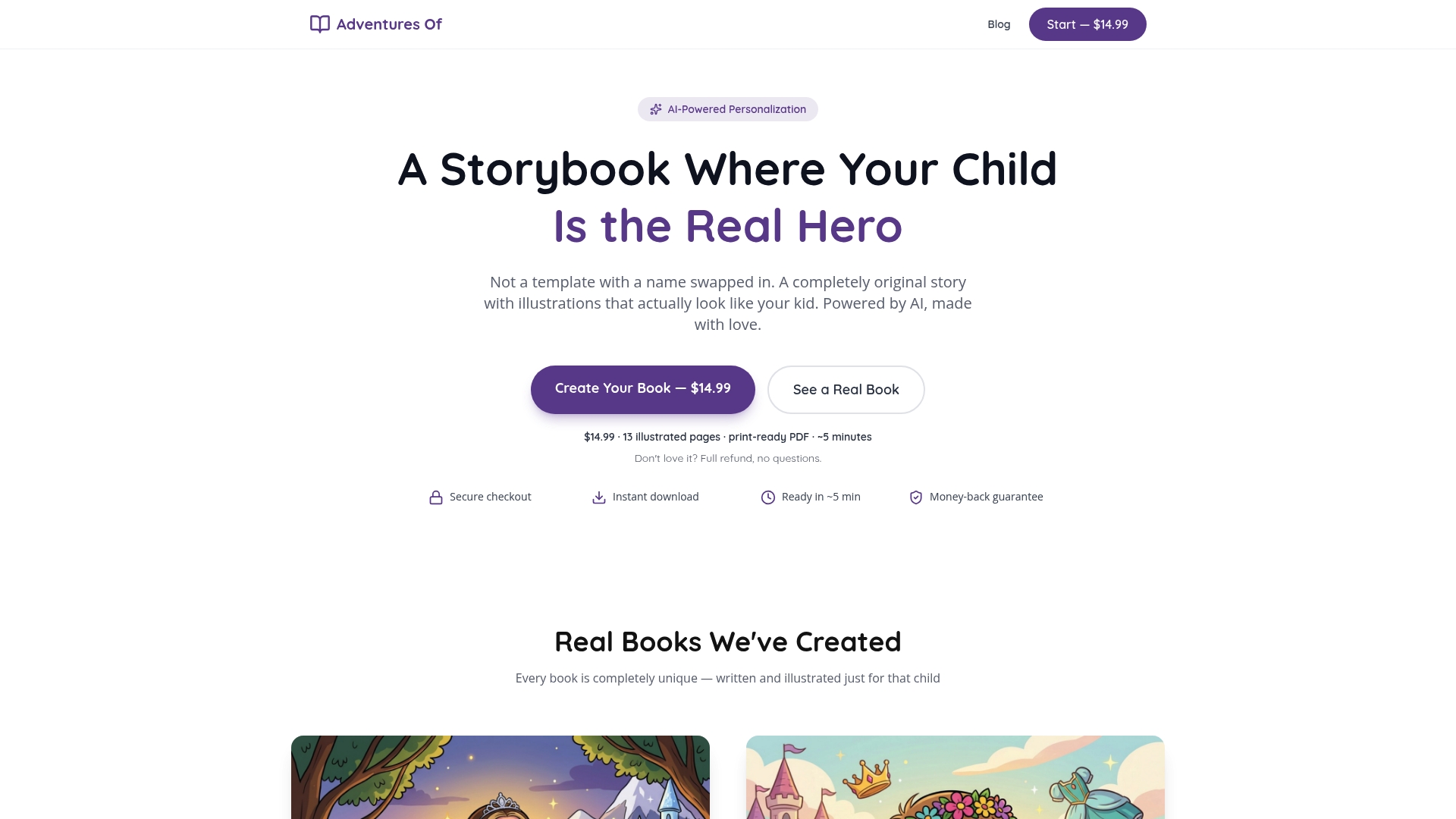
Each book is built from scratch using your child's actual photo and a few personal details. The story and illustrations are original, not recycled from a template that thousands of other kids have received. The entire process takes about five minutes, the download is yours immediately, and the one-time price is $14.99 with no subscription. There's also a 7-day refund policy if the result doesn't meet your expectations.
You can start creating a personalized children's book for your child today, or explore the custom baby book option if you're looking for something for a younger child. Either way, you get one original story built for one specific kid.
FAQ
What personal data do personalized book platforms typically collect?
Most platforms collect your child's name, uploaded photos, age, interests, and sometimes location details. Photos in particular may generate derived facial data that persists after the original is deleted.
How do I ensure privacy in custom book creation?
Use a pseudonym, strip EXIF metadata from photos before uploading, disable cloud sync on your device, and read the platform's data retention policy before submitting anything.
Can AI-generated book platforms use my child's photo for model training?
Some can, yes. Platforms often retain content indefinitely and may use it to improve their AI without offering an opt-out. Always check the privacy policy for language about "training," "improving," or "derivative" uses.
Is local-first software safer for creating personalized books?
Yes. Local-first tools don't upload your data to external servers, which eliminates the main source of cloud-related privacy risk. The trade-off is slightly less convenience compared to fully web-based platforms.
Should I share my child's real name when ordering a personalized book?
It depends on the platform's privacy policy. Using a shortened version or nickname provides the same story quality while reducing the amount of identifying information tied to the order.