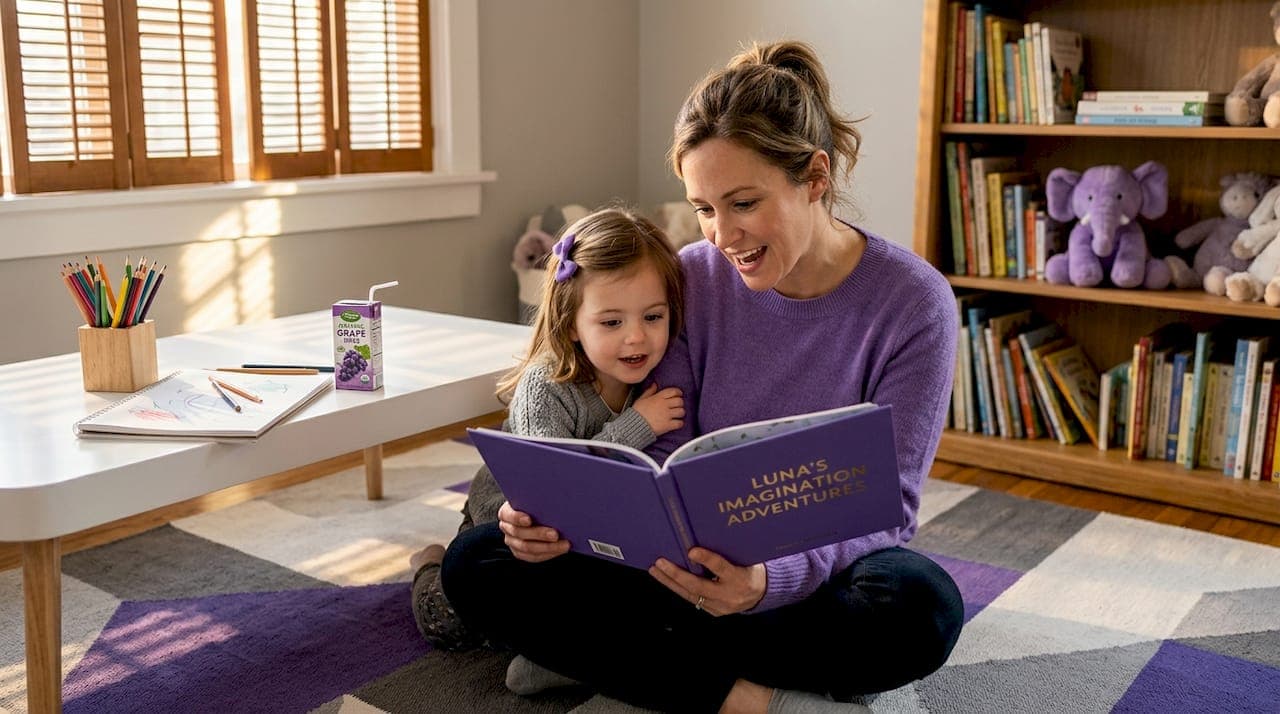
Most children's books cast a generic kid as the hero. Your child reads along, but there's a quiet distance between them and the story. The personalized storytelling advantages that researchers and educators are documenting go far beyond novelty or name-swapping. In child development terms, this is called bespoke narrative or individualized narrative learning, and the research behind it is specific enough to matter. This article covers what the science actually says, what it means for your child's reading time, and how to tell the difference between a story that's truly built for your kid versus one that just has their name on the cover.
Table of Contents
- Key takeaways
- 1. Personalized storytelling advantages start with how attention works
- 2. Children who see themselves as heroes think differently
- 3. Vocabulary and comprehension grow faster with familiar context
- 4. Emotional intelligence and self-identity get a real workout
- 5. How personalized digital storytelling works (and where it can fall short)
- 6. Template books versus truly bespoke stories: what actually differs
- My honest take on personalized storytelling
- See your child as the hero of their own original story
- FAQ
Key takeaways
| Point | Details |
|---|---|
| Active involvement beats passive listening | Children learn more from stories when they are asked questions and respond, not just sit and listen. |
| Protagonism builds creative confidence | When a child is the hero, they are more likely to imagine new solutions and explore their own identity safely. |
| Familiar context accelerates vocabulary | Words introduced inside a story the child relates to are easier to recall and use than words from generic texts. |
| True personalization requires responsiveness | Simply swapping a name into a template does not replicate the cognitive and emotional gains of genuinely tailored narratives. |
| Social interaction preserves digital story gains | Remote or digital storytelling loses most of its learning benefits without real-time interaction alongside it. |
1. Personalized storytelling advantages start with how attention works
When a story is about someone else in a made-up place, a child's brain processes it differently than when the story is about them and places they recognize. This is not a metaphor. Face-to-face storytelling with scaffolding demonstrably improves children's learning outcomes and produces measurable neural synchrony between the storyteller and the child. That synchrony is the brain literally getting in sync with the story being told.
Passive listening does not produce the same effect. The 2026 npj Science of Learning study found that the learning gains from scaffolded, interactive storytelling vanished in remote environments where social coupling was absent. Attention is not just whether a child is in the room. It is whether they are in the story.
Pro Tip: Ask your child one question per page spread during storytime. "What do you think happens next?" or "What would you do here?" activates the kind of neural engagement that passive reading cannot.
Here is what active, personalized storytelling looks like in practice:
- The storyteller pauses and asks the child to predict what their story-self will do next
- The narrative acknowledges something specific to the child (their dog's name, their school, their favorite food)
- Follow-up questions connect story events to the child's real experience
- The adult adjusts the story in real time based on the child's responses
That last point matters. Effective personalization includes scaffolding techniques like prompting and timely adjustment, not just content customization. A story where the main character happens to be named after your kid is not the same thing.
2. Children who see themselves as heroes think differently
There is a well-documented phenomenon in child psychology where children who see characters like themselves in stories develop stronger creative confidence. When the hero of a story looks like your child, shares their interests, and faces problems they recognize, something shifts. They stop asking "what would the character do?" and start asking "what would I do?"
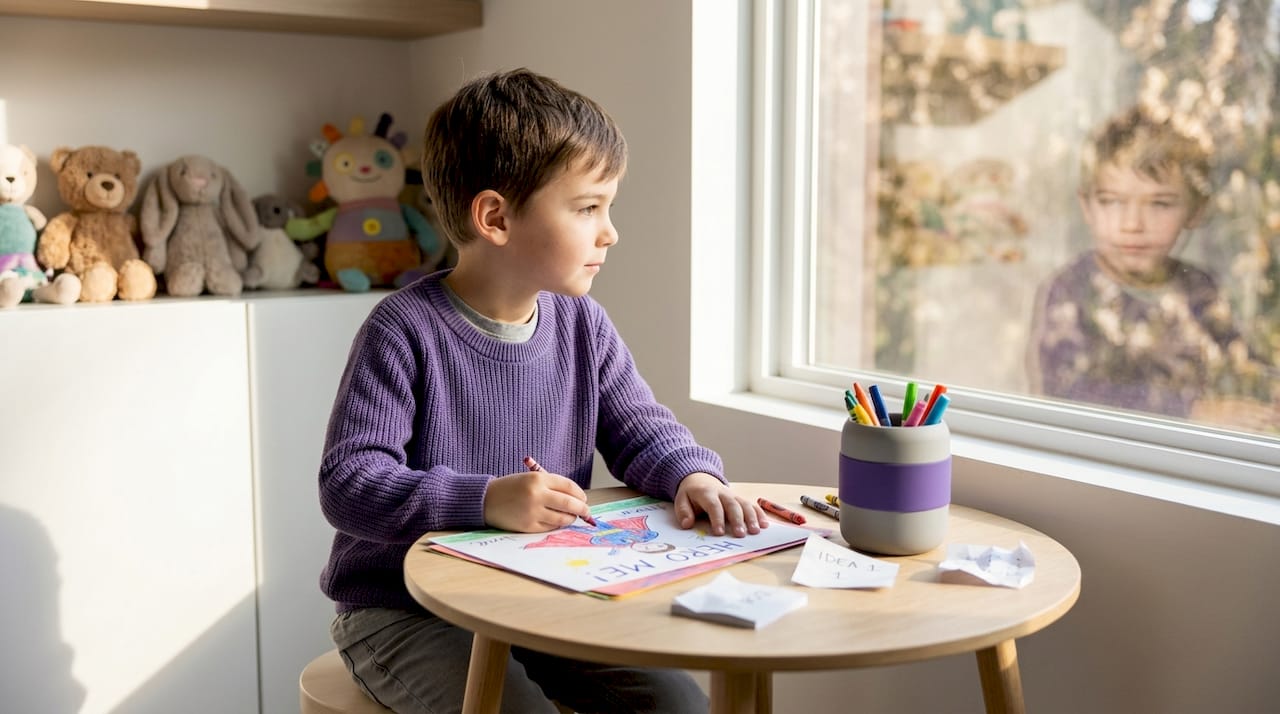
Storytelling activates multiple brain regions holistically, which is why the emotional and imaginative effects of a story outlast the reading session itself. A child who spent twenty minutes as the hero of their own adventure carries that self-image forward.
The benefits of individualized storytelling for creativity show up in a few specific ways:
- Children invent story continuations at bedtime, extending the narrative on their own
- They are more willing to take on unfamiliar challenges because their story-self succeeded
- They use story scenarios to safely explore difficult emotions (fear, failure, conflict with friends)
- Their drawing and play often reflects the characters and settings from personalized stories, not generic ones
One way to think about this: a generic story shows a child what a hero looks like. A personalized story tells them they already are one.
3. Vocabulary and comprehension grow faster with familiar context
Here is something that surprises a lot of parents. The reason personalized stories build language skills faster is not that they are more fun (though they usually are). It is that they provide context. Children recall vocabulary more easily through storytelling because the words land inside a narrative the child already cares about.
If your child hears the word "enormous" used to describe a dragon they have never met in a place they have never been, the word is free-floating. If they hear it used to describe the wave at the beach they visited last summer in a story about them, the word is anchored.
The educational research backs this up clearly. A 2026 Frontiers in AI study found that personalized content with adaptive feedback produced greater positive learning outcomes and motivation compared to traditional textbook approaches. The difference was not the technology. It was the responsiveness of the content to the specific learner.
| Learning context | Vocabulary recall | Engagement level | Feedback mechanism |
|---|---|---|---|
| Generic group story | Moderate | Passive | None or delayed |
| Personalized story, one-on-one | High | Active | Immediate, responsive |
| Template book (name only) | Moderate | Mild novelty effect | None |
| Truly bespoke narrative | High | Invested | Adaptive |
Pro Tip: After reading a personalized story with your child, pause and ask them to use one new word from the story in a sentence about their own day. This single practice measurably increases retention.
Research on tutoring also confirms that one-on-one literacy sessions produce better outcomes than even small group settings. The reason is not class size. It is the quality and frequency of individualized attention and feedback. Personalized storytelling replicates that exact dynamic in a reading context.
4. Emotional intelligence and self-identity get a real workout
Stories are one of the oldest tools humans have for making sense of experience. For children especially, personal storytelling reframes self-identity and supports personal development by encouraging reflection. That is a clinical way of saying: when kids see their own life reflected in a story, they start to understand it better.
Personalized stories give children a way to rehearse difficult situations before they face them. A story where their character has to speak up in class, or comfort a friend who is sad, gives them a script they did not have before.
The social and emotional advantages of tailored narratives show up in three consistent areas:
- Empathy: Children who see their own story-self navigate another character's feelings develop stronger perspective-taking skills
- Emotional regulation: A child who has a story ending where their character handled a fear calmly has a mental model for doing the same
- Self-awareness: Hearing their own name and interests reflected in a narrative prompts children to think about who they are, not just what happens in books
One underappreciated detail: sharing a personalized story with a grandparent, a teacher, or a friend creates a natural conversation starter. The story is already specific to the child, so the conversation becomes specific and real, not generic. This is one of the quieter family storytelling benefits that parents notice after the first read-through.
5. How personalized digital storytelling works (and where it can fall short)
The customized narrative advantages described above come with one clear condition: social interaction needs to be part of the experience. Learning gains from personalized digital stories largely disappear when there is no real-time social engagement alongside them.
This matters for parents and educators using apps, e-books, or AI-generated storybooks. A digital personalized story is a tool, not a replacement for co-reading. The story creates the spark. The conversation you have with your child while reading is where the learning happens.
What that looks like in practice: sit with your child when reading a digital or printed personalized book. Ask questions. React to the story together. Let them flip back to a favorite page. The story's job is to give you both something specific and meaningful to talk about. That is where the real impact of personalized storytelling lands.
6. Template books versus truly bespoke stories: what actually differs
A lot of products in the personalized children's book space use a simple approach: take a pre-written story, swap in a child's name and a few details, and print. That is better than nothing. But the benefits of personalized storytelling described in this article are not fully delivered by name-swapping.
Here is the honest comparison. You can read a fuller breakdown at the personalized vs. template books breakdown on the Adventures Of blog.
What makes a story truly bespoke:
- The plot is generated around the child's specific interests, not a fixed template with blanks filled in
- The illustrations show a character who actually looks like your child, not a stock drawing with a name tag
- The challenges in the story reflect something the child actually cares about or recognizes
- No two children get the same story structure, even if they share a name
Personalization succeeds most when changing learner activities through choices and feedback, not just changing surface content. The same principle applies to storybooks. Novelty fades fast. Genuine investment in a story that reflects your child's actual world does not.
The deeper impact shows up on re-reads. Generic stories get boring after the third time through. A story built around your child keeps yielding new conversations because the child keeps growing into new parts of it.
My honest take on personalized storytelling
I have spent a lot of time reading research and talking with educators about what actually moves the needle for children's learning. And the honest answer is this: the word "personalized" gets applied to a lot of things that do not deserve it.
A book with your child's name on the cover is not the same as a story built around who your child actually is. I have seen parents genuinely delighted by template books, and that is real. But when I look at what the research consistently shows, the outcomes come from responsive storytelling. The stories where the child is asked what they think, where their input shapes what happens next, where the illustrations actually look like them.
What I have learned is that the magic is not in the story itself. It is in what the story makes possible between the adult and the child. A truly bespoke story gives you a better starting point for that conversation. Storytelling tips for children that generate real engagement almost always come back to this: the story is a prompt, not a performance.
The caution I would offer is this. Do not let a beautifully personalized book become a screen replacement. The social coupling requirement from recent neuroscience is real. A digital story your child reads alone has a fraction of the developmental impact of the same story read together with someone who asks good questions.
— Jason
See your child as the hero of their own original story
If you want to put these benefits into practice, Adventures Of offers one of the more genuinely bespoke approaches available. You upload a photo of your child, share a few details about their interests, and the AI generates an original story built around them with illustrated characters that actually resemble your kid. Not a template with their name dropped in. A story that starts with who they are.
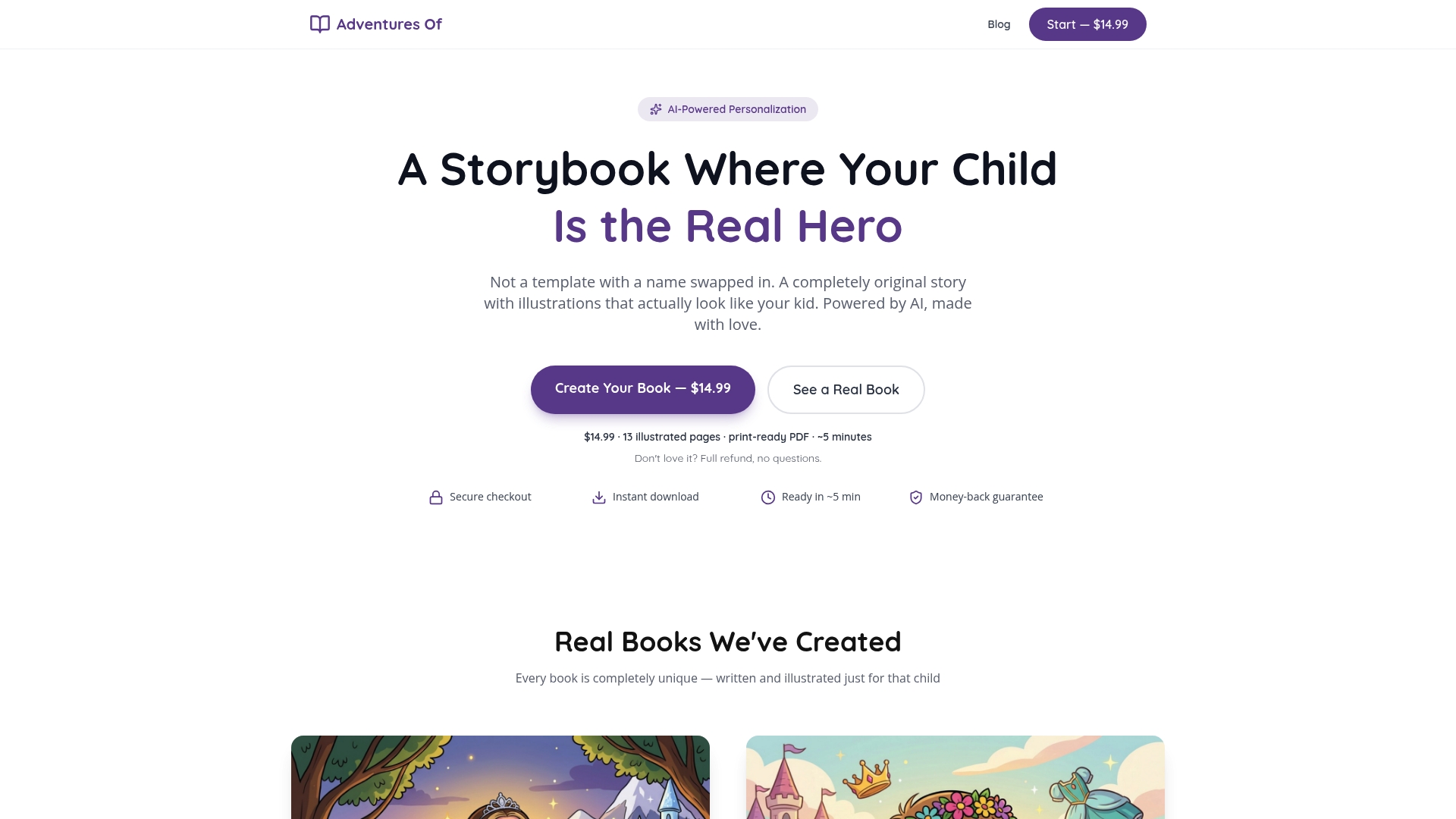
The full process takes about five minutes. You get a 13-page, 8.5x8.5 print-ready PDF you can download immediately or print at home. One-time price of $14.99 with a 7-day refund if it is not what you hoped for. If you want to see what a story that genuinely stars your child looks like, you can create your child's book and have it in hand before bedtime.
FAQ
What are the main personalized storytelling advantages for children?
Personalized storytelling improves attention, vocabulary retention, and emotional intelligence by anchoring learning in familiar, child-specific context. Research shows that interactive, tailored narratives produce stronger learning outcomes than generic stories or passive listening.
Does a personalized book with just a name swap count as true personalization?
No. Simply replacing a name in a pre-written template does not deliver the cognitive or emotional benefits of genuine personalization. True bespoke storytelling changes the plot, character details, and illustrations to reflect the specific child.
How does personalized storytelling support language development?
Children recall new vocabulary faster when words appear inside stories that connect to their real experiences. One-on-one literacy attention paired with personalized narrative context produces measurably better language outcomes than group or generic reading.
Can digital personalized stories deliver the same benefits as in-person storytelling?
Only when paired with active co-reading and conversation. Research from the 2026 npj Science of Learning study found that learning gains disappeared in remote settings without real-time social interaction, meaning the adult's presence and questions are still required.
At what age do personalized stories have the most impact?
The benefits of individualized storytelling are documented across early childhood through middle school, but the foundational language and identity gains are strongest in the 2 to 8 age range when vocabulary acquisition and self-concept are developing most rapidly.