Custom children's books are personalized storybooks designed around a specific child's name, appearance, interests, and story, replacing generic characters with the actual kid at the center of the narrative. The key features of custom books include editable covers, flexible page layouts, adjustable text, and material choices that together give parents real creative control. Platforms like Shutterfly, Adventuresofbook, and Leo Books each approach this differently, but the core goal is the same: a book that feels made for your child and no one else.
1. Cover types and what they mean for your child's book
The cover is the first thing a child touches, and it sets the tone for everything inside. Cover styles affect durability and presentation in ways that matter more than most parents expect.
Here are the main options you will encounter:
- Hardcover: The most durable choice. Works well for keepsakes, gifts, and books that will be read repeatedly by young children who are not always gentle.
- Softcover: Lighter and more flexible. Better for travel or casual reading, though it shows wear faster.
- Leather or faux leather: A premium feel that suits milestone books like baby's first year or a birthday tribute.
- Padded cover: Adds a soft, tactile quality that younger children especially enjoy holding.
- Image-customizable covers: Lets you place your child's photo, a chosen illustration, or a combination directly on the front.
Beyond the cover material, you also control typography, background color, and spine color on most platforms. Shutterfly allows customization of nearly every aspect of a photo book, including theme, cover design, and spine color. That level of control means the outside of the book can match the story inside, rather than looking like a stock product with a name printed on it.
Pro Tip: Choose hardcover for any book you plan to keep long-term. Softcover is fine for a travel copy or a second print, but the original keepsake deserves the sturdier option.
Binding is equally worth thinking about. Standard binding works for most books. Layflat and deluxe layflat bindings allow pages to open completely flat, which is useful for full-spread illustrations or photo collages where you do not want the image to disappear into the spine.
2. How layouts and page styles shape the story
Page layout is where the storytelling actually happens. Flexible layout systems let parents treat each page as a fully editable canvas rather than a rigid template slot.
The most common layout options include:
- Full-bleed spreads: The image or illustration fills the entire page with no white border. Creates a dramatic, immersive feel.
- Collage layouts: Multiple photos or illustrations arranged on one page. Good for capturing a sequence of moments or a busy birthday party.
- Minimalist single-image layouts: One photo or illustration per page with generous white space. Keeps the focus on the image and works well for younger readers.
- Multi-photo spreads: Two or more images side by side across a double-page spread. Useful for before-and-after moments or parallel scenes.
- Text-forward layouts: More space given to the written story, with smaller images as supporting visuals. Works for chapter-style books aimed at older children.
Page style also covers the physical finish. Matte pages reduce glare and give a softer, more painterly look. Glossy pages make colors pop and are easier to wipe clean, which matters with younger children. Thicker pages resist tearing and hold up better through repeated readings.
Pro Tip: If your child is under four, prioritize thick, glossy pages. They survive sticky fingers far better than thin matte stock.
Iterative editing features let you regenerate specific pages and preview layout changes before committing to a final print. This means you can try a full-bleed layout on one page, decide it feels too busy, and switch to a minimalist version without starting over.
3. Text editing and how it builds a personal narrative
Text is what turns a photo collection into a story. Adding captions, titles, and longer text entries with font size and style adjustments gives parents the tools to write a narrative that actually sounds like their family.
Most platforms let you add captions beneath images, page titles at the top, and longer storytelling paragraphs in the body of the page. Font choices matter here. A playful rounded font reads differently than a classic serif, and matching the typography to the tone of the story is a small detail that children notice even if they cannot articulate why.
AI-powered text tools like Shutterfly's Magic Writer generate story suggestions based on the details you provide. These are useful starting points, but the best results come from editing the AI output to include specific details only your family would know, like the name of your child's stuffed animal or their favorite phrase. That specificity is what separates a meaningful book from a generic one.
4. What materials and finishing touches make custom books special
The physical quality of a custom book determines whether it becomes a treasured keepsake or something that falls apart after a few months. Upgrades like 6-color printing and metallic details enrich color depth and add a finish that standard printing cannot match.
Here is a comparison of the main material and finish options:
| Feature | Standard | Premium |
|---|---|---|
| Paper type | Matte or basic glossy | Thick matte, premium glossy, recycled |
| Print quality | 4-color CMYK | 6-color printing for richer tones |
| Special finishes | None | Metallic accents, embossed elements |
| Presentation | Plain packaging | Gift box, ribbon, memorabilia pocket |
| Durability | Light use | Designed for repeated handling |
Metallic accents on a cover title or embossed lettering on the spine are the kind of details that make a book feel like a real published product rather than a home print job. Gift boxes and memorabilia pockets add presentation value when the book is given as a birthday or holiday gift. For personalized book options intended as keepsakes, these finishing touches are worth the extra cost.
Recycled paper options are available on several platforms for parents who want to make a more environmentally conscious choice without sacrificing print quality. The color reproduction on recycled stock has improved significantly and is now comparable to standard paper for most illustration styles.
5. Customization tools and how they support parents
The best custom book platforms give parents two distinct paths: do it yourself with a drag-and-drop editor, or hand the initial layout to a professional designer and then edit from there. Shutterfly offers both as creation paths, with the designer service provided at no extra cost.
The tools that make the biggest practical difference include:
- Drag-and-drop editors: Let you move photos, text boxes, and design elements around the page without any design experience. Most platforms have these.
- AI autofill: Automatically places your uploaded photos into suggested layouts, saving time on the initial setup.
- Magic Writer and similar AI text tools: Generate story text or captions based on prompts you provide. Useful for parents who want a starting point rather than a blank page.
- Cross-device syncing: Lets you start a book on your phone during a commute and finish it on a desktop at home. Shutterfly and similar platforms sync across app, desktop, and browser.
- Preview and regenerate: The ability to see exactly how a page will look before printing, and to regenerate specific pages without affecting the rest of the book.
Adventuresofbook takes a different approach. Rather than a drag-and-drop editor, it uses AI to generate an entirely original story and custom illustrations based on photos you upload of your child. The process takes about five minutes and produces a 13-page illustrated book where the character looks like your actual kid. There is no template to fill in. You can learn more about how to make a personalized book using this approach on their blog.
6. How to choose the right custom book features for your child
Matching the features to the occasion and the child makes the difference between a book that gets read once and one that stays on the shelf for years. The book format affects display, hold, and image impact, so starting with the intended use is the right move.
Here is a practical framework:
- Birthday books: Go for a hardcover with a full-bleed photo on the front, glossy pages, and a gift box presentation. The child's name and age should appear on the cover. Check out birthday gift books for ideas on how to structure the story.
- Baby's first year: Layflat binding works well here because you will likely include wide photo spreads. Thick pages and a padded cover suit the age group.
- Holiday gifts: A softcover is fine if budget is a concern, but the story content matters more than the format for holiday themes. Christmas storybooks with the child as the main character tend to get the most repeat readings.
- Keepsakes: Hardcover, premium paper, metallic accents, and a gift box. These are the books that end up in storage and get pulled out years later.
- Grandparent gifts: Simpler layouts with larger text and clear photos work best. The story does not need to be complex. Grandparent gift books that feature the grandchild's name and face are consistently well received.
The design control you have over cover, layouts, typography, page styles, and finishing upgrades means you can match every element to the specific child and occasion. That is the actual advantage of custom books over buying off the shelf.
Key takeaways
The most effective custom children's books combine durable covers, flexible layouts, editable text, and quality materials to create a story that reflects the specific child rather than a generic character.
| Point | Details |
|---|---|
| Cover choice drives durability | Hardcover suits keepsakes; softcover works for casual or travel use. |
| Layout flexibility shapes storytelling | Full-bleed, collage, and minimalist layouts each serve different narrative styles. |
| Text editing adds personal depth | Captions, titles, and AI-assisted story text make the narrative feel genuinely personal. |
| Materials determine longevity | Thick pages, 6-color printing, and metallic finishes produce books that last. |
| Match features to the occasion | Birthday, keepsake, and holiday books each call for different cover and binding choices. |
Why templates are not the same as true customization
I have looked at a lot of custom children's books over the years, and the single biggest gap I see is between what parents think they are getting and what they actually receive. Most platforms that call themselves "personalized" are really just template books. They take a fixed story, swap in a child's name, and maybe adjust the hair color on a pre-drawn character. The child is not really in the book. A version of the child is in the book, and there is a real difference.
True customization means the story was written for this child, and the illustrations were created from this child's actual face. That is what changes how a kid responds to the book. When a child opens a page and sees a character that genuinely looks like them, the engagement is different. They point at the page. They ask to read it again. They show it to their friends.
Template books are not bad. They are faster to produce and often cheaper. But if you are making a book for a specific occasion or as a long-term keepsake, the template version will feel generic within a year. The books that stay meaningful are the ones where the child can look back at age ten and say, "That's actually me."
— Jason
Create your child's book with Adventuresofbook
Adventuresofbook builds each book from scratch using AI trained on your child's uploaded photos. The result is an original story with 13 illustrated pages where the character looks like your actual child, not a clip-art stand-in. The whole process takes about five minutes, and the finished book is a print-ready 8.5x8.5 PDF you can download immediately.
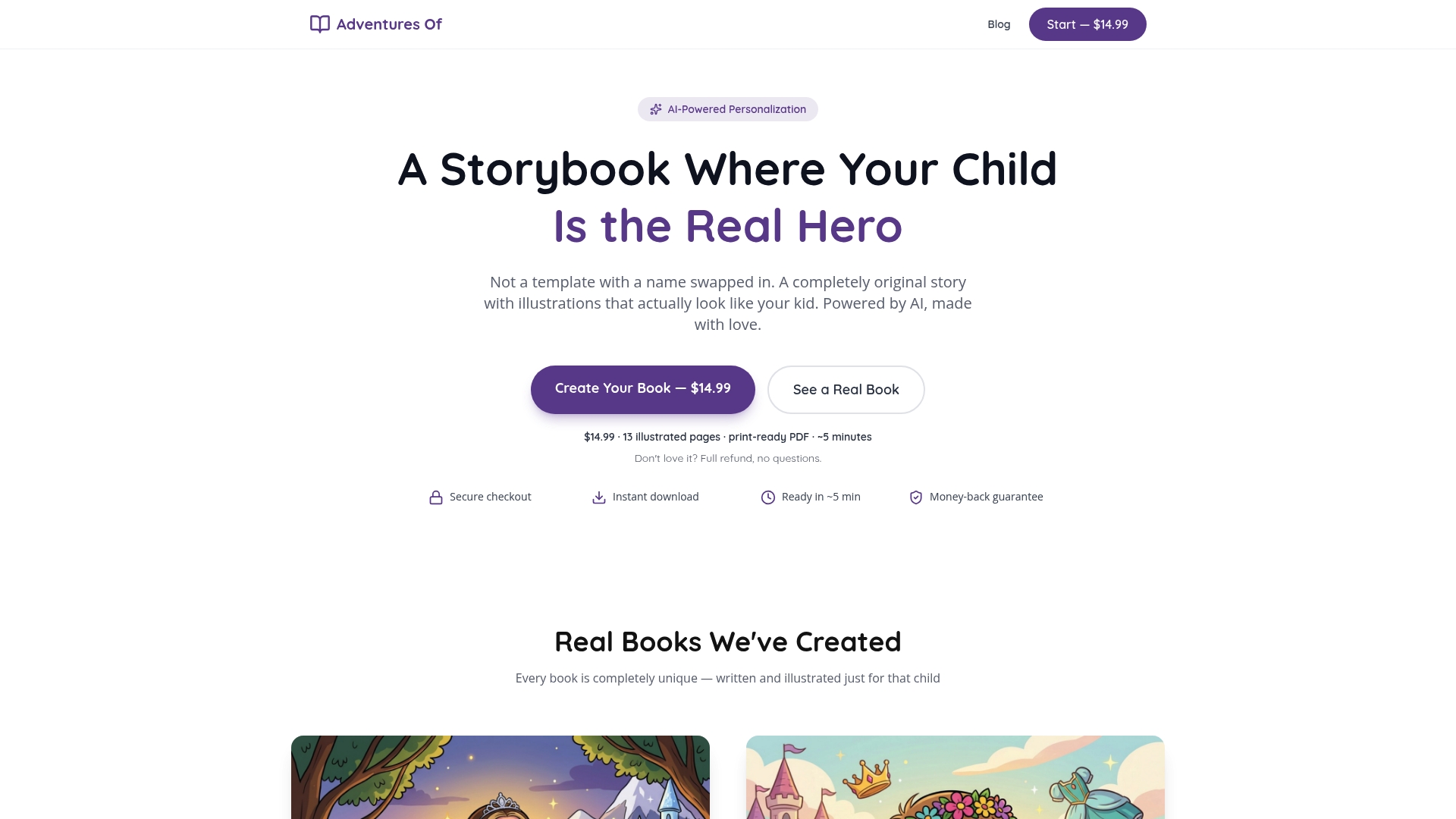
The price is $14.99 one time, with a 7-day refund policy if you are not satisfied. There are no subscriptions and no templates. Every book is written and illustrated specifically for one child. If you are ready to see what a genuinely personalized book looks like, start creating now at Adventuresofbook.
FAQ
What are the key features of custom children's books?
The key features include personalized covers, flexible page layouts, editable text and captions, material choices like matte or glossy pages, and binding options such as hardcover or layflat. Together, these features let parents build a book around a specific child rather than a generic character.
How is a custom book different from a template book?
A template book swaps a child's name into a pre-written story with fixed illustrations. A true custom book, like those from Adventuresofbook, generates an original story and illustrations from the child's actual photos, producing a one-of-a-kind result.
What binding type is best for a children's book?
Hardcover with standard binding suits most keepsakes and gifts. Layflat binding is better for books with wide photo spreads or full-bleed illustrations, since pages open completely flat without losing content in the spine.
Can I edit the text in a custom children's book?
Yes. Most platforms let you add captions, page titles, and longer story paragraphs with font and size controls. Some, like Shutterfly, also offer AI-generated text suggestions you can edit to include personal details specific to your child.
How long does it take to create a custom children's book?
Creation time varies by platform and method. Adventuresofbook generates an original AI story and illustrations in about five minutes. DIY platforms like Shutterfly take longer depending on how much editing you do, typically one to two hours for a complete book.