
Custom books are personalized storybooks that place a specific child at the center of an original narrative, making them one of the most direct tools parents and educators have for sparking creative thinking. Learning how to inspire imagination with custom books goes beyond swapping a name into a pre-written plot. The most effective versions use the child's real photo, interests, and personality to generate a story that exists nowhere else. That specificity is what turns a reading session into a creative experience the child wants to revisit, extend, and make their own.
How custom books inspire imagination more than generic stories
Personalized books that feature the child as the hero boost motivation to imagine story outcomes far more than standard picture books. The reason is straightforward: when a child sees themselves in the story, they stop being a passive reader and start being a participant. That shift from observer to protagonist is where imagination development with storytelling actually begins.
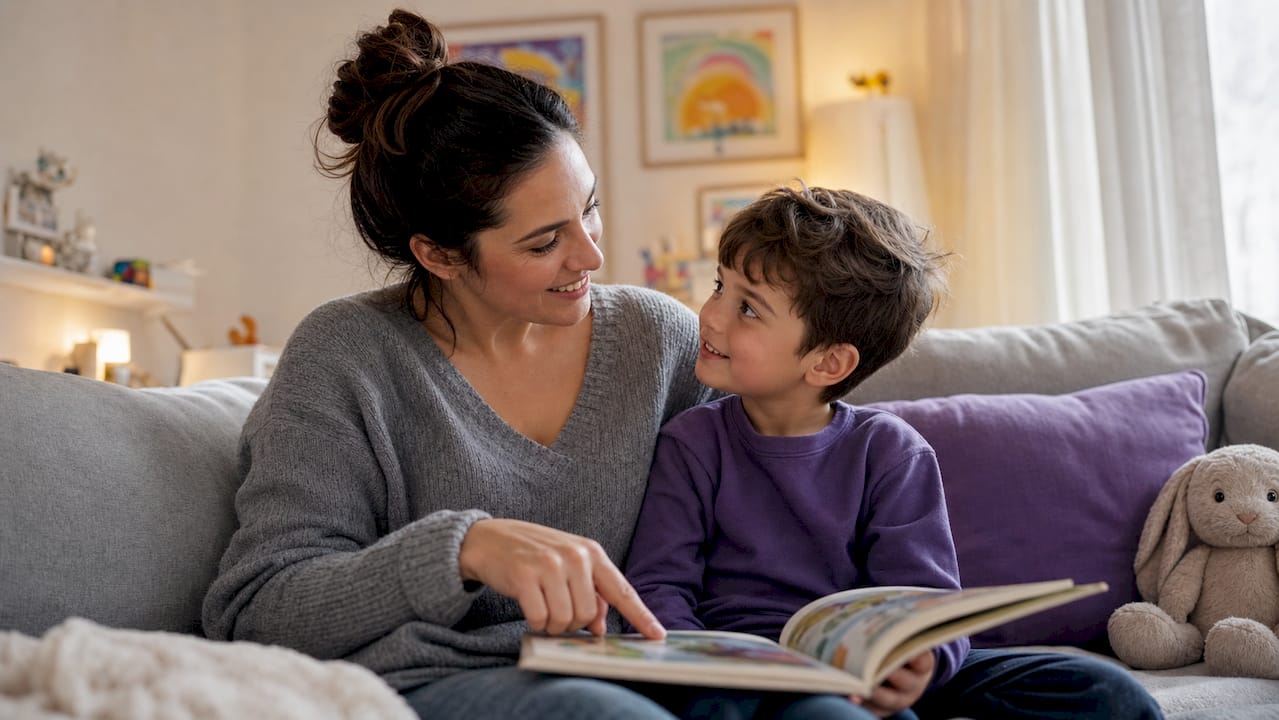
The psychology behind this is well documented. Children exposed to absurd, open-ended stories develop flexible, creative thinking and empathy. That flexibility is the foundation of divergent thinking, which is the ability to generate multiple solutions or story directions from a single starting point.
There is an important distinction to make here between two types of personalized books. Template books insert a child's name and maybe a few physical traits into a fixed story that hundreds of other children also receive. Truly custom books, by contrast, generate an original narrative per child, built around their specific details. The difference in imaginative engagement is significant.
Pro Tip: Ask your child to rename a side character in their custom book. That one small act of ownership opens the door to inventing backstories, motivations, and plot twists they will carry into play long after the book is closed.
| Feature | Template Books | Truly Custom Books |
|---|---|---|
| Story originality | Fixed plot, name swapped in | Original story per child |
| Illustrations | Generic characters | Based on child's real photos |
| Imaginative engagement | Moderate | High |
| Reread value | Low | High, grows with each reading |
Personalized storybooks also function as safe imaginative spaces where children test ideas, explore emotions, and build empathy. That is not a soft benefit. It is the mechanism by which children practice thinking flexibly, which carries directly into academic and social development.
How to choose custom books that actually spark creativity
The single most important criterion when selecting a custom book for creativity is whether the story is original or templated. A book that generates a new narrative from your child's details will always outperform one that slots their name into chapter three of a story written for the masses.
Here is what to look for when evaluating any custom book for creativity:
- Original story generation. The platform should write a new story, not fill in blanks. Ask directly: does every child get a different plot?
- Photo-based illustrations. Characters that look like your child create stronger identification than illustrated avatars with a name label underneath.
- Open-ended themes. Stories that end with unresolved possibilities, or that feature absurd or fantastical elements, invite children to keep inventing after the last page.
- Minimal or no text options. Wordless picture books powerfully promote imagination by requiring children to build their own narrative from visual cues. Some custom book platforms offer low-text formats that serve the same purpose.
- Affordable, fast production. A book that takes three weeks to arrive gets read once. A book available in minutes gets read repeatedly, and repeated engagement deepens narrative complexity and creative thinking.
Pro Tip: For classroom use, order books with different themes for different children. When kids share their stories with each other, the group imaginative output multiplies. Each child becomes a storyteller, not just a reader.
When comparing platforms, Adventuresofbook generates an original AI story and illustrations from uploaded child photos in approximately five minutes. The result is a 13-page, 8.5x8.5 print-ready PDF at $14.99. Wonderbly and Hooray Heroes both produce high-quality books with strong production values, but their stories follow fixed templates with personalized details layered in. Neither approach is wrong. The question is whether you want a story written for your child or a story written for all children with your child's name added.
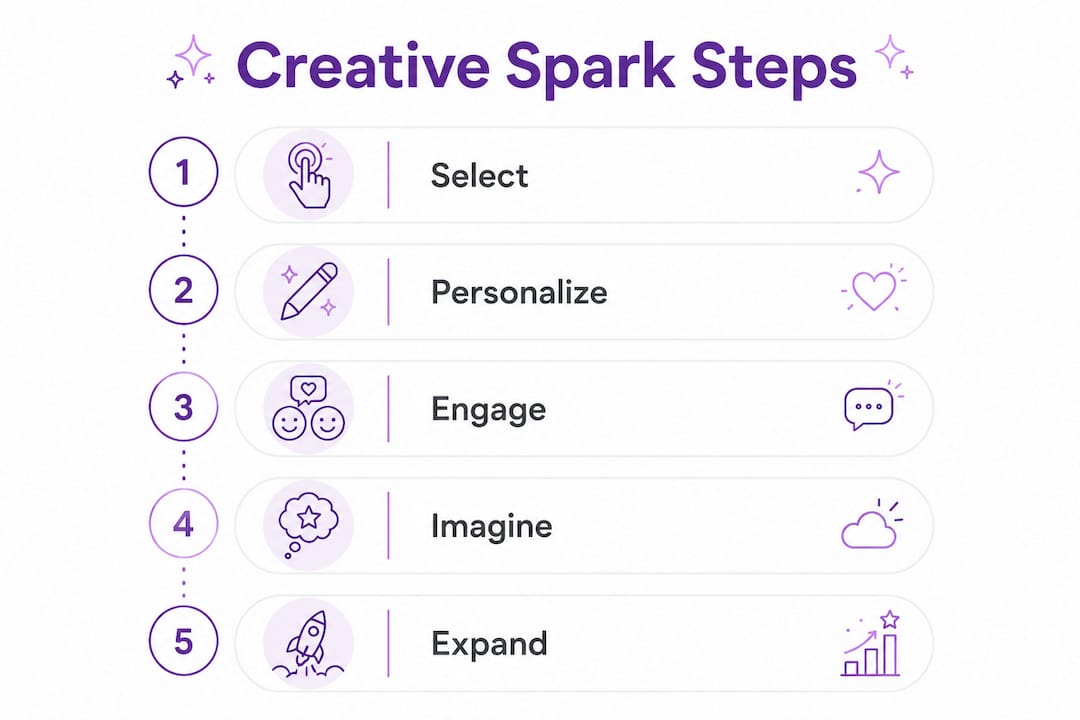
Step-by-step: using custom books to build imaginative thinking
Reading a custom book once is a start. Using it as a creative tool is the goal. The steps below are drawn from child development research and practical reading guidance.
-
Read for at least 15 minutes daily. Nightly reading measurably improves children's creative thinking. Bedtime is ideal because the child is relaxed and the story carries into sleep, which is when the brain consolidates imaginative material.
-
Ask open-ended questions during reading. Replace "Did you like that part?" with "What do you think happens next?" or "Why do you think the character did that?" Open-ended prompts encourage divergent thinking rather than yes/no recall.
-
Pause at turning points. Stop before a resolution and let the child predict or invent the outcome. Then read the actual ending. Comparing their version to the book's version is a rich creative exercise.
-
Extend the story into play. After reading, encourage the child to act out scenes with toys, draw new characters, or build the story's setting with blocks. Physical play anchors the narrative in the child's imagination.
-
Revisit the same book multiple times. Each rereading adds detail. Children who return to the same custom book consistently add new story interpretations and deepen narrative complexity with each pass.
-
Involve the child in story changes. Ask "If you could change one thing in this story, what would it be?" That question alone can generate 20 minutes of creative conversation and a dozen new story ideas.
A few things to avoid: do not correct a child's interpretation of the story. Do not rush to the next page when they are thinking. And do not treat the reading session as a comprehension test. The goal, as child development research consistently shows, is to share an imaginative space between adult and child, not to assess understanding.
Adventures of vs. competitors: which custom book fits your goal?
Adventuresofbook is built specifically for parents who want a book that no other child has. The AI-generated story and illustrations are created from uploaded photos and the child's personal details, producing a genuinely original result in about five minutes. The $14.99 price covers a downloadable PDF you can print at home or through a local print shop. The 7-day refund policy removes the risk.
The one-child-per-book model is a deliberate choice. It means the story is written for one specific child, not adapted from a shared template. That specificity is what drives the imaginative engagement described throughout this article.
Wonderbly produces beautifully designed books with strong narrative craft. Their stories are polished and age-appropriate, and the physical book quality is excellent. The trade-off is that the story is fixed. Your child's name appears in a story that was written before they existed.
Hooray Heroes takes a similar approach, with strong illustration quality and a focus on the child's appearance. Again, the story structure is templated, even if the visual personalization is detailed.
Here is a direct comparison:
| Provider | Story Type | Illustrations | Price Range | Turnaround |
|---|---|---|---|---|
| Adventuresofbook | Original per child | From real photos | $14.99 | ~5 minutes |
| Wonderbly | Template with name | Generic illustrated | $25–$40 | Days to weeks |
| Hooray Heroes | Template with appearance | Customized avatar | $30–$50 | Days to weeks |
Parents and educators who want a book that functions as a creative catalyst, one that the child will return to and build on, will get more from a truly original story. Parents who want a beautifully produced physical gift with strong production values may find Wonderbly or Hooray Heroes worth the wait and higher cost.
Key takeaways
Custom books inspire imagination most effectively when they feature original stories built around the specific child, not generic templates with a name inserted.
| Point | Details |
|---|---|
| Original stories outperform templates | Books with unique narratives per child drive stronger imaginative engagement than name-swap formats. |
| Open-ended questions matter | Asking "What happens next?" during reading generates more creative ideas than closed comprehension questions. |
| Repetition deepens imagination | Rereading the same custom book multiple times adds narrative complexity and creative thinking over time. |
| Photo-based illustrations increase identification | Characters that look like the child create stronger emotional connection and story ownership. |
| Play extends the story | Acting out scenes or drawing new characters after reading anchors the narrative in active imagination. |
What i've learned from watching kids read their own stories
I have sat with a lot of children during reading sessions, and the moment that never gets old is when a child points to a character in a book and says, "That's me." Not "that looks like me" or "that has my name." Just: that is me. That recognition is instant, and what follows it is pure creative energy.
The mistake I see most often is adults treating that moment as the end of the experience. The child sees themselves, smiles, and the adult moves on to the next page. The better move is to stop there and ask what the character is thinking. What are they afraid of? What do they want to do next? Those questions turn a reading session into a story-building session.
I also think we underestimate how much children want to change stories. They are not passive consumers of narrative. Given the chance, they will rewrite endings, add characters, and invent sequels. A custom book that features them as the hero gives them a natural starting point for that kind of creative work. A generic book with their name in it does not, because the story was never really theirs to begin with.
The other thing worth saying: do not worry about doing this perfectly. You do not need a structured lesson plan or a reading curriculum. You need 15 minutes, a book your child actually cares about, and the willingness to let them talk.
— Jason
Create a book that belongs to your child
If you are ready to put your child at the center of a story that was written specifically for them, Adventuresofbook makes the process straightforward. Upload a photo, share a few details about your child, and the AI generates an original story with illustrations that look like them. The whole process takes about five minutes.
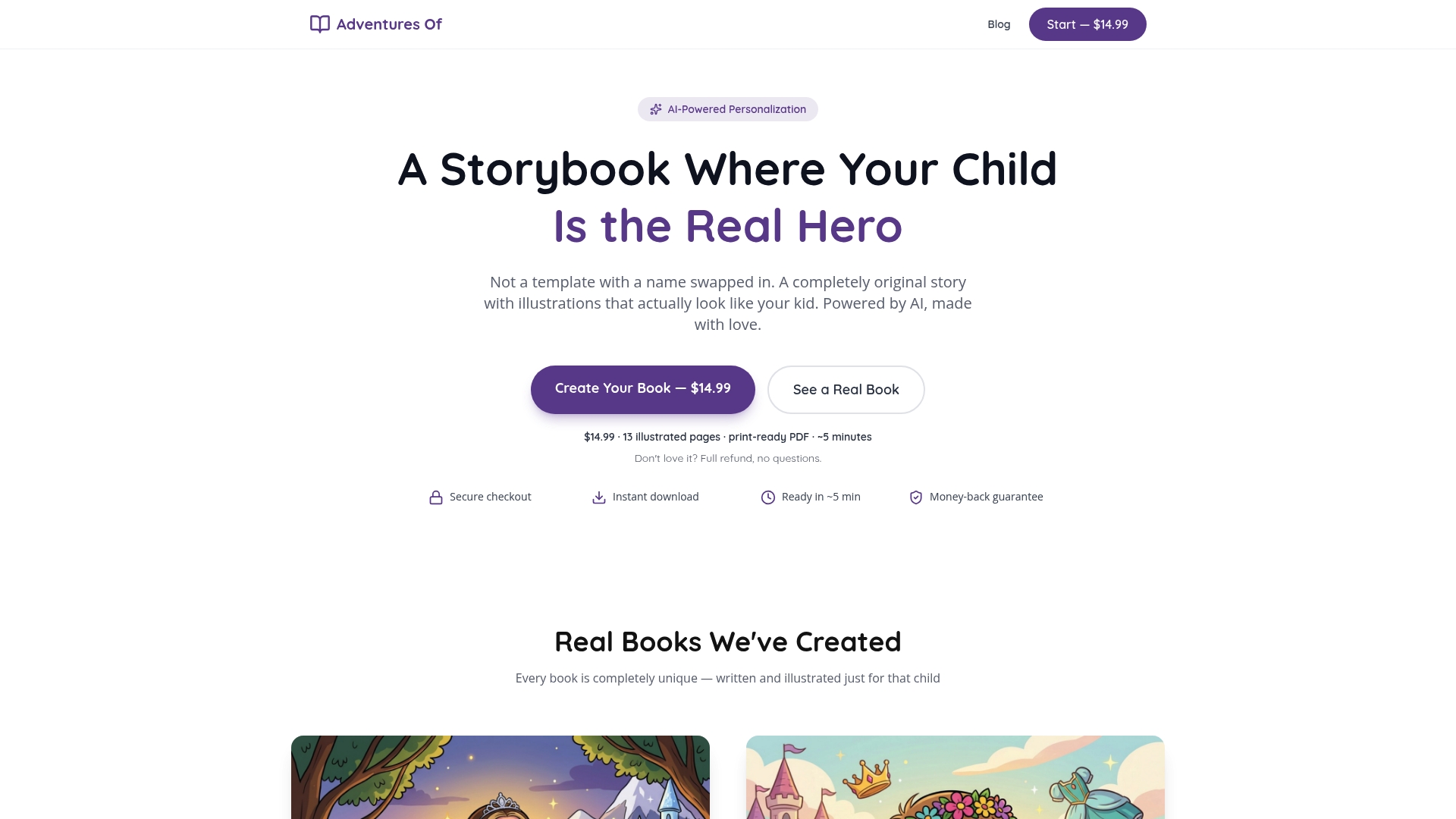
The result is a 13-page, 8.5x8.5 personalized storybook your child can read, reread, and build on. At $14.99 with a 7-day refund policy, it is a low-risk way to give them a story that is genuinely theirs. You can also explore custom baby books if you are creating something for a younger child. Start at adventuresofbook.com/create.
FAQ
What makes a custom book better for imagination than a regular book?
Custom books that feature the child as the hero create stronger emotional identification, which drives children to invent new outcomes and extend the story through play. Original stories, not templates, produce the highest imaginative engagement.
How often should children read their personalized book?
Daily reading of at least 15 minutes produces measurable gains in creative thinking. Rereading the same custom book multiple times is encouraged, as each pass deepens narrative complexity and adds new imaginative detail.
What questions should i ask during a custom book reading session?
Ask open-ended questions like "What do you think happens next?" or "Why did the character do that?" Closed questions like "Did you like it?" do not promote divergent thinking the way open prompts do.
Is Adventuresofbook suitable for classroom use?
Yes. Each book is created for one child, so educators can order individual books for different students. When children share their unique stories with classmates, the group creative output increases significantly.
How is Adventuresofbook different from wonderbly or hooray heroes?
Adventuresofbook generates an original story and photo-based illustrations for each child, while Wonderbly and Hooray Heroes use fixed story templates with personalized details layered in. The core difference is whether the story was written for your child or adapted for them.