
Getting your child to sit still for story time is hard enough. Getting them genuinely excited about what happens next? That's a different challenge entirely. Knowing how to engage kids with personalized stories can change the whole dynamic, turning passive listeners into active participants who actually care about the plot. This guide walks you through exactly what you need, what to do, and what to avoid, so your child doesn't just hear a story but lives inside one.
Table of Contents
- What you need to prepare for personalized storytelling
- Step-by-step guide to creating personalized stories your child will love
- Common pitfalls to avoid and how to troubleshoot story engagement
- Recognizing the results: How personalized stories boost imagination and confidence
- Why personalized storytelling is more than just swapping names: A parent's perspective
- Create your child's one-of-a-kind story today with Adventures Of
- Frequently asked questions
Key Takeaways
| Point | Details |
|---|---|
| Deep personalization matters | Stories tailored to your child’s identity and interests engage them more than superficial name swaps. |
| Interactive reading helps | Using interactive prompts in personalized stories keeps your child actively involved. |
| Personalization boosts confidence | Seeing themselves as the hero fosters your child's imagination and self-esteem. |
| Use authentic details | Incorporate your child’s real appearance and preferences for stronger emotional connection. |
| AI simplifies creation | Modern AI tools let you make custom illustrated storybooks quickly without needing writing skills. |
What you need to prepare for personalized storytelling
Now that you understand why personalized stories matter, here's how to prepare what you need to get started.
Before you write a single sentence, a little groundwork goes a long way. Personalized storytelling works best when you already know your material, and in this case, your material is your child.
Gather the essentials first:
- Your child's full name and nickname, if they have one they love
- Physical details: hair color, eye color, any features they're proud of
- Favorite activities: soccer, painting, building blocks, dinosaurs
- Emotional personality: are they brave, curious, funny, shy?
- People they love: siblings, grandparents, a best friend, a pet
Research confirms that effective personalization requires the child's name and physical appearance to feel real to them. This isn't just a nice touch. It's the foundation of the whole experience.
Choosing the right tools also matters. A story that names your child but uses a generic illustrated character misses the point. Ideally, you want a tool or platform that customizes both the text and the visuals. AI-powered options that generate illustrations from real uploaded photos are especially effective because the child can see themselves on the page. Check out this guide on making a personalized book if you want a fuller picture of your options.
| What to prepare | Why it matters |
|---|---|
| Child's name and nickname | Immediate identification with the protagonist |
| Physical appearance details | Makes illustrations feel like a true likeness |
| Favorite hobbies and interests | Drives plot relevance and emotional investment |
| Key relationships (family, friends) | Deepens the story's emotional world |
| A calm, quiet reading space | Reduces distraction and maximizes immersion |
Pro Tip: Ask your child directly what superpower they'd want or what problem they'd love to solve. Their answer gives you a story premise in about 10 seconds, and they'll be hooked before you've even started.
Step-by-step guide to creating personalized stories your child will love
With preparation in place, let's break down the creation process into clear, actionable steps.
The goal here is not to write a literary masterpiece. It's to create a story your child can see themselves inside of. Follow this process and you'll get there every time.
Step 1: Build a simple story outline Start with a three-part structure: a problem, an adventure, and a resolution. Keep it age-appropriate. For a 4-year-old, "the magical forest is in trouble and only Maya can fix it" is perfect. For a 7-year-old, add a few more obstacles.
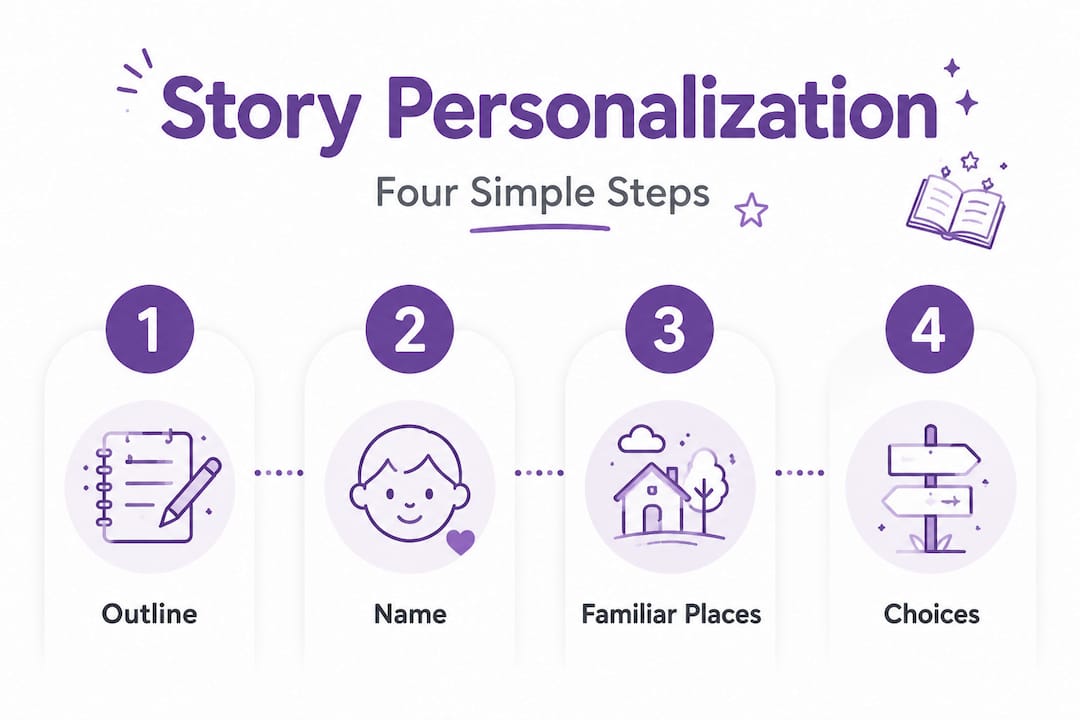
Step 2: Put your child at the center Use their real name throughout, not just once in the introduction. Personalizing protagonist names improves reading comprehension and helps children develop a stronger sense of social agency. The child needs to feel like they are making the decisions in the story, not just observing someone with their name.
Step 3: Root the story in their world Set scenes in places they know: their backyard, their school, their favorite park. Include characters modeled on real people in their life. Including real interests and emotions in the protagonist role supports significantly deeper involvement than generic settings ever could.

Step 4: Add decision points Pause during reading and ask: "What do you think Liam should do next?" or "Do you think they should go through the cave or around it?" These interactive storytelling methods make the child a co-author, not just a listener. Even a two-second pause with a question changes the energy in the room.
Step 5: Make your child the capable hero Check your story before reading it. Does your child solve the main problem? Do they use a real skill or trait they actually have? If the story just swaps a name onto a generic plot, it won't hit differently. The character needs to feel like them, not a placeholder.
Here's a quick checklist to review before you read:
- Child's name used throughout, not just at the start
- Story setting is familiar or meaningful
- A real personality trait drives the plot forward
- At least one interactive moment or question is built in
- The child is the one who solves the core problem
Pro Tip: When you're done writing or generating your story, read it aloud to yourself first. If you can swap any child's name in without changing anything else, it's not personalized enough yet. These personalized book creation tips can help you go deeper.
For parents who want a head start, exploring personalized children's books options gives you a sense of what's already possible without building from scratch.
Common pitfalls to avoid and how to troubleshoot story engagement
Knowing what pitfalls to watch for makes it easier to keep your child captivated through personalized stories.
Even parents who do everything "right" sometimes hit a wall. The child zones out, asks to watch TV instead, or just doesn't seem moved by what should be an exciting adventure. Here's where things usually go wrong.
The name-only trap This is the most common mistake. You take a generic story, swap in your child's name, and expect magic. Superficial personalization without identity-relevant framing limits engagement significantly. The story needs to reflect who your child actually is, not just what they're called.
No interactive moments Passive reading is fine for bedtime wind-down. But if you want real engagement, your child needs to feel involved. Guiding mechanisms and interaction prompts are key to getting quality engagement during story reading. Even one question per page changes everything.
Stories that are too long or too complex Watch your child's eyes. Drifting attention is feedback. Shorter, faster-paced stories often work better than longer ones, especially for children under six. You can always add chapters later once interest is established.
Tips for troubleshooting on the fly:
- If attention drops, ask a question rather than reading faster
- If the story feels flat, bring in a real-life detail mid-read: "Remember when YOU did that last summer?"
- If your child is frustrated or bored, shorten the resolution and end on a high note
- If they keep asking for the same story again, add new detail each time to keep it fresh
There's also a useful comparison between personalized vs template books that can help you understand why some approaches work better than others at a structural level.
The custom book making process is also worth understanding so you know what to expect in terms of depth and detail. And if you want research-backed inspiration on embedding children as lead characters, that resource explores the concept in a broader context.
Recognizing the results: How personalized stories boost imagination and confidence
Understanding these positive outcomes shows why personalized stories are worth the effort to create and share.
Parents often ask whether personalized storytelling actually makes a measurable difference, or whether it's just a nice idea. The research here is clear and a bit surprising.
Personalized books increase story retelling accuracy, text comprehension, and both behavioral and verbal involvement during shared reading. In practical terms: your child pays closer attention, understands more, and participates more. That's a meaningful jump from just swapping a name.
Children whose protagonist names match their own show higher reading comprehension and stronger social-emotional engagement. They start identifying with what the character does, which naturally builds confidence. When a child sees themselves solving problems in a story, they start to believe they can do it outside one too.
"When a child sees their own name, face, and favorite things woven into a story, something clicks. They're not watching a hero. They're being one."
One of the most compelling findings is the effect on children of color specifically. When stories reflect their actual appearance and identity, not just a default character with a name change, verbal and behavioral involvement rises noticeably. Representation in storytelling isn't just a social goal. It's a practical engagement tool.
The benefits of personalized stories also extend beyond single reading sessions. Children who engage deeply with stories build stronger imaginative capacity over time and often develop an earlier love of books. That love, once established, tends to stick.
Why personalized storytelling is more than just swapping names: A parent's perspective
Here's something the usual advice misses: most parents think personalization is a formatting trick. Change the name, done. But that's not what the research shows, and honestly, it's not what children respond to either.
We've seen the data. Effective personalization requires identity-relevant protagonist framing and emotional involvement, not just superficial name swaps. That means building a story where your child's specific courage, curiosity, or kindness is the thing that drives the plot forward.
Think about it from your child's point of view. If a story named "Emma's Adventure" stars a generic red-haired girl who happens to be called Emma, your actual Emma might not care much. But if the Emma in the story loves drawing comics and uses that skill to decode a secret map? Now you have her full attention.
The same logic applies to interactive elements. Interactive story designs with built-in guiding mechanisms genuinely enhance the quality of child engagement beyond what any amount of personalized text alone can do. A question, a pause, a choice given to the child during the story changes their relationship to it entirely.
The layered approach, name plus likeness plus interests plus interactive moments plus personality-driven plot, is what separates a story a child enjoys from one they ask for every night. And it's what separates a book a child reads from one that shapes how they see themselves.
We don't think you need to be a professional author to pull this off. You need to know your child. That's it. Everything else is just execution. Check out more on deep personalization insights if you want to explore what fully personalized versus lightly customized looks like side by side.
Create your child's one-of-a-kind story today with Adventures Of
Ready to bring these storytelling techniques to life? Adventures Of helps you make it simple, meaningful, and uniquely yours.
If building a personalized story from scratch sounds like a weekend project you don't have time for, there's a better way. Adventures Of takes everything in this guide and does the heavy lifting for you in about 5 minutes.
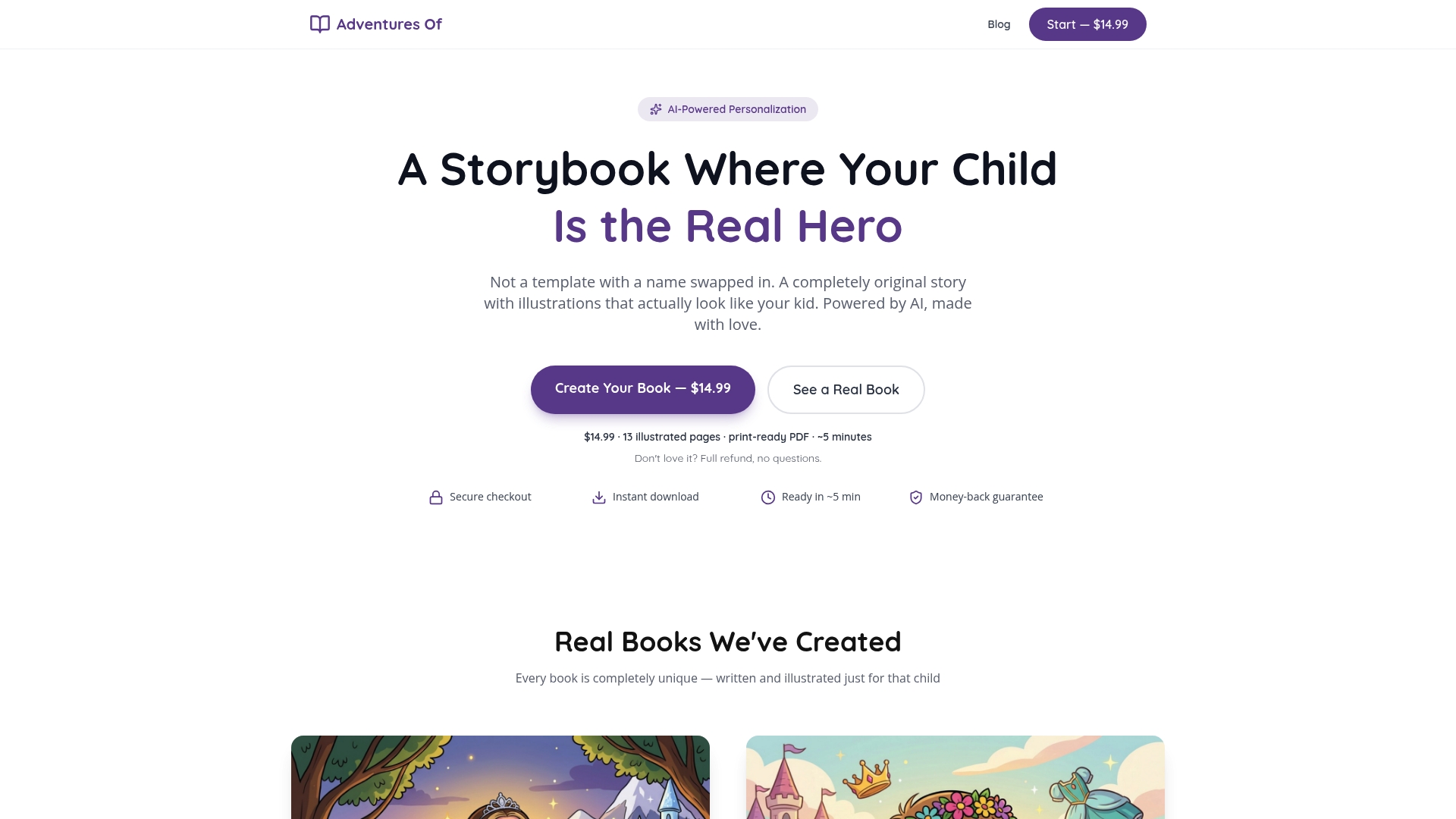
You upload a photo of your child, add their details and interests, and the AI generates a completely original 13-page story with custom illustrations that actually look like your child, not a template character. No name-swapping shortcuts. No recycled plots. A genuinely one-of-one personalized children's book your child will recognize themselves in immediately. You get a print-ready digital file for $14.99, backed by a 7-day refund policy. Whether you're looking for a meaningful gift or a new bedtime ritual, Adventures Of also offers custom baby books for the youngest readers in your family.
Frequently asked questions
How does personalizing a story improve my child's engagement?
Using your child's name and likeness helps them identify with the protagonist, which directly increases attention, comprehension, and emotional investment. Personalized books increase story retelling and behavioral involvement during shared reading.
Is it enough to just change the character's name to my child's?
No. Effective personalization needs to include your child's interests, emotions, and personality, not just a name change. Superficial name swapping limits real engagement because identity-relevant framing is what creates true connection.
Can AI help me create personalized stories easily?
Yes. AI tools can generate custom stories and illustrations quickly by using your child's specific details, making personalized storytelling accessible even if you're not a writer. AI-powered tools can turn simple ideas into engaging illustrated stories in minutes.
Are personalized stories equally beneficial for all children?
Personalization benefits all children, but research shows especially strong gains for children of color, where representation boosts engagement even further. Children of color showed greater verbal and behavioral involvement when stories reflected their real identity.
How long does it usually take to make a personalized storybook?
With AI tools, including Adventures Of, you can create a fully illustrated, personalized storybook in around 5 minutes. This custom book creation process is designed to be fast without sacrificing quality or originality.