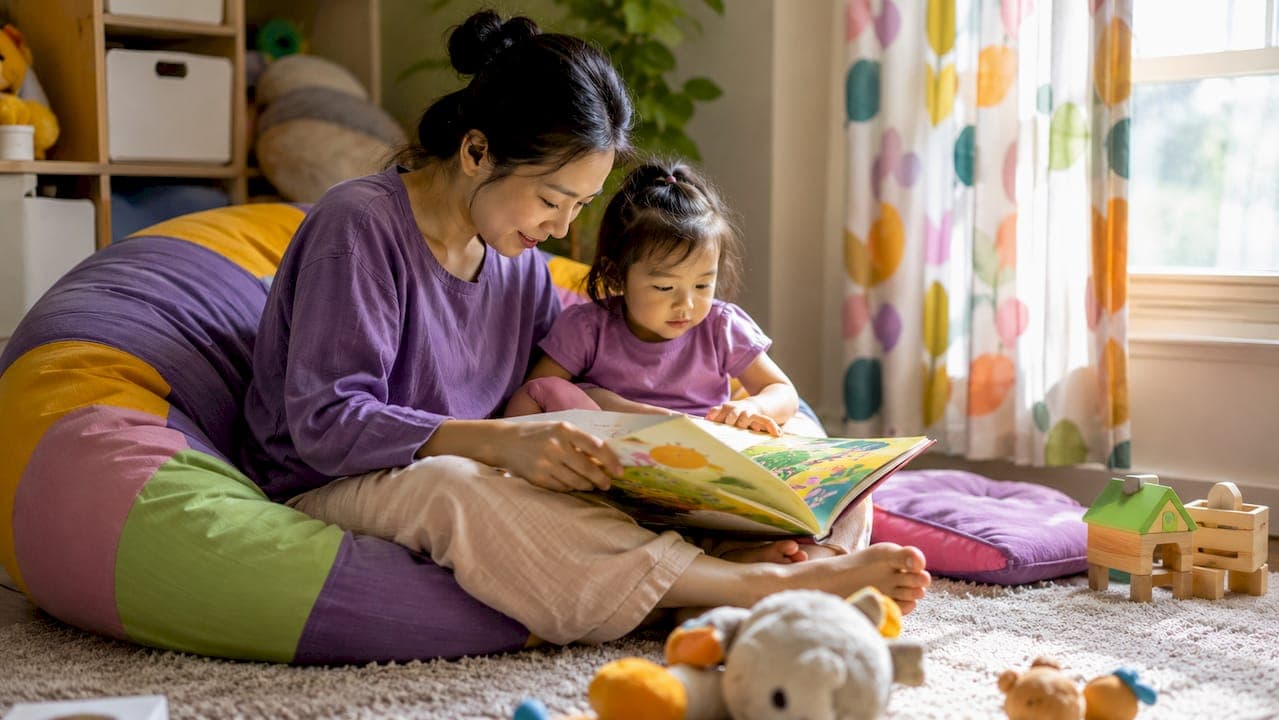
Modern storybooks are defined by a deliberate combination of structured print design, consistent illustration, digital interactivity, and multisensory elements that work together to build comprehension and engagement in young readers. The features of modern storybooks go well beyond a good story and pretty pictures. Publishers, child development researchers, and educators now treat every design choice as a tool for learning. This guide breaks down exactly what those features are, why each one matters, and how you can use them to choose better books for your child.
1. What are the core features of modern storybooks?
Modern children's books are built on a framework that balances tradition with deliberate innovation. The best ones share several identifiable traits: a tight print format, coherent illustration across every page, purposeful interactivity, and sensory elements that draw young readers in physically. Each feature serves a specific developmental goal. None of them are decorative.

Understanding these features helps you stop guessing at the bookstore and start choosing with confidence.
2. The strict 32-page format and why it still matters
Print storybooks follow a rigid 32-page structure built around roughly 14 double-page spreads. This is not an arbitrary tradition. It is driven by printing efficiency and the way children process narrative in short, visual bursts.
Page turns are active storytelling devices. A skilled author places a moment of suspense or curiosity right before each turn, which keeps a child leaning forward. The River Editor's 2026 guide on picture books describes this as "read-aloud musicality." That phrase captures something real: the rhythm of a well-paced storybook feels almost like a song when read out loud.
- Word count discipline: Picture books for ages 3–5 typically stay under 800 words. Books for ages 5–8 can stretch to 1,000–1,500 words. Exceeding these counts usually signals a story that has not been edited tightly enough.
- Text-illustration balance: Text and images should complement each other, not repeat the same information. If the text says "she was scared," the illustration should show how scared, not just a scared face.
- Thematic focus: Modern picture books carry one clear theme per story. Subplots are rare and usually absent entirely.
Pro Tip: When evaluating a print storybook, flip through it before buying. Count the page turns. If the story feels rushed or padded at any point, the format has not been respected.
You can learn more about how format shapes a book in Adventuresofbook's guide to making personalized children's books.
3. How illustration consistency shapes comprehension
Cross-page narrative coherence is one of the most researched and least discussed features of modern storybooks. A 2026 survey on AI-generated storybook illustrations found that consistent character identity, spatial layout, visual style, and thematic elements across pages are critical to reader understanding. That finding applies equally to hand-illustrated books.
Think about what happens when a child sees a character with brown hair on page 3 and blonde hair on page 7. The story does not break, but comprehension does. The child's brain spends energy reconciling the inconsistency instead of following the plot.
Strong illustration consistency involves more than character design. It includes:
- Setting landmarks: Recurring visual anchors (a red door, a specific tree) that tell the child where they are in the story world.
- Viewpoint stability: The "camera angle" of illustrations should not shift dramatically without a narrative reason.
- Color palette coherence: A consistent palette signals emotional tone. Warm colors for safety, cooler tones for tension or mystery.
- Scale relationships: Characters should stay proportionally consistent relative to objects and settings across every spread.
Pro Tip: Before reading a new book with your child, flip through the illustrations alone. Ask yourself whether the main character looks the same on every page. If you notice inconsistencies, the book may create confusion for younger readers.
Narrative coherence through consistent imagery is not just aesthetic. It is essential for comprehension in illustrated storybooks for young children.
4. Digital storybook features that actually improve learning
Digital storybooks show improved reading engagement when narration, illustration, and interactivity are well designed and pedagogically aligned. A 2026 systematic review of 14 studies confirmed this, but it also flagged a clear risk: excessive multimedia harms focus. More features do not automatically mean better learning.
The digital storybook features worth looking for are:
- Voice narration with word highlighting: This links spoken language to printed text, which directly supports phonics development.
- Interactive quizzes at natural pause points: Brief comprehension checks after a key scene reinforce retention without interrupting flow.
- Branching narratives: 62% of students in a 2026 MDPI study reported greater interest when given story choices, especially when those choices were scaffolded with clear instructions.
- Accessibility features: Screen-reader support, large touch targets, and adjustable text size make digital storybooks usable for children with different needs. Projects like StoryPal demonstrate how these features can be built into a single platform for children aged 3–12.
- Parent activity reports: Some platforms track reading time, quiz scores, and vocabulary exposure, giving parents a clear picture of engagement.
"Digital storybook features boost engagement only when multimedia elements are carefully paced and aligned with learning goals; otherwise, they can overwhelm young readers." — Systematic Review, 2026
The practical takeaway for parents: look for digital books where the interactive elements feel like part of the story, not interruptions to it. A sound effect that plays when a child taps a frog is fun. A pop-up quiz that appears mid-sentence is not.
You can read more about interactive books for kids and how they support learning in a dedicated guide from Munkte Products.
5. Branching narratives and the power of story choice
Branching narratives give children agency inside a story. The child makes a choice at a decision point, and the story changes direction based on that choice. This format is the children's book version of a choose-your-own-adventure novel, and research backs its effectiveness.
The 2026 MDPI study on branching narratives found that clear feedback loops at choice points are what make this format work. When a child picks an option and the story immediately shows the consequence of that choice, comprehension and engagement both rise. When the feedback is absent or confusing, the format loses its advantage.
Branching stories also build early critical thinking. A child who chooses to have the hero climb the tree instead of cross the bridge is practicing cause-and-effect reasoning. That is a genuine cognitive skill, not just entertainment.
6. Multisensory and tactile features in physical books
Tactile features on physical storybooks, such as touch-and-feel textures on board book pages, offer multisensory engagement that supports early childhood development. Penguin Random House's 123s of Kindness at Bedtime by Patricia Hegarty is a concrete example: it includes a texture on every other page across its 12-page format, giving toddlers something to feel as well as see.
Multisensory engagement matters because young children learn through their whole bodies, not just their eyes. When a child touches a rough texture labeled "rocky path" or a soft patch labeled "bunny fur," the sensory input reinforces the vocabulary. The word and the sensation become linked in memory.
Physical tactile books work best for children under age 4. As children develop stronger reading skills, the tactile elements become less critical, and illustration and narrative complexity take over as the primary engagement tools.
7. Themes in contemporary literature for children
Themes in contemporary literature for young readers have shifted noticeably over the past decade. Modern children's books now regularly address emotional literacy, neurodiversity, family structures beyond the nuclear norm, and environmental responsibility. These are not political choices. They are responses to what children actually encounter in their lives.
A book that reflects a child's real experience builds what researchers call "mirrors and windows." A mirror shows the child their own life. A window shows them someone else's. Both are necessary for empathy development. Publishers like Penguin Random House, Candlewick Press, and Lee and Low Books have made diverse representation a stated editorial priority, which means the selection of books with these themes is now broader than it has ever been.
8. Character development in modern storybooks
Character development in modern storybooks is more intentional than it was in earlier decades. Characters in contemporary picture books are allowed to fail, feel confused, and change their minds. That shift matters because children identify with characters who feel real.
The most effective character arcs in picture books follow a simple structure: the character wants something, faces an obstacle, tries and fails, and then succeeds through a change in approach or perspective. This mirrors the emotional challenges children face daily. When a child sees a character work through frustration and come out the other side, they absorb a model for their own behavior.
Key Takeaways
The most effective modern storybooks combine structured print design, coherent illustration, purposeful digital interactivity, and sensory elements to build both engagement and comprehension in young readers.
| Point | Details |
|---|---|
| Print format is a feature | The 32-page structure and page turns are active storytelling tools, not just publishing conventions. |
| Illustration consistency builds comprehension | Stable character design, color palette, and viewpoint across pages reduce cognitive load for young readers. |
| Digital features need alignment | Narration, quizzes, and branching choices only improve learning when paced and tied to the story's goals. |
| Tactile elements support early learners | Touch-and-feel textures in board books link sensory experience to vocabulary for children under age 4. |
| Themes and character arcs matter | Books that reflect real emotions and diverse experiences build empathy and give children models for their own behavior. |
My honest read on what actually moves the needle
I have spent a lot of time with children's books, both as a parent and as someone who thinks carefully about how stories are built. My honest observation is this: most parents focus on theme and illustration style when choosing a book, and those things matter. But the features that most reliably determine whether a child stays engaged are the ones that are hardest to see at a glance.
Page turn pacing is one. A book that rushes through its spreads or drags in the middle will lose a child's attention no matter how beautiful the art is. Illustration consistency is another. I have watched children stop mid-story to ask "why does she look different now?" That question is a sign the book has failed at a basic design level.
With digital storybooks, I am genuinely cautious about feature overload. A platform that offers narration, ambient sound, animated elements, and pop-up quizzes all at once is not giving a child a richer experience. It is giving them a distraction machine. The accessibility features guide from CoreForge Audio makes a useful point: the best digital reading tools are the ones where the technology disappears and the story takes over.
The books I keep coming back to, print or digital, are the ones where every feature serves the story. Nothing is there for its own sake. That is the standard worth holding.
— Jason
How Adventuresofbook puts your child at the center of the story
If you want a book that combines the best of modern storybook design with genuine personalization, Adventuresofbook is worth a look. It uses AI to generate an original story and illustrations based on your child's actual photo and personal details. There are no templates and no generic characters with a name swapped in. Your child is the hero, drawn to look like themselves.
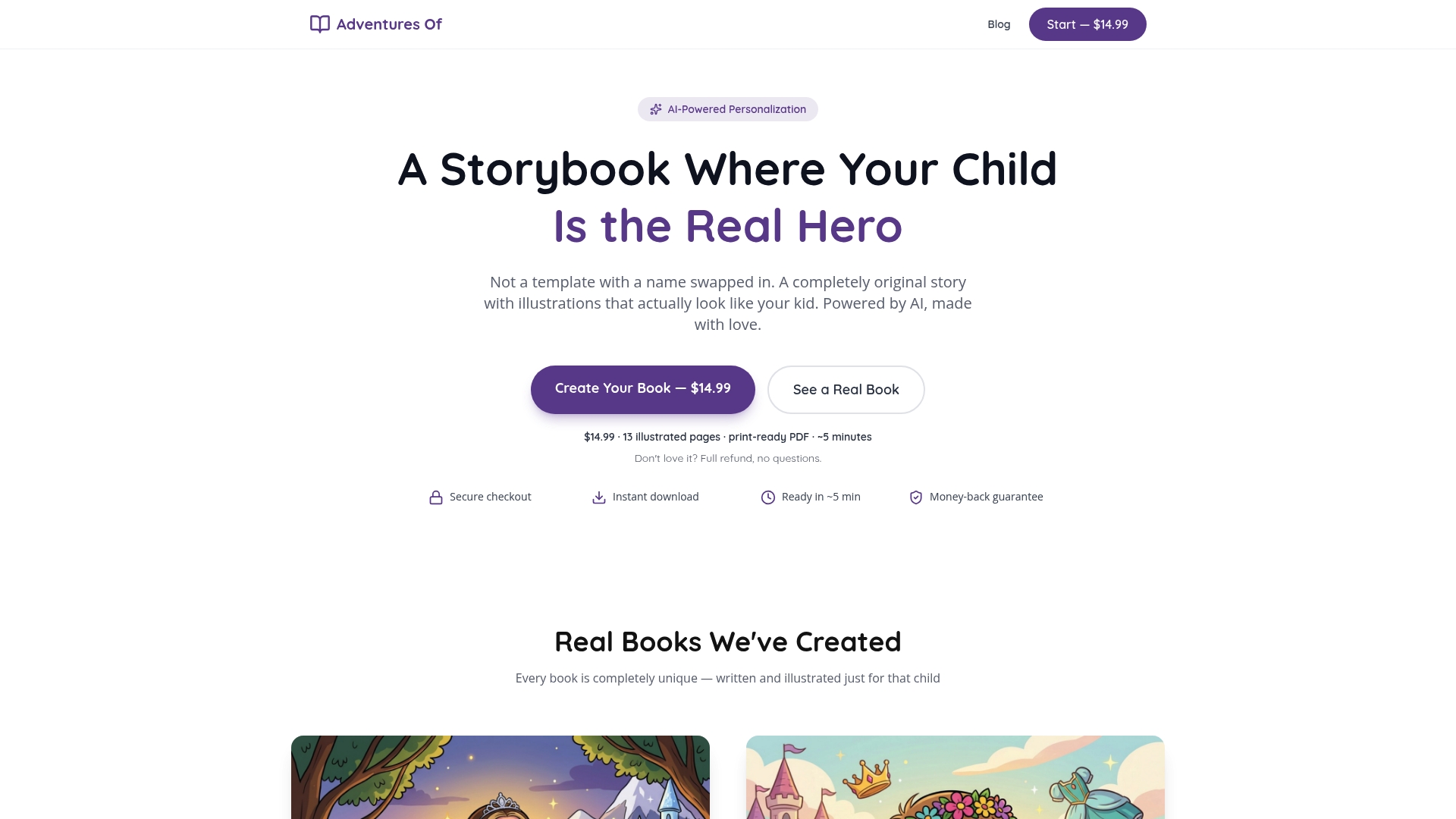
The process takes about five minutes. You upload a photo, add your child's details, and receive a 13-page, 8.5x8.5 print-ready PDF for $14.99. It comes with a 7-day refund guarantee. If you want a book that reflects your child's face, name, and world, you can start with personalized children's books at Adventuresofbook. For younger children, the custom baby books option is a strong starting point.
FAQ
What is the standard length of a modern picture book?
Modern picture books follow a 32-page format with approximately 14 double-page spreads. This structure is driven by printing conventions and the natural rhythm of read-aloud storytelling.
Do digital storybooks actually help children learn to read?
Digital storybooks improve reading engagement when narration, illustration, and interactivity are carefully aligned with learning goals. Excessive or poorly paced multimedia can reduce focus rather than build it.
What makes branching narrative storybooks effective?
Branching narratives work best when they include clear feedback at choice points, showing children the consequence of each decision. Without that feedback, the format loses its engagement and learning benefits.
Why does illustration consistency matter in children's books?
Consistent character design, color palette, and viewpoint across pages reduce the cognitive effort children spend on visual reconciliation. This frees their attention for story comprehension, which is why cross-page coherence is treated as a core design requirement in modern storybooks.
At what age are tactile storybooks most useful?
Tactile board books with touch-and-feel textures are most effective for children under age 4. At that stage, sensory input directly reinforces vocabulary and concept learning in ways that text and illustration alone cannot match.