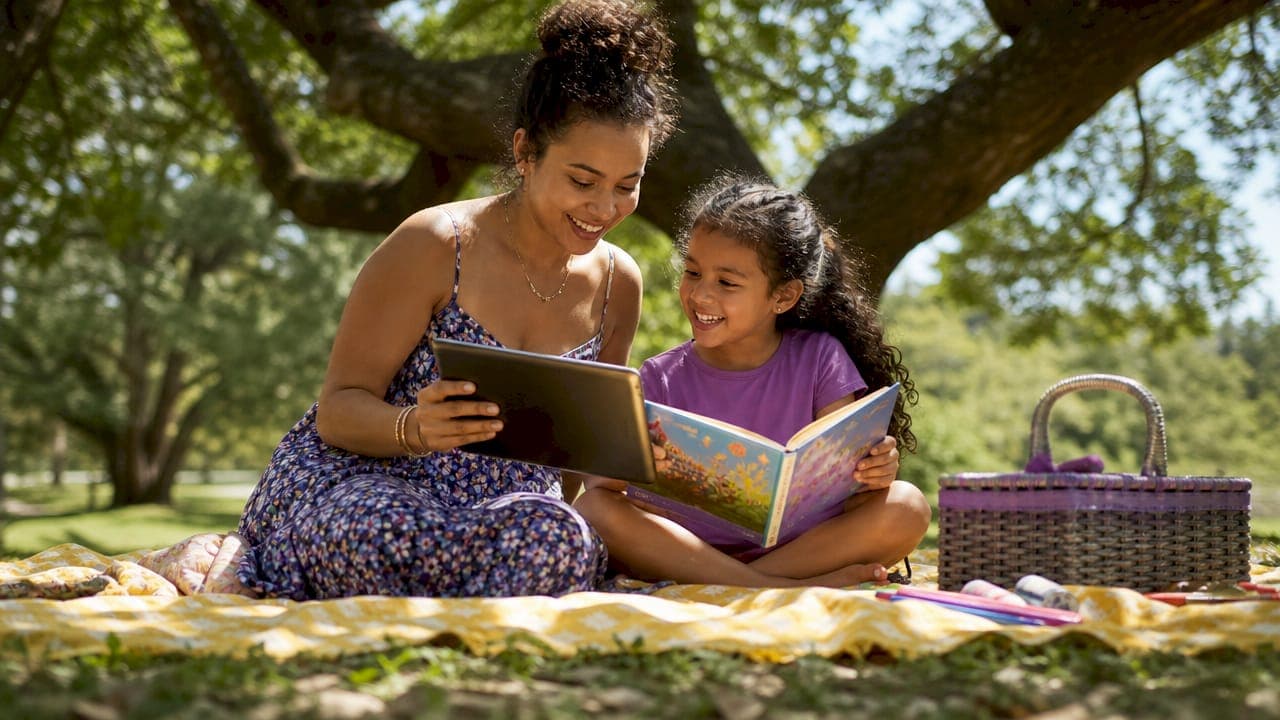
E-commerce for kids books is the online purchase and sale of children's literature through digital platforms, including retail marketplaces, subscription services, and print-on-demand storefronts. The industry has grown sharply: online retail accounted for 42% of U.S. children's book sales in 2023, up from 28% in 2019, with Amazon and Barnes & Noble as the dominant forces. That shift means parents now have more ways than ever to find books matched to their child's age, reading level, and identity. Formats range from physical picture books to e-books and audiobooks, and newer services go further by personalizing the story itself around your specific child.
What is e-commerce for kids books, and what types exist?
E-commerce for kids books covers three distinct models, and knowing which one you are dealing with changes what you should expect from the experience.
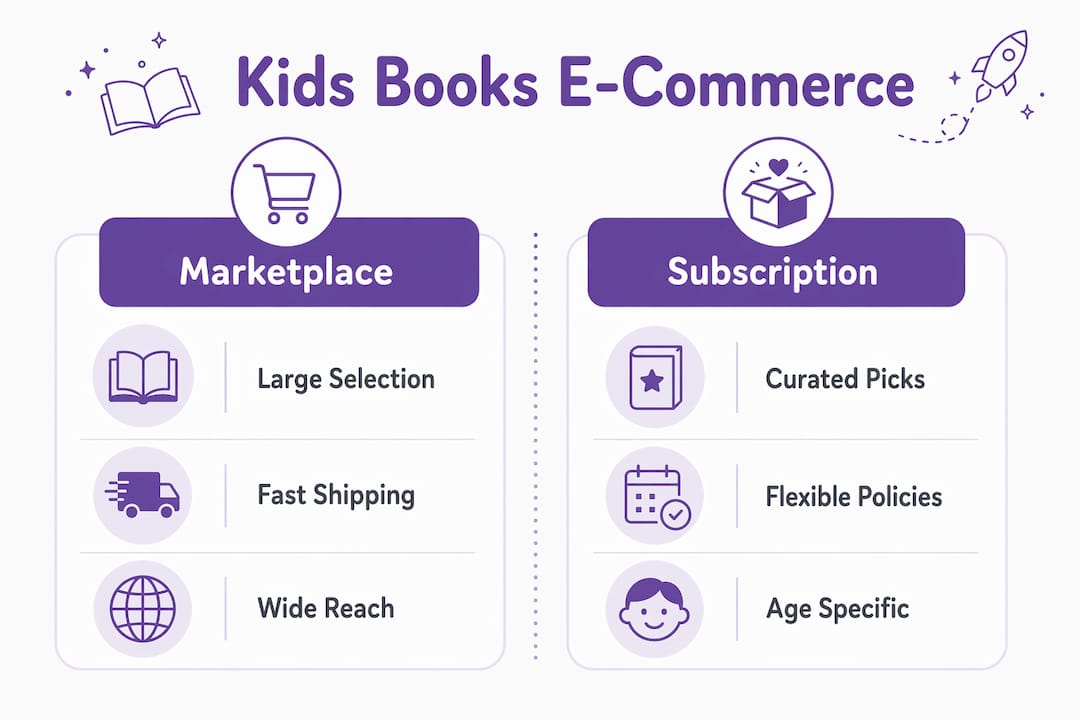
Retail marketplaces are the most familiar. Amazon and Barnes & Noble carry millions of titles, ship fast, and surface user reviews that help you gauge quality before buying. The selection is broad, but the experience is generic. You search, you filter by age range, you buy. There is no one helping you figure out whether a book actually fits your six-year-old who is obsessed with space and hates princess stories.
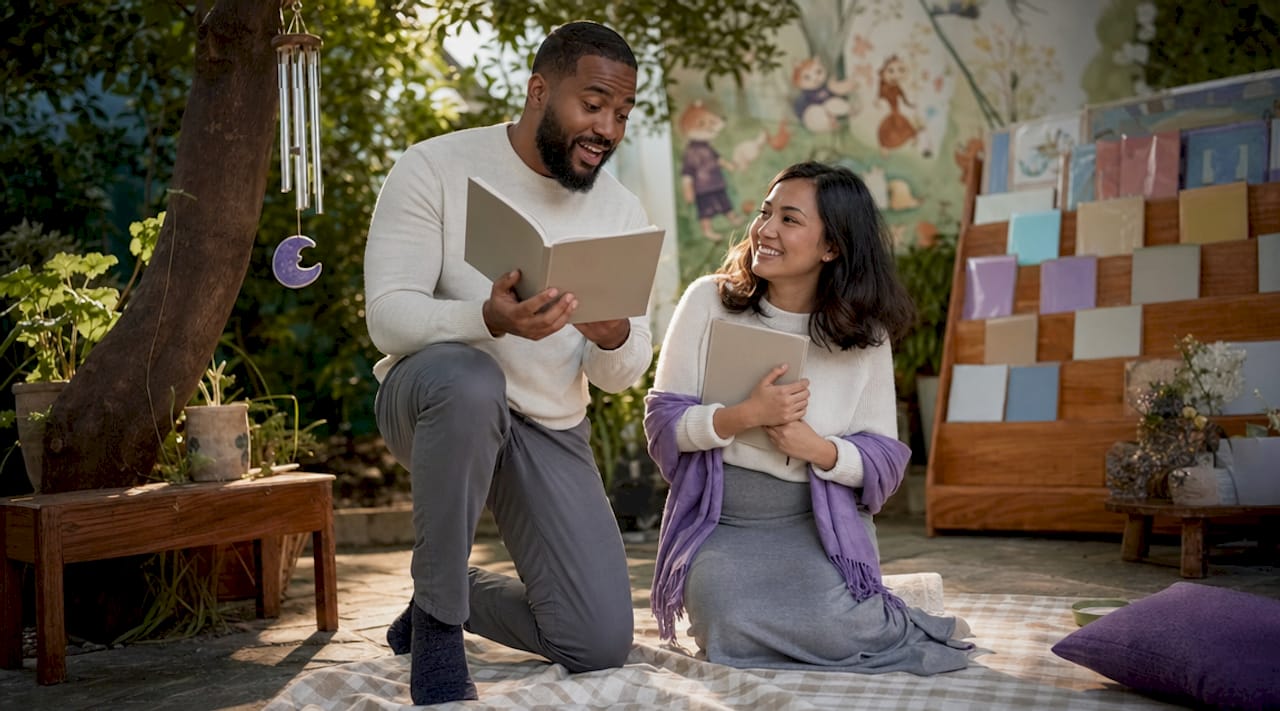
Subscription book clubs solve that problem by doing the curation for you. Services like Elephant Books deliver age-banded packages monthly for children ages 0 to 6, with personalized gift notes and specialty packaging included. JustBookify uses AI to match selections to a child's reading level and stated interests, and it lets families swap out books that miss the mark. These services mimic the feeling of receiving a thoughtful gift rather than a warehouse shipment.
Print-on-demand storefronts are the third model, and they are the most relevant if you want something genuinely one-of-a-kind. Independent authors and creators sell directly through platforms like Shopify or WooCommerce, with fulfillment handled by services like Lulu Direct. The book is printed after you order it. No inventory sits in a warehouse. This model is how personalized children's books featuring your child's actual name, interests, and even physical likeness reach your door.
- Retail marketplaces: widest selection, fastest shipping, no personalization
- Subscription clubs: curated by age and interest, recurring delivery, gift-ready packaging
- Print-on-demand: made to order, highly personalized, independent creators
Pro Tip: When buying from a subscription service, check whether they offer a flexible replacement policy before committing. JustBookify, for example, lets you swap books that are unwanted or unavailable, which matters when your child's tastes shift every few months.
How does online shopping for children's books compare to physical bookstores?
The honest answer is that they are not substitutes. They are partners. Research published in the Journal of Industry, Competition and Trade found that each bookstore closure correlates with roughly 210 fewer children's books sold monthly, and that decline affects online sales too, not just in-store purchases. When a local bookstore closes, the community loses a discovery engine that was quietly feeding online purchases as well.
Physical bookstores offer something no algorithm has fully replicated: a knowledgeable bookseller who can watch your child pick up a book, flip through it, and put it back down, then hand them something better. That tactile, social experience is especially valuable for picture books, where the art style and page feel matter as much as the story.
Online shopping wins on selection, price comparison, and convenience. You can find out-of-print titles, niche topics, and books featuring diverse characters that a small local store may not stock. You can read hundreds of parent reviews at midnight without driving anywhere.
| Factor | Physical bookstore | Online e-commerce |
|---|---|---|
| Selection | Limited to store inventory | Millions of titles available |
| Discovery | Expert staff recommendations | Algorithms and user reviews |
| Personalization | Occasional gift wrapping | Gift notes, custom books, subscriptions |
| Convenience | Requires travel, set hours | 24/7, ships to your door |
| Community | Story times, author events | Limited to digital forums |
"Parents value a hybrid approach: discovering books in a physical store, then purchasing conveniently online." — Research on brick-and-mortar and e-commerce complementarity, Springer
The practical takeaway is to use both channels deliberately. Browse at your local bookstore when you can. Buy online when you need selection, speed, or personalization that a physical shelf cannot provide.
What should parents consider when choosing kids book subscriptions or personalized books?
Choosing well comes down to four things: age alignment, interest matching, flexibility, and what the service adds beyond the book itself.
-
Age-banded selections matter more than you think. A book written for a five-year-old and one written for an eight-year-old are not interchangeable, even if both are labeled "picture books." Look for services that sort by specific age ranges rather than broad categories like "ages 4 to 8."
-
Interest matching separates good services from great ones. JustBookify's AI-based selection tailors books to a child's stated interests and reading level, and it adds gamification elements like badges and reading achievement points to keep kids engaged between deliveries. That kind of sustained motivation is harder to build with a one-time purchase.
-
Flexibility protects your investment. Kids change fast. A child who loved dinosaurs in January may be fully committed to robots by March. Services that allow substitutions or pauses without penalty are worth paying a small premium for.
-
Look at what surrounds the book. Elephant Books includes personalized gift notes and distinctive packaging as part of the experience. That attention to presentation signals that the service thinks about the child receiving the book, not just the parent ordering it. For gift-giving, that difference is significant.
For personalized books specifically, the question is whether the customization is real or cosmetic. Many services swap a child's name into a pre-written template story. That is a different product from a book where the story, the character's appearance, and the plot are generated around your specific child. Both exist in the market. Neither is dishonest, but they deliver very different experiences.
Pro Tip: Before subscribing, check whether the service publishes its curation criteria. If a company cannot explain how it matches books to your child, it is probably running a generic rotation with a personalized label on top.
How do print-on-demand services work for personalized kids books?
Print-on-demand, or POD, is the production model behind most truly personalized children's books sold online. Here is how the workflow actually runs when you buy from a creator using Lulu Direct integrated with a storefront like Shopify or WooCommerce.
You place an order and pay the creator directly through their storefront. The platform transfers the production cost to the POD provider. The provider prints and binds the book, then ships it directly to you under the creator's branding. The creator never touches physical inventory. You receive a book that was made specifically for your order.
The benefits for buyers are real. Because no inventory is held, creators can offer niche products that a traditional publisher would never greenlight. A book featuring a child with a specific cultural background, a rare medical condition, or an unusual combination of interests becomes commercially viable when you only print what sells. For parents looking for inclusive storytelling options, POD is what makes those books possible.
The trade-offs are worth knowing upfront:
- Production takes longer than warehouse fulfillment. Plan for 5 to 10 business days before shipping begins.
- Per-unit cost is higher than mass-produced books, which is why personalized POD books typically cost more than a standard picture book from Amazon.
- Quality varies by provider. Lulu Direct is well-regarded for print quality, but not every creator uses the same standards.
| Feature | POD storefront | Large retailer |
|---|---|---|
| Personalization | High, made to order | None or template-based |
| Production speed | 5 to 10 days before shipping | Same day or next day |
| Price per book | Higher | Lower |
| Creator revenue control | Direct, higher margin | Royalty-based, lower margin |
| Inventory risk | None | Held by retailer |
For parents, the practical implication is simple. If you want a book that genuinely features your child, not a character with your child's name, POD is the model that makes it possible. Plan ahead for delivery time, and read the creator's fulfillment policy before ordering for a birthday or holiday.
Key takeaways
E-commerce for kids books works best when parents match the buying model to what they actually need: speed and selection from marketplaces, curation from subscriptions, and genuine personalization from print-on-demand.
| Point | Details |
|---|---|
| Three distinct models exist | Marketplaces, subscriptions, and print-on-demand each serve different parent needs. |
| Online and offline are complementary | Bookstore closures reduce both in-store and online children's book sales. |
| Age and interest matching matters | Services like JustBookify use AI to align books with reading level and stated interests. |
| POD enables real personalization | Print-on-demand lets creators produce books featuring your specific child without holding inventory. |
| Flexibility protects your subscription | Swap policies and pause options are worth prioritizing when children's interests shift quickly. |
My honest read on where this market is heading
I have spent a lot of time looking at how parents actually buy children's books online, and the pattern I keep seeing is this: the parents who are happiest with their purchases are the ones who were clearest about what they wanted before they clicked buy.
If you want volume and variety, a marketplace like Amazon is genuinely hard to beat. If you want someone else to do the thinking for you, a well-run subscription service is worth the monthly cost. But if you want a book that makes your child feel like the story was written about them specifically, because it was, then neither of those options fully delivers.
What I find underappreciated is how much the packaging and presentation of a children's book affects the child's relationship with it. Elephant Books figured this out early. The physical experience of receiving a curated package, with a personal note and thoughtful wrapping, creates anticipation that a plain cardboard box from a warehouse does not. That emotional layer is not frivolous. It is part of why kids remember certain books and forget others.
The caution I would offer is about the word "personalized." It is used loosely. A book with your child's name in the title is not the same as a book where the character looks like your child and the story was written around their specific interests. Both are sold online. Read the product description carefully, and look at sample pages before you pay.
The best approach I have found is to treat online and offline channels as tools for different jobs, use physical bookstores for discovery and community, and use e-commerce for selection, personalization, and convenience. Neither replaces the other. They work better together.
— Jason
How Adventuresofbook creates a book starring your actual child
If you have read this far and you are thinking about a personalized book that goes beyond a name swap, Adventuresofbook is worth a look.
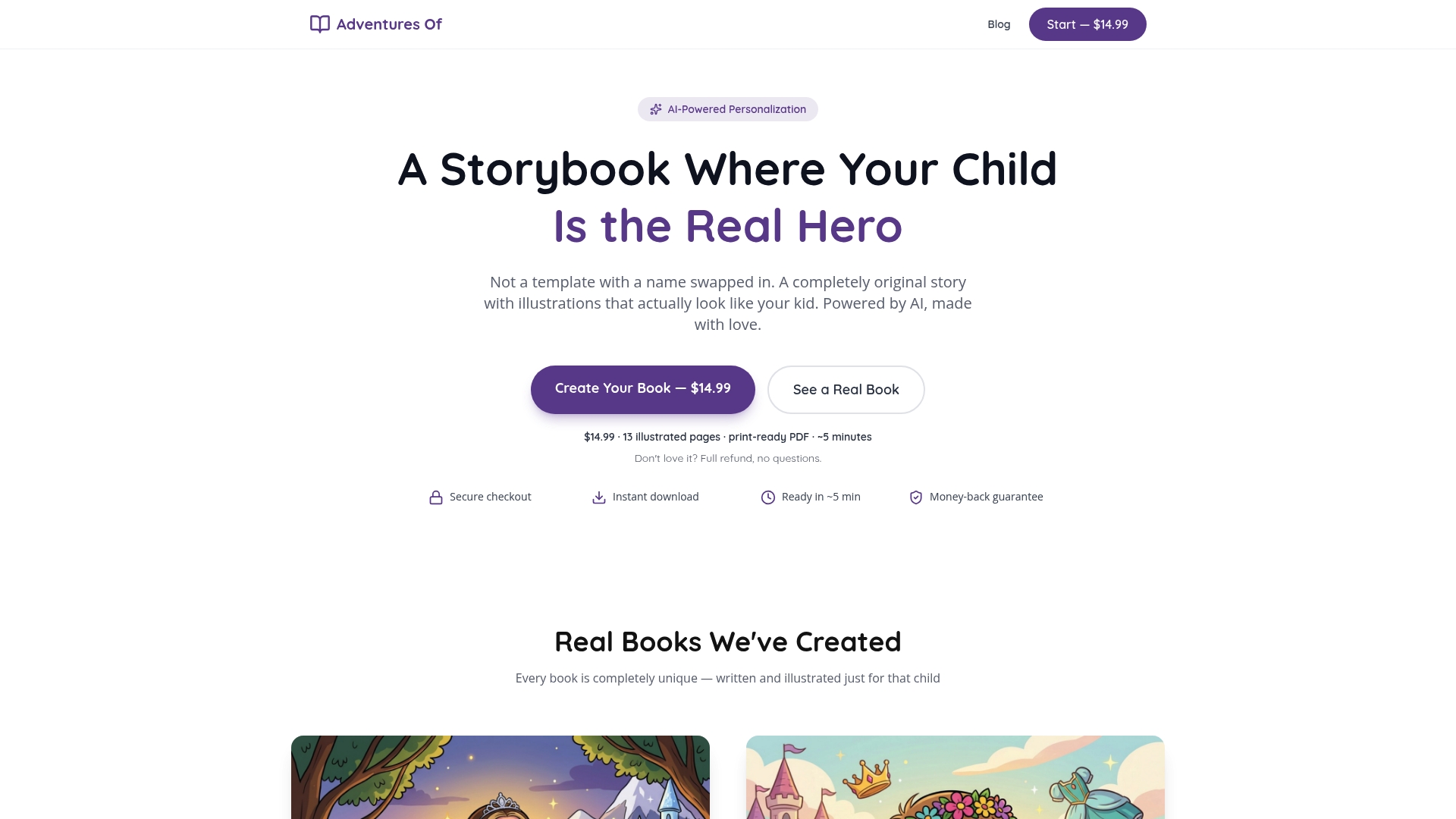
The process takes about five minutes. You upload a photo of your child, add their name and a few details about their interests, and the AI generates an original story with 13 illustrated pages where the character looks like your child. Not a generic cartoon with a name label. An illustration built from the photo you uploaded. The result is an 8.5x8.5 print-ready PDF you can download immediately or send to a local printer. The price is $14.99 one-time, and there is a 7-day refund policy if it does not meet your expectations. You can see the full range of personalized storybook options on the site, or go straight to creating your book now.
FAQ
What is e-commerce for kids books, exactly?
E-commerce for kids books is the buying and selling of children's literature through online platforms, including retail marketplaces, subscription clubs, and print-on-demand storefronts. Online retail represented 42% of U.S. children's book sales in 2023, covering physical books, e-books, and audiobooks.
Are online children's book subscriptions worth it?
They are worth it if the service matches books to your child's specific age and interests rather than sending generic selections. Services like JustBookify use AI-based curation and allow book swaps, which makes the subscription more likely to stay relevant as your child grows.
How long does a print-on-demand children's book take to arrive?
Print-on-demand books are produced after you order, so expect 5 to 10 business days for production before shipping begins. Lulu Direct's fulfillment model prints and ships directly to the customer with no inventory held by the creator.
Do physical bookstores hurt or help online kids book sales?
Physical bookstores help online sales. Research shows that each bookstore closure corresponds to roughly 210 fewer children's books sold monthly, with declines in both in-store and online channels. Discovery in physical stores drives purchases across both formats.
What is the difference between a personalized and a customized kids book?
A customized book typically inserts a child's name into a pre-written template story. A personalized book, like those from Adventuresofbook, generates an original story and illustrations based on the child's actual photo and specific details, producing a genuinely one-of-a-kind result.