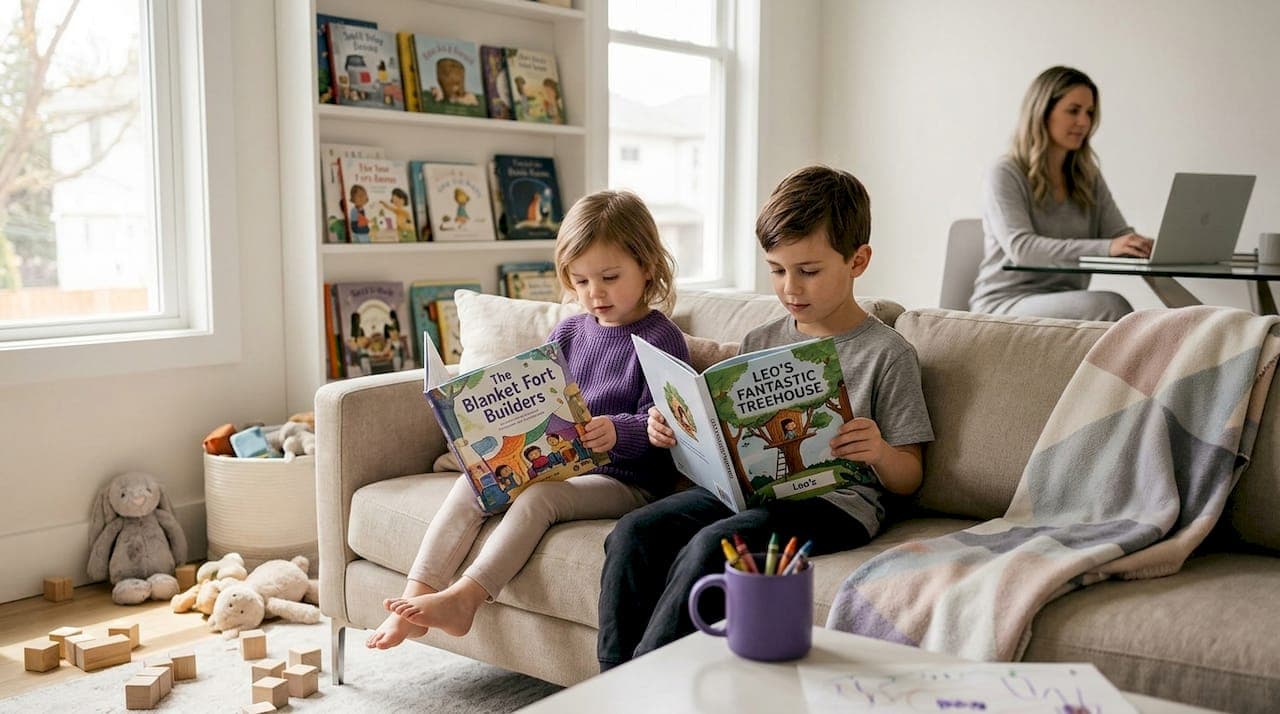
When your child spots their own name and face in a storybook for the first time, something clicks. Their eyes go wide, they lean in, and suddenly reading time isn't a negotiation anymore. That reaction is not a coincidence. A growing body of research suggests that personalization in children's books does far more than entertain. It shapes behavior, builds identity, and may even teach kids to be kinder. But many parents still assume that a well-loved classic off the shelf is just as good. This article breaks down what the evidence actually says, and helps you figure out which type of book delivers the most value for your child.
Table of Contents
- What makes a book 'custom' vs 'generic'?
- Why do personalized storybooks boost engagement and prosocial behavior?
- Representation: Custom books as tools for inclusion
- Practical considerations: Cost, creation time, and gift impact
- A fresh take: Why custom storybooks are more than a trend
- Where to find custom children's books that make a difference
- Frequently asked questions
Key Takeaways
| Point | Details |
|---|---|
| Personalization boosts engagement | Children are more attentive and emotionally invested in books featuring themselves. |
| Representation matters | Custom books allow families to address underrepresentation and affirm children's identities. |
| Prosocial behaviors increase | Personalized storybooks encourage sharing and empathy more than generic options. |
| Gift value is higher | A custom book creates lasting memories and unique excitement, making it ideal for special occasions. |
| Consider practicalities | Custom books require more investment in time and money but deliver meaningful results. |
What makes a book 'custom' vs 'generic'?
Let's start with the basics, because these two terms get mixed up a lot.
A generic book is a traditionally published storybook with universal characters, preset names, and plots designed to appeal to the widest possible audience. Think classic picture books with characters like curious monkeys, friendly bears, or adventurous children with no specific background or face. They're widely available, often beautifully illustrated, and written by skilled authors. Nothing wrong with them at all.
A custom book, on the other hand, is built around a specific child. It might feature the child's actual name, a character that looks like them, their hometown, their favorite toy, or even their siblings. Some custom books use templates where the name is inserted into a preset story. Others, like AI-generated books, create entirely original stories and illustrations based on photos and details you provide. The difference between those two types of custom books matters, and you can read more about it in our breakdown of personalized vs template books.
Here's a quick side-by-side look at how these two options compare:
| Feature | Custom storybook | Generic storybook |
|---|---|---|
| Character appearance | Resembles the child | Universal or fictional |
| Child's name | Yes, built in | No |
| Cultural background | Can be tailored | Usually limited |
| Availability | Made to order | Instantly available |
| Story originality | High (especially AI-generated) | Preset |
| Representation | Fully customizable | Often limited |
| Price | Typically higher | Lower |
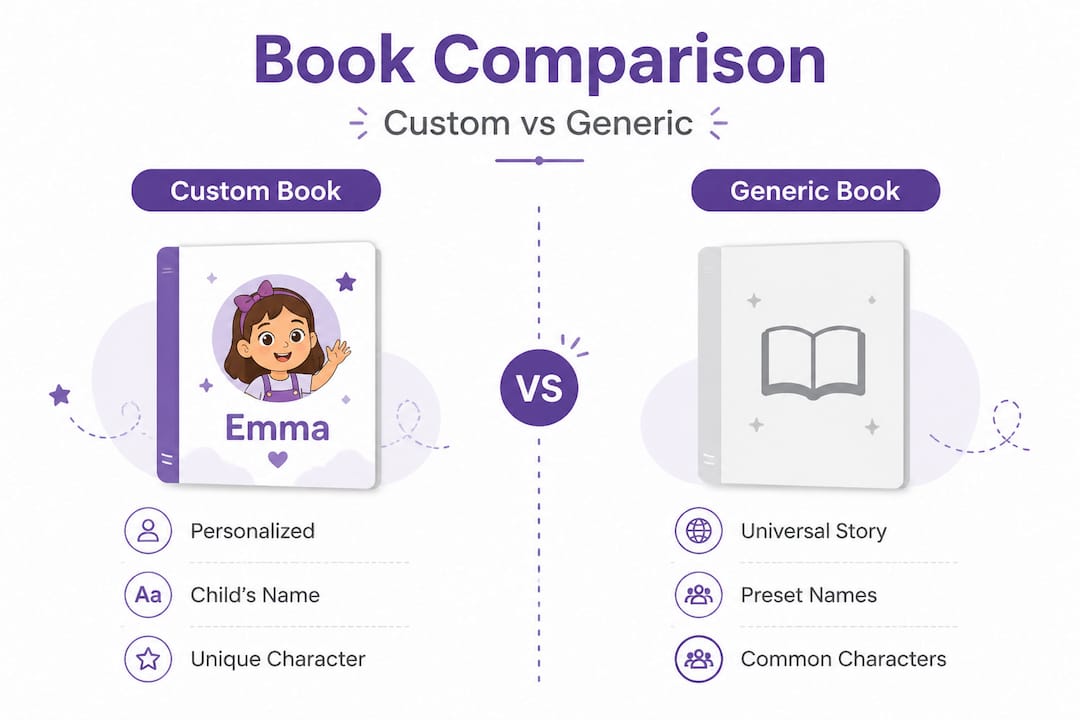
One area where this distinction matters most is representation. Research shows that children of color benefit most from seeing themselves in stories, precisely because mainstream publishing still underrepresents them. A Black child, a South Asian child, or a child with a physical disability rarely finds a character that truly looks like them in a generic book. A custom book fixes that immediately.
Key differences at a glance:
- Generic books prioritize broad appeal; custom books prioritize the individual child.
- Custom books can reflect a child's ethnicity, family structure, and personality.
- Template custom books insert a name but keep everything else generic; AI-generated custom books build the story from scratch.
- Generic books are easier to find in stores; custom books often require ordering online.
With those definitions clear, we can look at what happens when a child actually reads a personalized story versus a standard one.
Why do personalized storybooks boost engagement and prosocial behavior?
Here's where the research gets genuinely surprising.
Most parents expect that a personalized book will be more fun for their child. Fewer expect it to make their child more generous. But that's exactly what the science suggests. Personalized storybooks increase altruistic sharing behavior more than non-personalized or neutral stories. Children who read books where they were the main character were more likely to share with others afterward compared to kids who read a story with a different protagonist.
Why does that happen? The short answer is identification. When a child sees their own name, face, or experiences reflected in a character, they emotionally merge with that character. They don't just observe what the character does. They feel like they are the character. That means the moral lessons in the story land much harder. If "Emma" in the book decides to share her snack, and your daughter is Emma, she's far more likely to internalize that choice as her own.
"Personalized storybooks appear to increase altruistic sharing behavior more than non-personalized or neutral stories, suggesting a meaningful link between character identification and real-world prosocial action."
This has real implications for how you choose books during early childhood. Story time isn't just downtime. It's one of the most effective windows for teaching empathy, fairness, and kindness. Custom books use that window more efficiently.
What personalized books do better:
- Hold attention longer, especially in easily distracted toddlers and preschoolers.
- Create a stronger emotional investment in the story's outcome.
- Increase the likelihood that lessons from the story transfer to real behavior.
- Make children feel seen, which supports emotional regulation and confidence.
If you're curious about how to bring a personalized story to life, take a look at our guide on making a personalized book. And if you're shopping for a younger child, our custom baby books are a great starting point for building a reading habit from the very beginning.
With the engagement and behavioral benefits established, there's another dimension worth looking at closely: what happens when a child never sees someone like themselves in a story at all.
Representation: Custom books as tools for inclusion
The children's publishing industry has made progress on diversity, but it still has a long way to go. A child from an underrepresented background can spend years reading books where no one looks like them, talks like them, or lives like them. Over time, that absence sends a quiet but powerful message: stories aren't really about people like you.
Custom books break that pattern completely.
When you create a personalized book for a child, you can include a character with their skin tone, their hair texture, their family setup, and their cultural traditions. That's not a small thing. Research confirms that children of color benefit most from this kind of personalization, specifically because they are so consistently left out of mainstream children's literature.
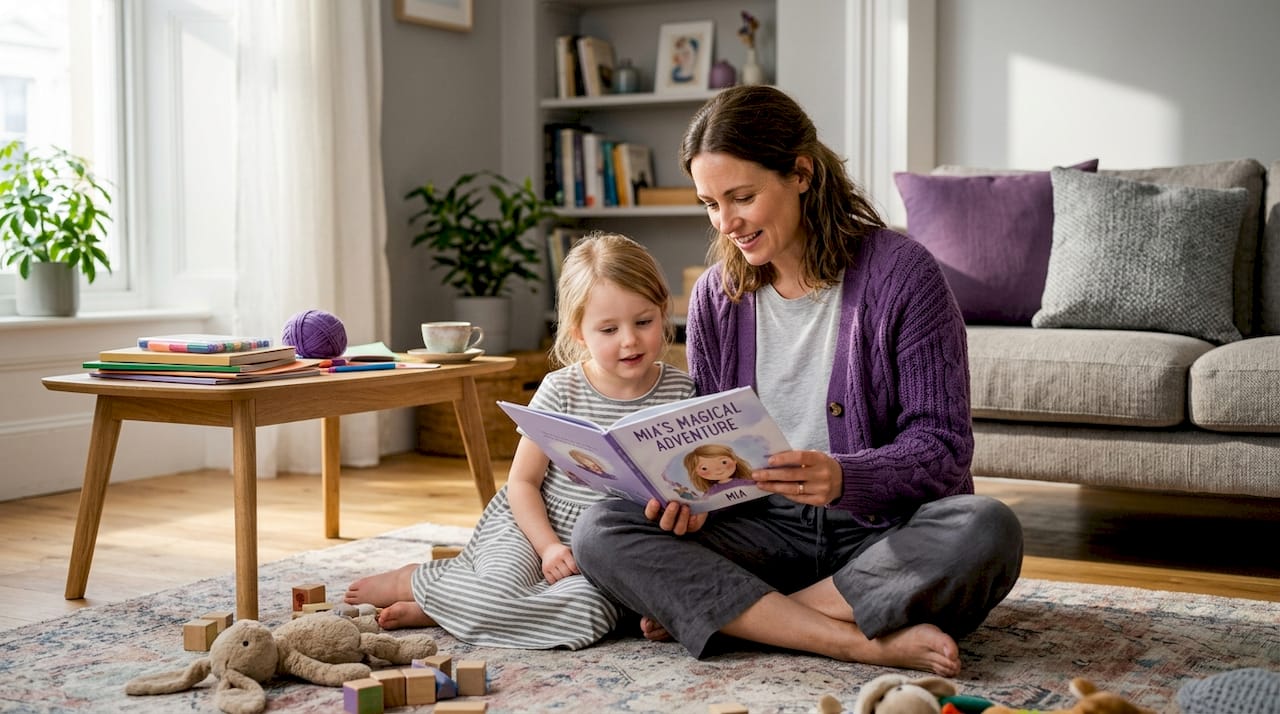
Here's how the representation gap plays out in practice:
| Representation factor | Custom books | Generic books |
|---|---|---|
| Skin tone match | Yes, fully adjustable | Rarely |
| Hair type/texture | Yes | Rarely |
| Cultural traditions | Yes, story can include them | Occasionally |
| Family structure (single parent, same-sex parents, etc.) | Yes | Limited |
| Language or names from the child's culture | Yes | Almost never |
| Child with disability or difference | Yes | Rarely |
This isn't about politics. It's about a child's sense of belonging. When kids see themselves in stories, they develop a healthier self-concept and are more motivated to engage with reading long term. That's a win on every front.
Pro Tip: Use a custom book as a starting point for cultural conversations. If your family celebrates a specific holiday, honors particular traditions, or speaks another language at home, build those details into the story. A personalized book that includes those elements becomes a keepsake that reinforces cultural pride alongside literacy skills.
For families looking to create that kind of meaningful experience, our personalized children's books let you shape the story around your child's real world, not a fictional stand-in.
Understanding the power of representation helps you see custom books as more than a novelty. But parents also have practical questions, and those deserve honest answers.
Practical considerations: Cost, creation time, and gift impact
Let's be real. Custom books cost more than generic ones. A classic picture book from a bookstore might run you $8 to $15. A custom book typically ranges from $20 to $50 or more, depending on quality and format. For some families, that's a meaningful difference.
But here's the way we think about it: generic books are easy purchases that get forgotten. Custom books become keepsakes. They're the kind of gift that a child asks to read again and again, that parents save long after childhood, and that carry genuine emotional weight. If you're choosing a birthday or holiday gift, that's worth factoring in.
The research backs this up too. Because personalized books increase sharing behavior and emotional engagement, they deliver more measurable developmental value per reading session. You're not just buying a book. You're investing in a tool that actively shapes how your child relates to others.
How to create a personalized book, step by step:
- Choose a reputable provider that offers true customization, not just name insertion.
- Upload a photo of your child so the illustrations can resemble them.
- Fill in key details: name, age, interests, family members, favorite things.
- Review the story and illustration previews if the platform offers them.
- Download your digital file or order a printed copy.
- Add a personal message inside the cover to make it extra special.
If you're unsure how long this takes, our post on the custom book timeline walks through what to expect. And for more gift ideas that go hand in hand with personalized books, our gift guide for kids has you covered.
Pro Tip: If you're ordering for a birthday or holiday, start earlier than you think you need to. Even digital books take a few minutes to generate and review, and printed copies need shipping time. Build in at least a week of buffer to avoid last-minute stress.
The practical case for custom books is strong once you weigh cost against impact. But there's a bigger picture here that most articles miss.
A fresh take: Why custom storybooks are more than a trend
We hear this sometimes: "Custom books are cute, but it's just a novelty. Kids grow out of it fast." We disagree, and here's why.
The novelty argument misses what personalization actually does to a child's developing brain. When a child sees themselves as the hero of a story, they're not just entertained. They're being told, at a formative moment, that their life is worth telling a story about. That's a different message than anything a generic book delivers, no matter how good the writing is.
There's also an undervalued role custom books play in family bonding. Reading a story where your child is the main character becomes a shared ritual. You're not just reading at them. You're reading about them, together. Parents and grandparents who sit down with a custom baby book aren't just filling reading time. They're creating a memory with the child's face at the center of it.
We also think the comparison to generic books sets up a false choice. You don't have to pick one. A great home library has both. The classics bring timeless themes and gorgeous craft. Custom books bring the child themselves into the story. Used together, they cover more developmental ground than either could alone.
What we do think is fair to say is this: if you've never tried a custom book with your child, you might be underestimating what it can do. The behavioral research, the representation research, and frankly the reaction on a child's face when they realize they're the hero, all of it points to something more lasting than a novelty.
Where to find custom children's books that make a difference
Now that you understand the real difference between custom and generic books, the next step is finding a source you can trust.
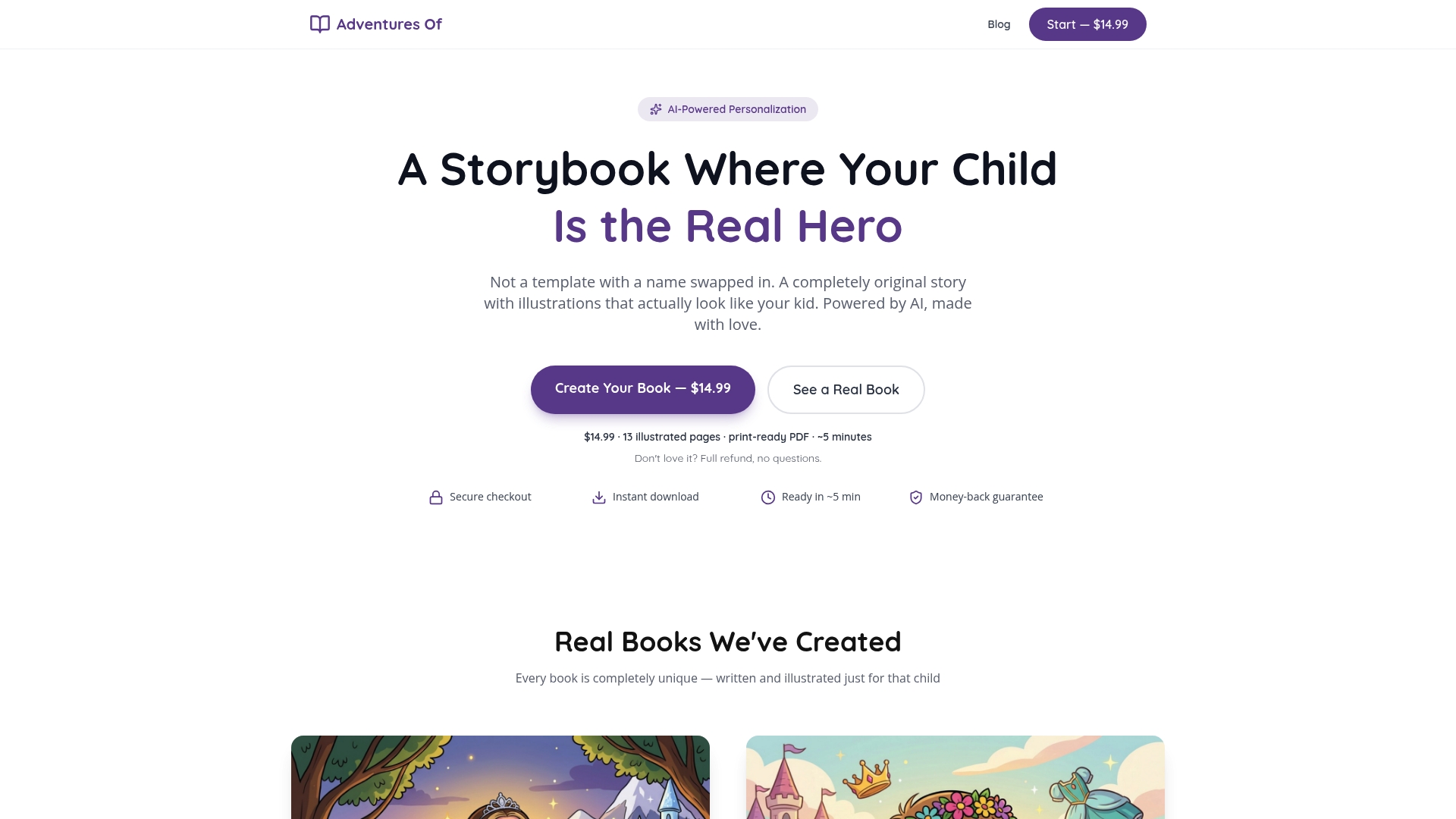
At Adventures of Book, we use AI technology to create fully original storybooks based on your child's photo and personal details. There are no templates, no generic characters, and no recycled plots. Every book is built from scratch in about five minutes, and you get a print-ready digital file you can download immediately or have printed and shipped. If you're ready to see your child become the hero of their own original story, browse personalized books to get started. You can also see custom baby books if you're shopping for a younger child, or simply explore all storybook options to find the right fit. Every order comes with a money-back guarantee, so there's no risk in trying.
Frequently asked questions
Do personalized storybooks really improve social skills?
Yes. Research shows that custom books increase sharing and compassion among young children more effectively than generic stories, because children identify more deeply with a character that resembles them.
Are custom children's books better for kids from underrepresented groups?
Absolutely. Studies confirm that children of color benefit most from personalized books, because mainstream publishing consistently underrepresents them, and seeing themselves in a story supports identity and confidence.
How long do custom books take to create and deliver?
Most custom children's books can be created online in just a few minutes, with digital downloads available immediately and printed copies typically arriving within one to two weeks depending on the provider.
Do custom books cost much more than generic books?
Custom books do typically cost more than store-bought picture books, but the added engagement, behavioral benefits, and lasting value as a keepsake make that extra investment worthwhile for most families.
Recommended
- Personalized Books vs. Template Books: What's the Actual Difference? | Adventures Of
- How to Make a Personalized Children's Book (Without Losing a Saturday) | Adventures Of
- How Long Does It Take to Make a Custom Children's Book? | Adventures Of
- Personalized Children's Books — Starring Your Kid | Adventures Of