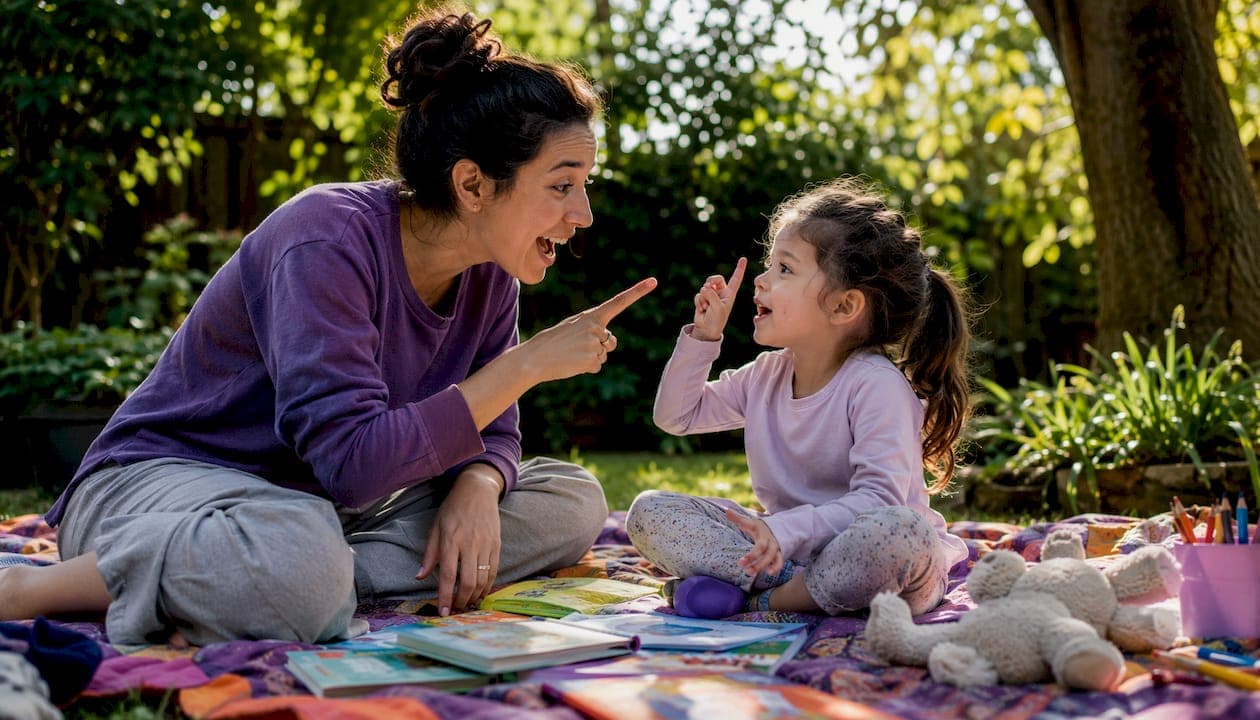
The best children's storytelling tips, right up front
Good storytelling with kids is less about performance and more about connection. Storytelling builds vocabulary and communication skills that go well beyond what reading alone can deliver. Here are the core techniques to start with today:
- Match language to your child's level. A three-year-old needs short sentences and concrete images. A seven-year-old can follow a subplot.
- Use a clear beginning, middle, and end. Even a two-minute bedtime story benefits from a simple arc.
- Ask questions as you go. "What do you think happens next?" turns a passive listener into a co-author.
- Bring in props and visuals. A stuffed animal becomes a character. A flashlight sets the mood.
- Focus on connection, not perfection. Children benefit from watching parents try, stumble, and enjoy the process.
- Personalize the conflict. A story about a kid who is nervous about the first day of school hits differently than a generic dragon tale.
- Keep it short for young children. Attention spans are real. Five minutes done well beats twenty minutes of wandering.
These are the building blocks. The sections below go deeper on each one.
Table of Contents
- How to teach your child narrative structure
- How to make storytelling interactive and dynamic
- How to balance emotions in your storytelling
- How to build a storytelling culture at home
- How Adventuresofbook turns your child into the hero of an original story
- Key Takeaways
- FAQ
How to teach your child narrative structure
Narrative structure sounds like a classroom concept, but it starts at the breakfast table. Teaching beginning, middle, and end works best when you anchor those concepts in things your child can already see and touch.
Start with physical objects. Line up three toys and say, "This one is at the beginning of the line, this one is in the middle, and this one is at the end." Once that clicks, move the same language into daily routines.
Why daily routines work so well:
- Narrating familiar activities (brushing teeth, making a sandwich) gives children a concrete story structure they already understand.
- It removes the pressure of inventing something new and lets them focus on sequencing.
- Repeating the words "beginning," "middle," and "end" in real contexts makes them stick.
A simple photo exercise:
- Take three or four photos during an activity, like baking cookies or a trip to the park.
- Print or display them in order.
- Tell the story yourself first, using beginning/middle/end language.
- Ask your child to retell it. Using sequential photos lowers the barrier for kids who struggle to organize thoughts independently.
- Gradually step back and let them lead more of the narration.
Adjust complexity as your child grows. By age nine, most children can use varied tones and descriptive language in their stories. By eleven, many can connect sentences with words like "meanwhile" and "therefore." Meet them where they are, not where you want them to be.
How to make storytelling interactive and dynamic
Static storytelling loses kids fast. The moment you shift from reading at them to reading with them, everything changes.
Puppets, expressive gestures, and changing voices help children picture characters clearly, which deepens comprehension and keeps attention locked in. You do not need a puppet theater. A sock on your hand works fine.
Techniques that make a real difference:
- Vary your voice. Go quiet for suspense, loud for excitement, slow for a sad moment. Your vocal range is the cheapest special effect available.
- Use your body. Move your feet when characters run. Hide under a blanket when they hide. Kids mirror this energy.
- Add sound effects. A knock on the table, a whispered wind sound, a gasp. These small details make scenes vivid.
- Pause and prompt. Stop mid-story and ask, "What would you do right now?" This turns listening into active thinking.
- Use props and role-play. A cardboard crown, a kitchen spoon as a sword. Props give children something to hold onto, literally and imaginatively.
- Invite contributions. Let your child name a character, choose the setting, or decide what the hero finds in the forest.
Pro Tip: The goal is not a flawless performance. A parent who laughs at their own silly voice, forgets a detail, and asks the child to help fill it in is modeling exactly the kind of creative confidence you want your child to develop.
How to balance emotions in your storytelling
Emotions are what make stories stick. Fear, happiness, and surprise are powerful hooks that pull children into a narrative. Used well, they build empathy and imagination. Overdone, they tip into manipulation or overwhelm.
The key is calibration. A little suspense is thrilling. A story that lingers on fear without resolution can leave a young child anxious rather than engaged.
Do's:
- Use relatable emotions tied to situations your child actually faces (nervousness, excitement, disappointment).
- Let characters feel things fully, then move through them. Resolution matters.
- Build empathy by asking, "How do you think she felt when that happened?"
- Use surprise sparingly. One unexpected twist per story is usually enough.
Don'ts:
- Do not manufacture distress for dramatic effect. Children sense when emotion feels forced.
- Avoid stories that end on unresolved fear or sadness for young children, especially at bedtime.
- Do not use emotional intensity as a substitute for plot. A story still needs structure.
- Skip the lecture at the end. If the moral is clear from the story, you do not need to announce it.
The sweet spot is a story where your child feels something real, sees a character navigate it, and comes out the other side. That arc, repeated across hundreds of stories, quietly builds emotional intelligence.
How to build a storytelling culture at home
Storytelling is most effective when it is treated as an everyday practice, not a scheduled activity. The families where children develop the strongest narrative skills are usually the ones where stories happen naturally, at dinner, in the car, during bath time.

Narrating daily life is one of the most underrated tools here. Describing what you are doing while you do it ("First we add the flour, then we stir...") gives children a running model of how stories are structured. They absorb it without realizing they are learning anything.
Practical ways to make storytelling part of your home culture:
- Tell stories from your own life. Your childhood, a funny thing that happened at work, a family memory. Real stories show children that narrative is not just for books.
- Let your child lead. Ask them to tell you a story. Accept whatever comes, no corrections, no redirections.
- Adapt stories to their world. A story about a child who loves dinosaurs and loses their favorite toy at the museum is more engaging than a generic fairy tale. Personalizing the conflict to match your child's current experiences creates genuine investment.
- Create a reading ritual. A consistent time and place, even fifteen minutes before bed, builds the habit. Occasional "unusual" spots (a blanket fort, the backyard) keep it fresh.
- Celebrate their stories. Write them down, draw them, or act them out. When a child sees their story treated as something worth keeping, they tell more of them.
Connecting storytelling to family history and shared memories adds another layer. Stories that carry real people and real places give children a sense of identity that fictional tales alone cannot.
How Adventuresofbook turns your child into the hero of an original story
Most personalized books on the market, including well-known options like Wonderbly and Hooray Heroes, work from templates. They swap your child's name into a pre-written story and generate a character that looks roughly like the description you provide. The result is charming, but the story is the same one every other child gets.
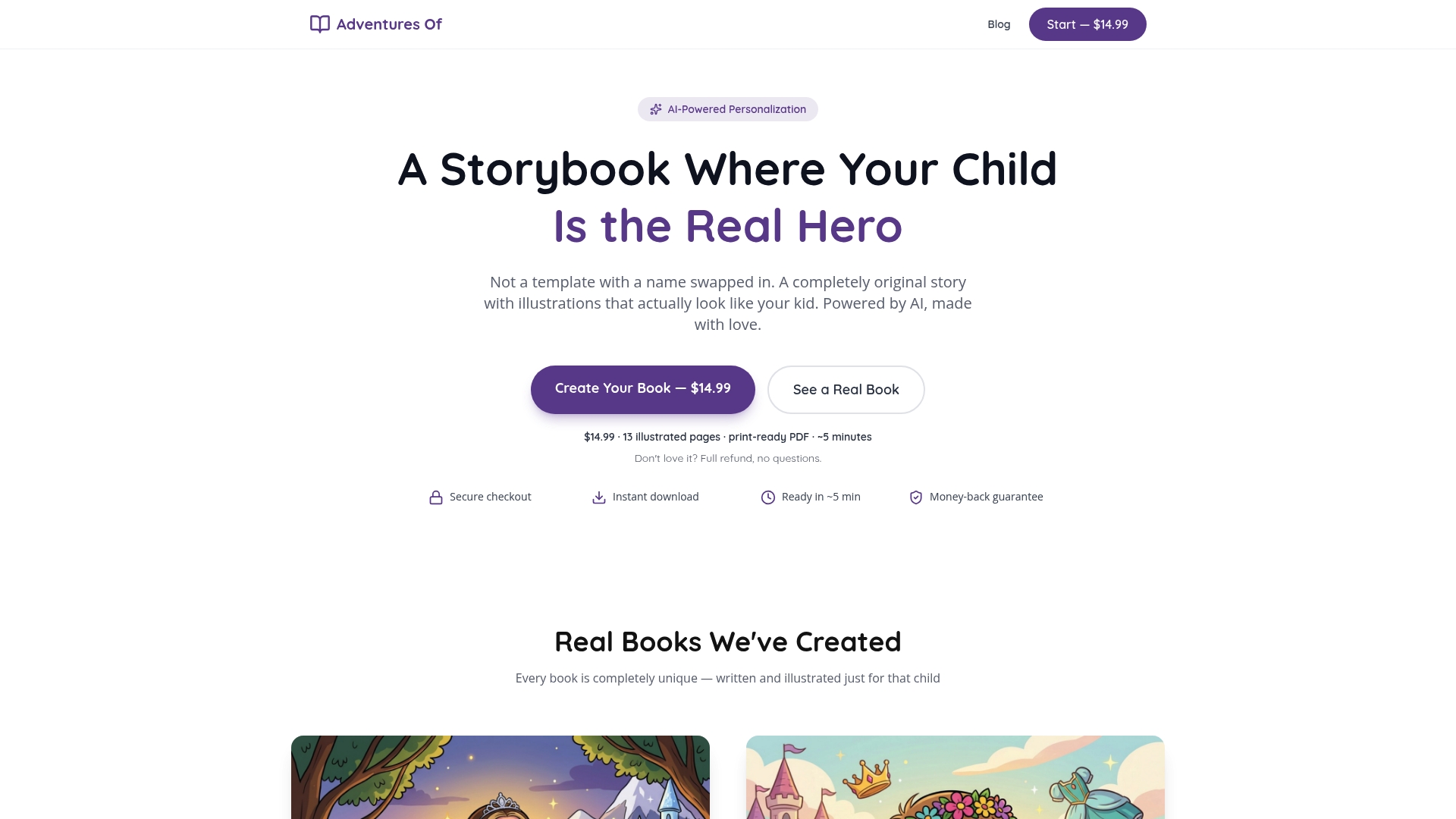
Adventuresofbook works differently. Upload a photo of your child, add their details and interests, and the AI generates an original story and illustrations built specifically around them. Not a template with a name changed. An actual new story, with a character who looks like your kid.
What you get:
- 13 illustrated pages with AI-generated artwork based on your child's uploaded photo
- An 8.5x8.5 print-ready PDF, ready to download and print at home or through a print service
- A story generated in about five minutes
- A 7-day refund policy if you are not satisfied
- One-time price of $14.99, no subscription
Pro Tip: Adventuresofbook creates one book per child. If you have multiple children, each gets their own story. That is the point: your child is the specific hero, not a stand-in.
The personalized storybook works especially well alongside the storytelling techniques in this article. Read it together, pause and ask questions, let your child retell it in their own words. The fact that they are the main character makes every one of those techniques land harder.
Ready to try it? Create your child's book in about five minutes.
Key Takeaways
Strong storytelling with children comes down to structure, participation, and making the story feel personal to your child.
| Point | Details |
|---|---|
| Start with structure | Teach beginning, middle, and end using daily routines and sequential photos before moving to invented stories. |
| Make it interactive | Vary your voice, use props, and pause for questions so children participate rather than just listen. |
| Balance emotion carefully | Use relatable feelings and resolve them within the story; avoid unresolved fear or forced drama. |
| Build a daily habit | Storytelling as a regular, casual practice builds narrative skills faster than occasional structured sessions. |
| Personalize the conflict | Stories that reflect your child's real experiences and interests engage them far more than generic plots. |
FAQ
What age should I start storytelling with my child?
You can start from infancy. Simple narration of daily activities builds early language and story awareness, and by age five most children can retell familiar stories in their own words.
How do I keep my child engaged during a story?
Vary your voice, pause to ask open questions, and invite your child to contribute details or predict what happens next. Participation keeps attention active.
Do I need to be a good storyteller to help my child?
No. Focusing on connection rather than performance is what matters most. Children benefit from watching parents enjoy the process, even imperfectly.
How is Adventuresofbook different from other personalized book services?
Adventuresofbook generates an original story and illustrations from your child's actual photo, rather than placing their name into a pre-written template. Each book is unique to that specific child.
How can I encourage my child to create their own stories?
Ask open questions, accept whatever they invent without correction, and treat their stories as worth keeping by writing them down or acting them out together.