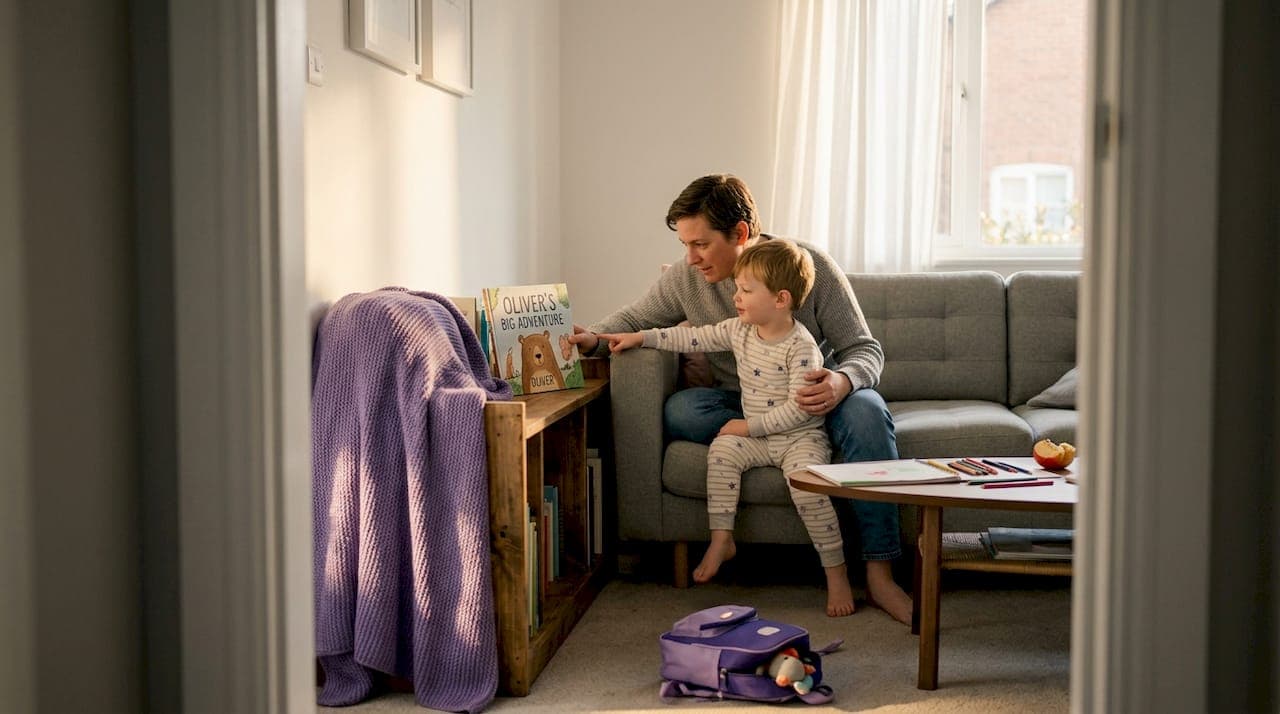
Every parent knows the frustration of watching a child tune out during storytime. You pick a beautifully illustrated book, and within two minutes, they're asking for a snack. Generic stories featuring characters who look and live nothing like your child can struggle to hold attention, especially for kids who rarely see themselves reflected in the pages. Personalized storybooks work differently: parents input their child's name, photo details, skin tone, and interests, and AI or custom tools generate stories where that specific child becomes the hero. This article gives you the criteria, top picks, a side-by-side comparison, and practical tips to build a reading list your child will actually beg to revisit.
Table of Contents
- What makes a book personalized?
- How to choose the right personalized books
- Top personalized storybook platforms for 2026
- Personalized books in action: What research shows
- A fresh take: Why personalization isn't always enough (and what to do)
- Create your custom reading adventure
- Frequently asked questions
Key Takeaways
| Point | Details |
|---|---|
| Personalization boosts engagement | Customized storybooks make children more attentive and invested in reading. |
| Name and likeness matter | Books using a child’s name and photo/avatar increase comprehension and joy. |
| Great for reluctant readers | Personalized picks are effective for hesitant or neurodivergent children. |
| Mix formats for best results | A blend of digital, print, and classic stories produces lasting literacy gains. |
What makes a book personalized?
Real personalization goes several layers deeper than just swapping a name into a template. When we talk about a genuinely personalized children's book, we're referring to any combination of these features working together to make a story feel like it was written for one specific child.
Here is what true personalization can include:
- Name integration: The child's name woven naturally into the narrative, not just on a dedication page
- Photo or avatar likeness: Illustrations that actually resemble the child's face, hair, skin tone, and features
- Cultural and skin tone representation: Characters drawn to reflect the child's racial and ethnic identity
- Thematic customization: Stories built around the child's specific passions, whether that's dinosaurs, soccer, or outer space
- Age and reading level matching: Vocabulary and plot complexity adjusted for where the child actually is developmentally
Each of these layers adds something distinct. A name in the text makes a child feel socially connected to the story. Research shows that name personalization enhances text transfer comprehension through social agency, meaning children understand and remember more because they subconsciously feel the story is speaking directly to them. That is not a small effect.
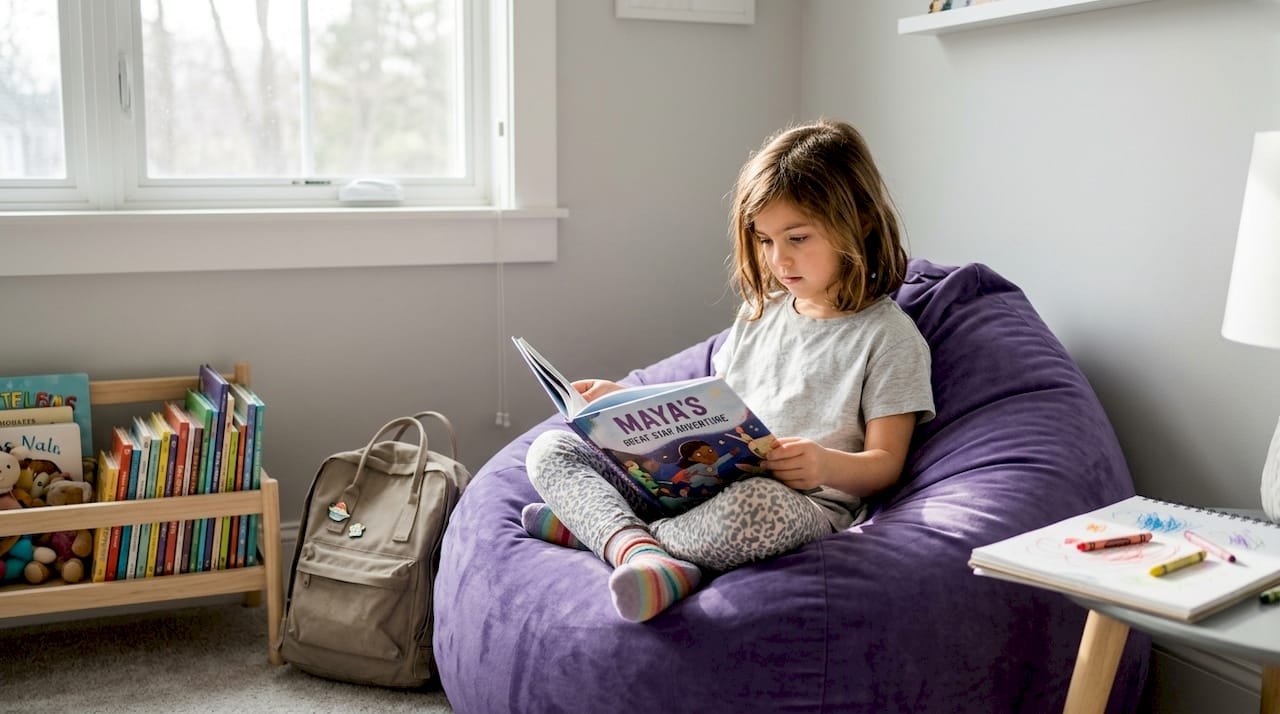
Visual personalization goes even further. When a child looks at the main character and sees their own face looking back, the engagement shifts from passive listening to active identification. This phenomenon, sometimes called the self-reference effect, is well-documented in psychology: people process and retain information more deeply when it relates to themselves.
The importance of diversity in kids' books amplifies this point significantly. Children of color, in particular, gain measurable benefits when the main character matches their appearance. Representation is not just feel-good: it directly supports how invested a child becomes in a story.
"Personalization is not a gimmick. When children see their face, hear their name, and recognize their interests in a story, something clicks. Reading stops being a task and starts being a relationship."
Pro Tip: Always use a platform's preview feature before purchasing. Look specifically at whether the character's skin tone, hair texture, and facial features actually resemble your child rather than a generic approximation.
Understanding the difference between genuinely custom content and simple name-swapping helps you avoid wasting money on books that disappoint. Our breakdown of personalized vs template books explains exactly what separates real AI-driven customization from basic fill-in-the-blank designs.
How to choose the right personalized books
With personalization options multiplying every year, picking the right books requires more than browsing a few websites. Here is a five-step criteria framework that helps parents make decisions they feel confident about.
-
Match age and reading level first. A book that visually resembles your child but is written two grades above their comprehension will still frustrate them. Look for platforms that let you specify age range and adjust vocabulary complexity accordingly.
-
Prioritize visual customization depth. Ask whether the platform uses photo uploads to generate unique illustrations or relies on a limited avatar builder. Photo-based AI illustration typically produces more accurate likenesses, which directly improves engagement.
-
Align themes with genuine interests. Survey your child before choosing a theme. A five-year-old obsessed with marine biology will connect far more deeply with an ocean adventure story than a fairy tale, even if the fairy tale features their name on every page.
-
Decide between digital and physical formats. Some families value an instant, downloadable PDF they can share on a tablet. Others want a printed keepsake on a bookshelf. Many platforms offer both, but quality varies.
-
Check content control and review options. Can you preview the story before committing? Can you request changes? Platforms that allow review before purchase reduce the risk of receiving something that misses the mark.
Research on personalized shared reading shows that personalization boosted story retelling and comprehension for all children, and dark-skinned children showed especially significant interaction effects in behavioral and verbal involvement. That finding tells us that the biggest gains from personalization often go to the children who historically have been underrepresented in mainstream children's literature.
For reluctant readers specifically, the combination of a familiar face in the illustrations and a theme the child already loves creates a double hook. The child is not just curious about the story; they are curious about themselves in the story. That is a fundamentally different motivational state.
"The question is not just whether a book is personalized. The question is whether the personalization matches what that particular child needs to feel seen, motivated, and capable."
Pro Tip: For hesitant readers, combine a personalized storybook with a familiar favorite character or setting from another book they already enjoy. Use the personalized book to build confidence, then branch out together into new titles.
Learning how to make a personalized children's book from scratch also helps parents understand what to look for when evaluating any platform's quality. Additionally, tips for early readers reinforce why matching content to reading stage matters as much as visual customization.
Top personalized storybook platforms for 2026
The market for personalized children's books has grown considerably. Here is an honest breakdown of the platforms parents are turning to most in 2026.
Several leading companies illustrate the range of approaches well. WonderWraps uses AI-powered photo uploads for children aged 0 to 8, supports seven languages, and produces illustrated books with a strong cultural representation focus. MIBOOKO offers an avatar or photo input system with themes including confidence building and adventure, making it popular for parents with specific developmental goals. MyFavoriteTale uses the child's photo specifically to influence the illustration style, with flexible custom themes that parents design around the child's world.
Here is a side-by-side comparison of key features across major platforms:
| Platform | Input method | Content control | Formats | Unique value | Best for |
|---|---|---|---|---|---|
| WonderWraps | Photo upload | Age and language settings | Print and digital | 7 language options, AI-generated likeness | Multilingual families, ages 0-8 |
| MIBOOKO | Avatar or photo | Theme and lesson selection | Print and digital | Confidence and social-emotional themes | Kids needing targeted messages |
| MyFavoriteTale | Photo for illustrations | Custom theme input | Print only | High illustration accuracy | Keepsake gifts |
| Adventures Of | Photo upload, AI-driven | Full story and detail customization | Instant digital download, print-ready | 100% original stories in about 5 minutes | Parents wanting speed, originality, and quality |
Key things to look for when reviewing any platform on this list:
- Story originality: Is the story written fresh for each child, or are stock plots modified slightly?
- Illustration accuracy: Do the sample previews show genuine facial resemblance or a generic cartoon?
- Turnaround time: How long from order to delivery? Platforms using AI typically deliver faster.
- Print quality: If you plan to print, check that the file resolution is high enough for a quality physical book.
- Privacy policies: You are uploading a child's photo. Verify how the platform stores, uses, and deletes that data.
Our personalized storybooks page walks through exactly how Adventures Of handles each of these points, from photo privacy to print-ready file quality, so you can compare directly against any other service.
Personalized books in action: What research shows
Numbers matter when you're making decisions for your child's development. The research on personalized reading has expanded meaningfully in the past two years, and the results are worth knowing.
Here is a summary of key findings:
| Study focus | Key finding | Sample size | Source |
|---|---|---|---|
| Name personalization and comprehension | Significantly improves text transfer comprehension via social agency | 96 elementary students | Springer, 2025 |
| Altruistic behavior after name personalization | Kids shared more after reading personalized stories | 315 children aged 5-6 | Springer, 2025 |
| Skin tone and involvement | Dark-skinned kids benefited more from personalized shared reading | 80 kindergarteners | Springer, 2025 |
| Story retelling and comprehension | Personalization boosted performance across all children | 80 kindergarteners | Springer, 2025 |
The behavioral findings are particularly striking. Children who read personalized stories where they were the main character showed measurable increases in altruistic sharing afterward. That means personalized books are not just helping kids read better: they are influencing how children treat others. Researchers believe this happens because children internalize the values and actions of the main character more deeply when that character is themselves.
For families with children of color, the skin tone interaction findings deserve special attention. Behavioral and verbal involvement during shared reading sessions was significantly higher for dark-skinned children when the story characters matched their appearance. This means the books you choose carry real equity implications, not just entertainment ones.
Additional research on literacy-boosting picture books reinforces why the structure and content of a book, not just its visual appeal, determines long-term reading skill development. Personalization that ignores story quality will always underperform.
Beyond the formal research, practical patterns emerge consistently among parents who use personalized books regularly. Children request the same personalized book repeatedly. They "read" it independently before they can actually decode words, narrating the story from memory. They bring it to school for show and tell. These behaviors signal genuine ownership, which is exactly the attitude toward reading that predicts long-term literacy success.
Our gift guide for bookish kids compiles additional ideas for pairing personalized books with other reading-focused gifts to sustain that enthusiasm through birthdays and holidays.
A fresh take: Why personalization isn't always enough (and what to do)
Here is something most personalized book platforms would prefer you not think too hard about: a child who only reads stories about themselves is actually developing a narrower literary imagination, not a broader one.
Research on AI-powered interactive reading acknowledges that personalization through large language models is promising but requires careful adaptation to children's cognitive levels and literary expectations. In other words, technology that generates stories can miss the narrative craft that makes classic children's books enduring. A beautifully personalized book with a weak plot arc is still a weak book.
There is also a subtler risk. Some children become so attached to books featuring themselves that they resist stories with different protagonists entirely. They stop practicing the core empathy skill that reading is supposed to build: the ability to inhabit someone else's perspective. That is a real tradeoff worth managing intentionally.
The solution is not to avoid personalized books. It is to use them as a gateway, not a destination. Start with a personalized story to hook a reluctant reader or build confidence in a child who has felt unseen in books. Then, once that love of reading is established, rotate in key genres for kids that challenge them to identify with characters very different from themselves.
The comparison between template vs custom books is worth revisiting from this angle too. Templates have limitations, but classic non-personalized stories often carry richer narrative traditions, cultural depth, and emotional complexity. The best reading diet for any child mixes formats and perspectives deliberately.
Pro Tip: Before buying any personalized book, read a sample story excerpt and ask yourself if you would enjoy reading it aloud three times. Strong storyline quality, not just customization, is what makes a book a household favorite.
Our honest take: personalization is one of the most powerful tools available for building early reading motivation. Use it strategically. Pair it with diverse classic literature. And always prioritize story quality alongside the personal touches.
Create your custom reading adventure
Ready to see your child become the hero of their very own story? Adventures Of uses AI to create 100% original storybooks featuring your child's actual likeness, built from photos you upload and details you share, in about five minutes.
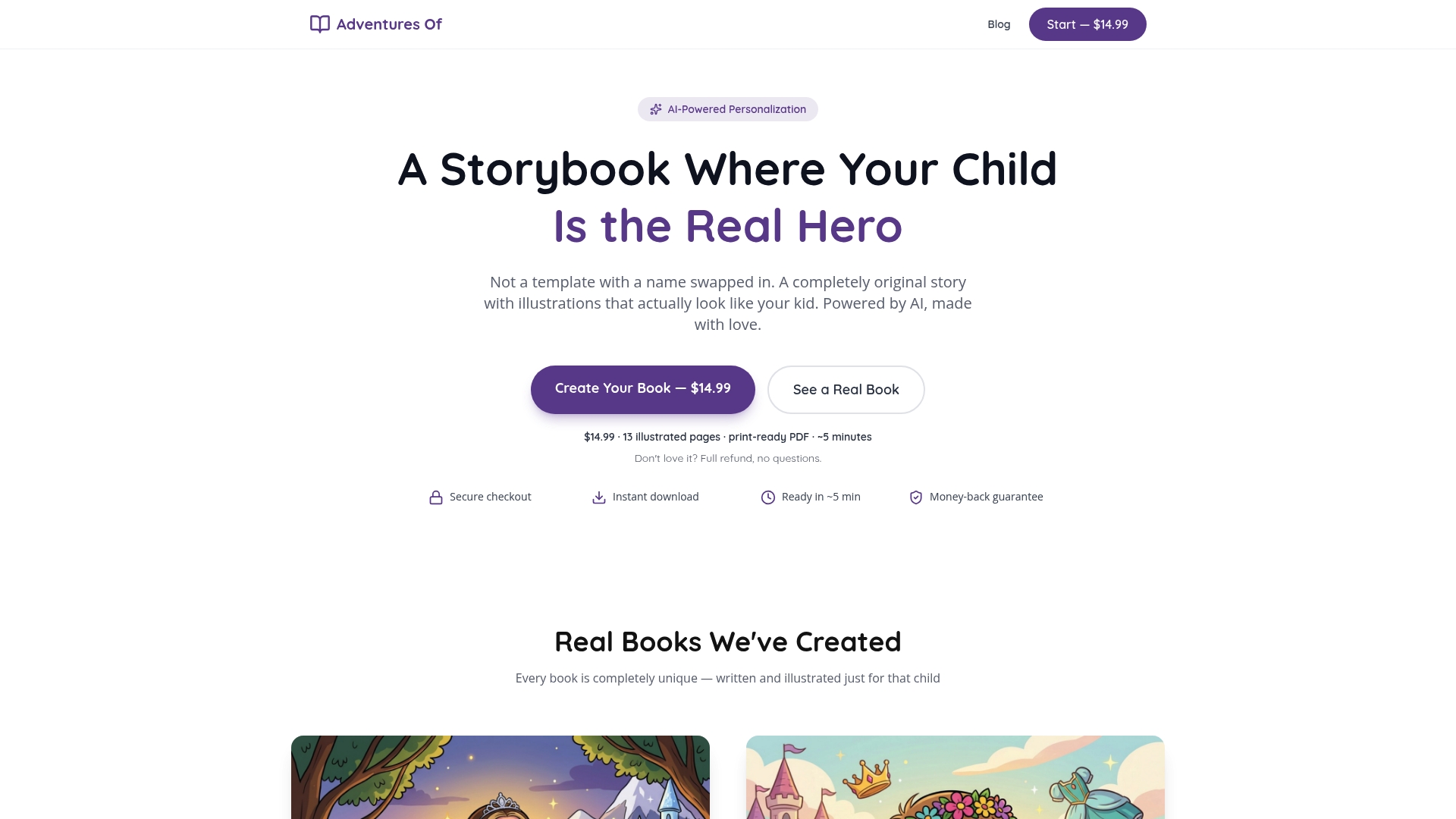
Every book is completely unique. No templates, no generic characters, no stock plots recycled from another family's order. You get a high-resolution, print-ready digital file you can download instantly and print at home or through any photo printing service. Parents consistently describe the moment their child opens the book and recognizes themselves on page one as genuinely unforgettable. Start personalizing your storybook today, or explore custom baby books for the youngest readers in your family. A money-back guarantee means there is no risk in trying.
Frequently asked questions
How do personalized storybooks help reluctant readers?
Seeing themselves as the main character creates an immediate emotional hook that generic books can't replicate. Personalization consistently boosts story retelling, comprehension, and verbal involvement, even for children who typically disengage during reading time.
Does adding a photo or avatar make a difference?
Yes, significantly. Photo and avatar input drives higher engagement because children recognize themselves in the illustrations, activating the self-reference effect that deepens memory and emotional investment in the story.
Are digital or print personalized books better for kids?
Both formats have genuine strengths. Digital books show higher behavioral engagement for some children, while print editions serve as lasting keepsakes and often work better for shared bedtime reading with a parent present.
What's the best age range for personalized reading lists?
Ages 0-8 show the strongest benefits from personalized books. WonderWraps, for example, targets this exact range with AI-powered photo-based books, and research on shared reading confirms that early childhood is when personalization has the deepest impact on engagement.
Will personalized reading delay my child discovering classic stories?
No, not if you blend both deliberately. Personalized books build reading motivation and confidence, which actually makes children more willing to explore classic stories. Think of personalized books as the on-ramp, not the entire road.