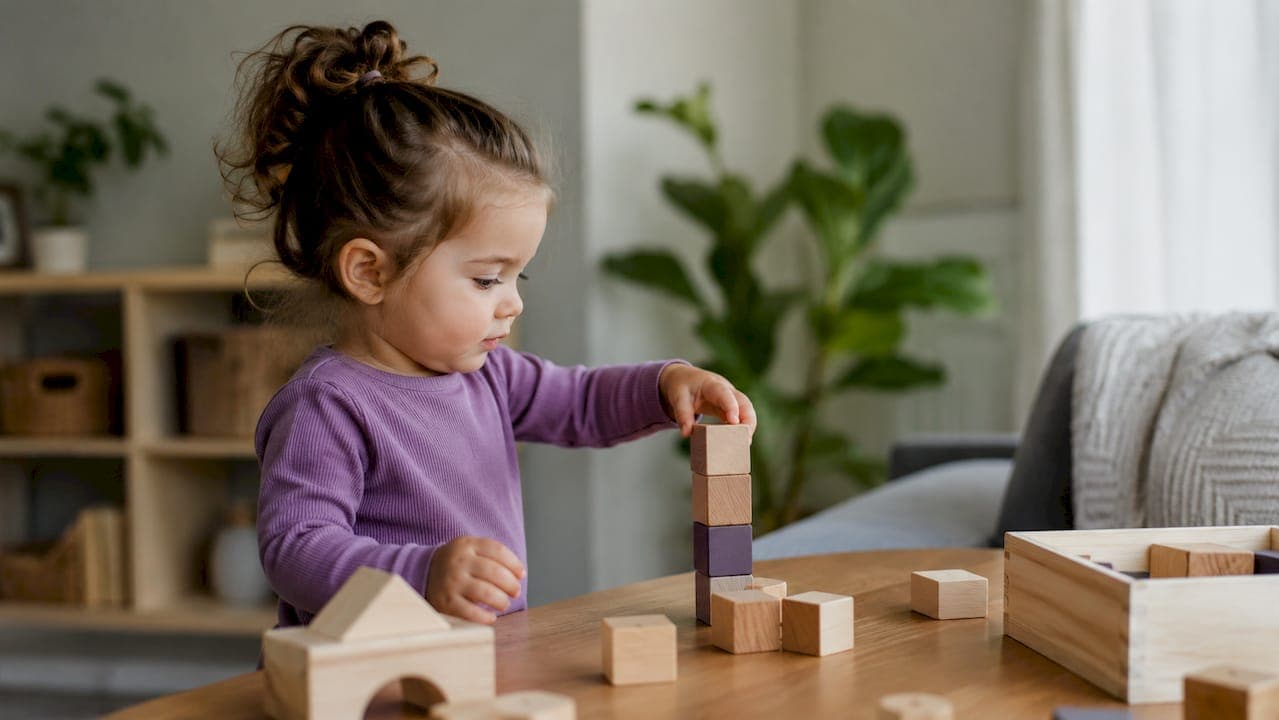
Personalized reading is defined as the practice of tailoring books, stories, and reading materials to a child's name, interests, appearance, and reading level. The advantages of personalized reading for children go well beyond novelty. Research shows that primary school children exposed to personalized books demonstrate higher reading comprehension, better focus, and longer attention spans. These outcomes matter whether you are a parent trying to get a reluctant reader off the couch or an educator managing a classroom with wildly different skill levels. The industry term for this approach is individualized literacy instruction, and it covers everything from AI-driven adaptive reading programs to custom storybooks featuring a child's own photo and name.
1. What are the core advantages of personalized reading for children?
The single most important advantage is emotional engagement. When a child sees their own name, face, or favorite hobby inside a story, the brain processes that story differently. It stops being something to get through and starts being something that belongs to them.
Research on children's fables confirms that personalization selectively enhances emotional and relational dimensions of reading without changing narrative complexity or length. That finding matters because it tells us the story does not need to be more sophisticated to work harder. It just needs to feel personal.
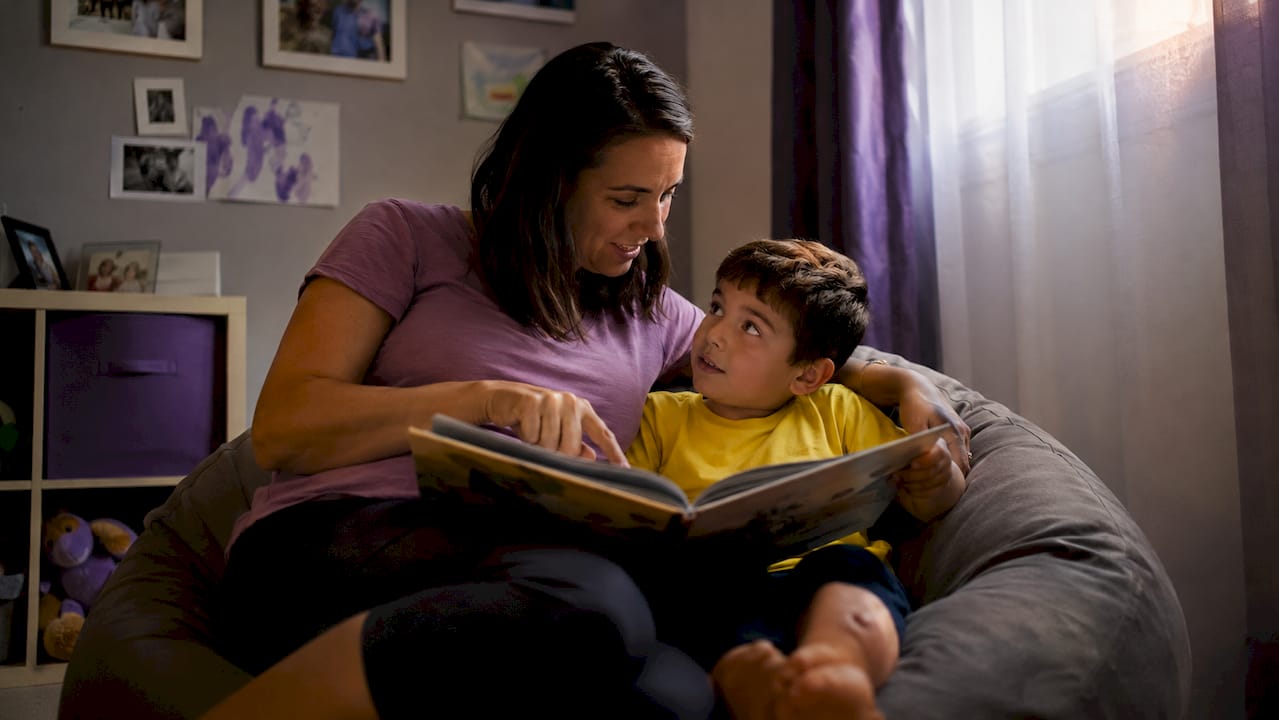
This emotional hook then drives every downstream benefit: better focus, more practice, stronger comprehension, and a positive reading identity that sticks.
2. How personalized reading builds emotional engagement and empathy
Children who see themselves reflected in a story pay more attention to it. That is not a guess. Personalized fables produce significantly higher emotional engagement compared to non-personalized versions of the same story. The child is not just a reader; they are a participant.
Here is what that looks like in practice:
- A child named Maya who loves dogs reads a story where Maya rescues a lost puppy in her neighborhood. She is not watching a character. She is living the scenario.
- A child who struggles with sharing reads a personalized fable where they learn the lesson. The feedback lands differently because it feels like a conversation, not a lecture.
- A child with a fear of the dark reads a story where their own character faces and overcomes that fear. The resolution feels achievable because the hero looks like them.
Minimal personalization is often enough to trigger this sense of recognition. You do not need an elaborate custom narrative. A name, a familiar setting, and one personal detail can create what researchers describe as a "psychological mirror." Higher degrees of personalization do not linearly increase engagement beyond those basics.
Pro Tip: When selecting a personalized book for a child, prioritize stories that reflect one specific interest or challenge the child is currently facing. That single point of relevance does more work than a book packed with generic details.
Empathy development follows naturally. When children inhabit a character's perspective in a story that feels real to them, they practice understanding emotions from the inside. That skill transfers to real relationships.
3. Academic benefits: comprehension, focus, and motivation
Personalized reading produces measurable academic gains. Primary school children exposed to personalized books show higher reading comprehension and longer attention spans during reading sessions. Those are not soft outcomes. They show up in classroom performance.
Here is how the academic benefits stack up:
- Improved comprehension. When a child cares about the story, they read more carefully. They re-read sentences. They ask questions. All of that processing deepens understanding.
- Longer focus. A child who would normally drift after five minutes will stay with a story that features their name and interests for significantly longer.
- Reduced reading anxiety. Personalized books lower anxiety for reluctant readers by framing reading as personal exploration rather than a test. That shift in framing changes everything for kids who have started to associate books with failure.
- More practice. Children who enjoy a book read it again. Repeated reading is one of the most reliable ways to build fluency, and personalized books get re-read far more often than generic ones.
- Stronger reading identity. Children who associate reading with personal relevance and positive emotion are more likely to develop lifelong reading habits. That long-term payoff starts with a single book that made them feel seen.
For struggling readers specifically, the benefits of tailored reading are especially significant. Reluctant readers benefit because personalization transforms reading from an evaluative task into a compelling personal narrative. The child stops performing and starts exploring.
4. How AI and technology power modern personalized reading programs
AI-driven adaptive reading programs represent the most advanced form of individualized reading. These tools do not just swap a name into a template. They analyze a child's reading habits, vocabulary range, and comprehension patterns, then adjust the difficulty and content of reading material in real time.
AI-driven personalized reading programs adapt content difficulty based on individual reading proficiency, maintaining the right level of challenge without tipping into frustration. That balance is what keeps children in what educators call the "zone of proximal development," where learning actually happens.
| Feature | Traditional reading programs | AI-adaptive reading programs |
|---|---|---|
| Difficulty adjustment | Fixed or teacher-adjusted | Dynamic, real-time |
| Content relevance | Generic or class-wide | Matched to individual interests |
| Feedback | Delayed, teacher-provided | Immediate, in-session |
| Accessibility for diverse learners | Limited | High, including special needs support |
| Equity across skill levels | Inconsistent | Structured to reduce gaps |
In mixed-proficiency classrooms, the equity argument for AI personalization is strong. AI adaptation reduces performance gaps for lower-proficiency learners without disadvantaging advanced readers. It does this by adjusting lexical complexity and sentence structure to match each learner's current level. Advanced readers still get challenged. Struggling readers get support. Nobody gets left behind or held back.
Pro Tip: If you are an educator using an AI reading platform, check whether it offers interest-based content filters. Matching reading material to a child's specific interests, not just their reading level, produces stronger motivation than difficulty adjustment alone.
AI-powered programs also provide real-time feedback and adapt narrative styles to match children's interests dynamically. For children with learning differences or special needs, that responsiveness is not a nice-to-have. It is the difference between a tool that works and one that gets abandoned.
5. Personalized books vs. template books vs. guided reading
Not all "personalized" reading experiences are equal. Understanding the differences helps you choose the right format for your child or classroom.
True personalized books generate an original story and original illustrations based on a specific child's photo, name, and interests. No two books are the same. The child is not a placeholder in someone else's story. They are the actual subject of a story written for them.
Template books insert a child's name and sometimes a few details into a pre-written story with pre-drawn characters. The character does not look like your child. The story is the same story every child gets, with a name swap. Services like Wonderbly and Hooray Heroes do this well and produce high-quality products. The trade-off is that the story is not truly original.
You can read a detailed breakdown of personalized vs. template books if you want to understand exactly where the line is.
Guided reading in a classroom setting groups children by reading level and uses shared texts with teacher support. It is effective for building decoding skills and group comprehension strategies. What it cannot do is make every child feel personally seen in the material.
One-on-one tutoring research shows that focused, individualized attention produces significantly more motivational praise and personal connection than group instruction. Personalized books replicate some of that one-on-one dynamic at home, which is why they complement guided reading rather than compete with it.
The practical takeaway for parents and educators:
- Use guided reading for skill-building in groups.
- Use personalized books to build motivation, emotional connection, and reading identity at home or in independent reading time.
- Use AI-adaptive platforms when you need real-time difficulty adjustment across a range of learners.
For early readers specifically, combining these approaches produces better outcomes than relying on any single method.
Key takeaways
Personalized reading works because it makes children feel seen, which drives emotional engagement, reduces reading anxiety, and produces measurable gains in comprehension and motivation.
| Point | Details |
|---|---|
| Emotional engagement comes first | Children engage more deeply when they recognize themselves in a story, even with minimal personalization. |
| Academic gains are real | Personalized books correlate with higher comprehension, longer focus, and stronger reading motivation in primary school children. |
| AI personalization closes equity gaps | Adaptive reading tools adjust difficulty in real time, supporting struggling learners without limiting advanced ones. |
| Template books are not the same | Name-swap books differ from truly original personalized stories; the latter produce stronger emotional impact. |
| Combine approaches for best results | Personalized books work best alongside guided reading and adaptive platforms, not as a replacement for them. |
My take on what actually moves the needle
I have spent a lot of time looking at what separates children who become readers from those who do not. The research points in one direction, and so does practical experience: the child who feels seen in a story reads more. Not because the story is better written, but because it feels like it belongs to them.
The part that surprises most parents is how little personalization it takes to trigger that response. You do not need a 200-page epic starring your child. A short story where their name appears, where the setting feels familiar, and where the character shares one real trait with them is enough to change how they experience reading.
My advice to parents is to start small. Pick one book that reflects something your child genuinely cares about right now. Not what you think they should care about. What they actually talk about at dinner. That specificity is what makes the difference.
For educators, the equity angle of AI-adaptive reading is worth taking seriously. A classroom where every child is reading material calibrated to their level and interests is a fundamentally different environment from one where everyone reads the same text and some kids are bored while others are lost.
The uncomfortable truth is that most reading programs are designed around the average child. Personalization, whether through a custom book or an adaptive platform, is a direct rejection of that average. And for the kids at either end of the spectrum, that rejection is exactly what they need.
— Jason
How Adventuresofbook creates genuinely original reading experiences
If you want to see what true personalization looks like in practice, Adventuresofbook is worth exploring. It is not a template service. You upload a photo of your child, add their name and a few personal details, and the AI generates an original story with illustrations that actually look like your kid. The whole process takes about five minutes.
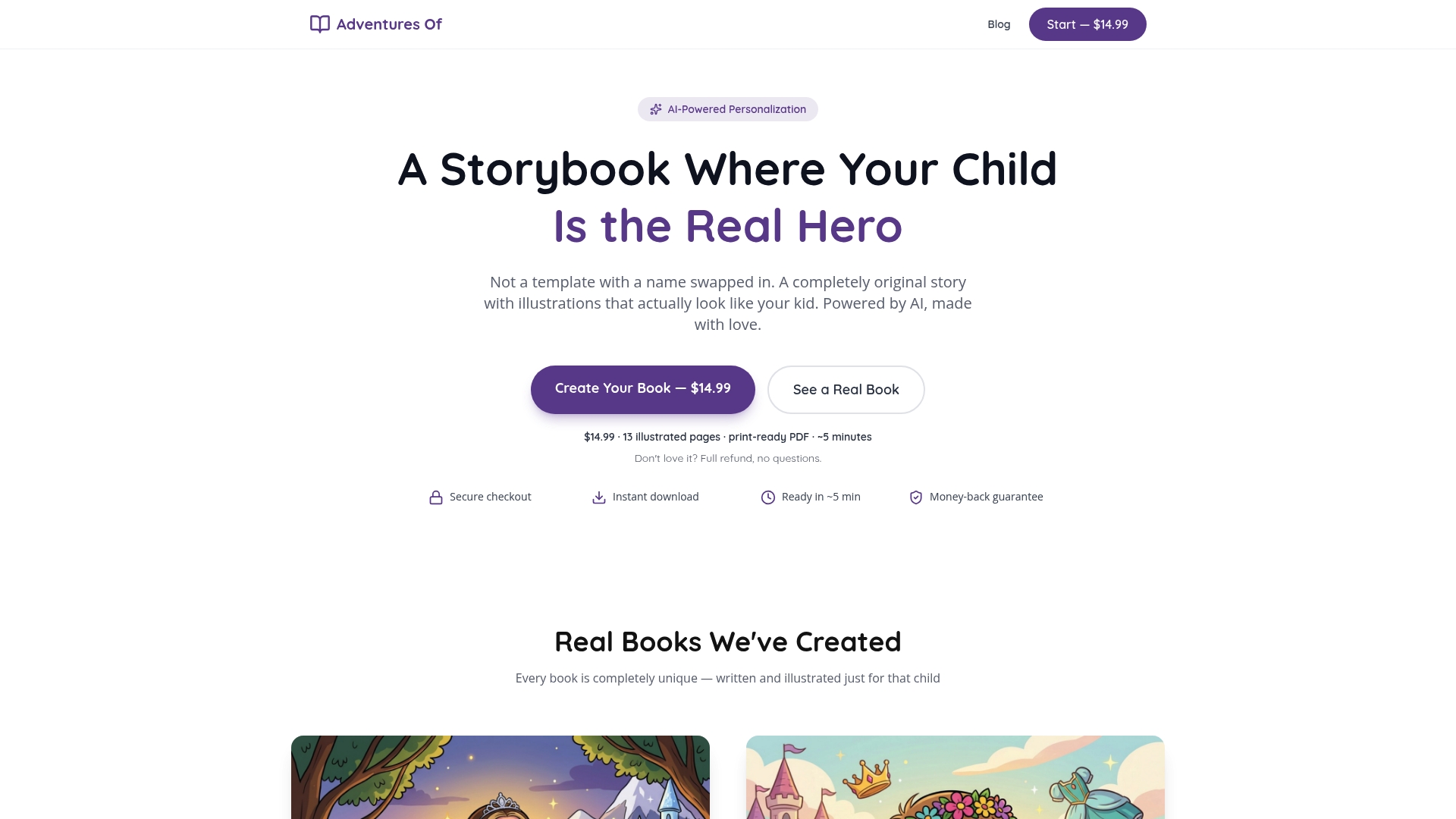
Each book is 13 illustrated pages, delivered as an 8.5x8.5 print-ready PDF for $14.99 one-time. There is a 7-day refund policy, so there is no risk in trying it. If you want to give a child a book where they are genuinely the hero, not just a name in someone else's story, you can create a personalized book and have it ready in minutes. For parents who want to learn more about the process first, the guide on how to make a personalized book walks through every step.
FAQ
What are the main benefits of tailored reading for kids?
Personalized reading improves emotional engagement, reading comprehension, and motivation by making stories feel directly relevant to the child. Research links personalized books to longer attention spans and more positive attitudes toward reading in primary school children.
Does minimal personalization actually work?
Yes. Research on children's fables shows that even minimal personalization, such as including a child's name and a familiar setting, is enough to significantly increase emotional engagement. Higher degrees of personalization do not produce proportionally greater results beyond those basics.
How do AI-adaptive reading programs differ from personalized books?
Personalized books provide a fixed, emotionally engaging story tailored to a specific child. AI-adaptive reading programs go further by adjusting reading difficulty and content in real time based on the child's ongoing performance. Both approaches support individualized reading but serve different purposes.
Can personalized reading help reluctant readers?
Personalized reading is particularly effective for reluctant readers because it reduces performance anxiety and reframes reading as personal exploration rather than evaluation. Familiar details and the child's own name create relevance that lowers resistance to reading practice.
How does personalized reading compare to standard guided reading?
Guided reading builds decoding and group comprehension skills effectively. Personalized reading adds emotional connection and individual motivation that group instruction cannot replicate. The two approaches work best in combination, not as substitutes for each other.