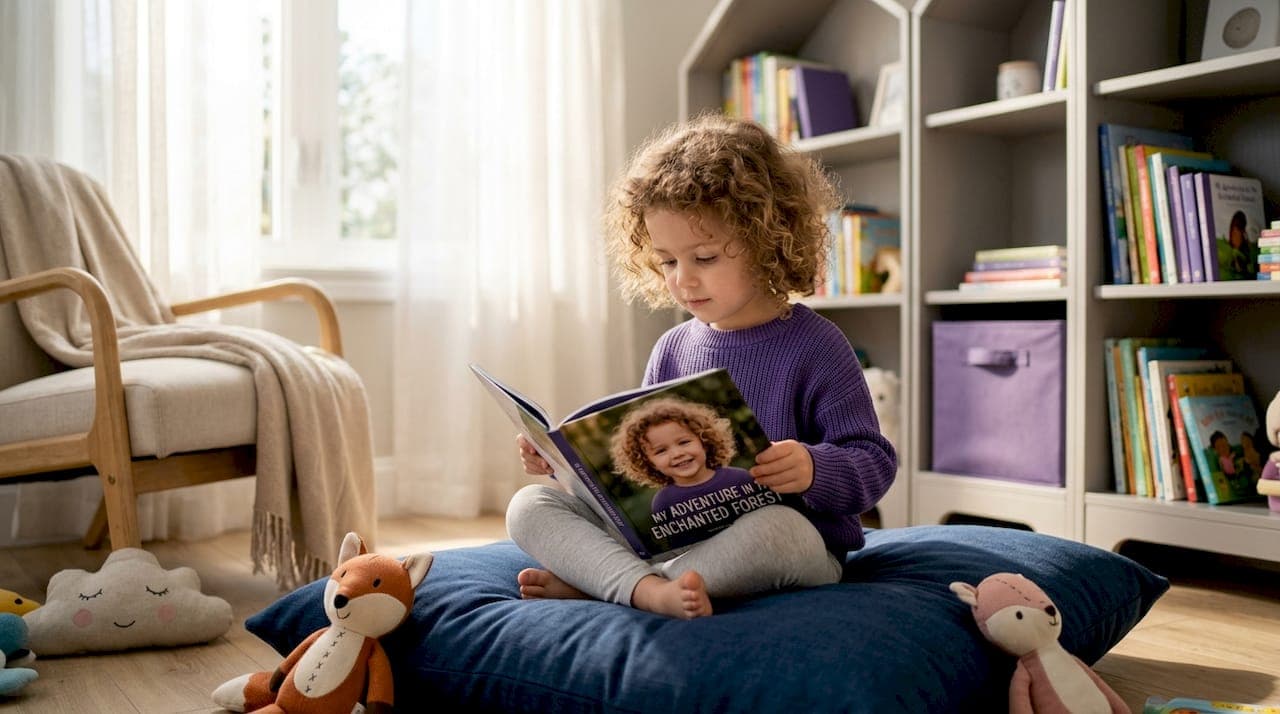
Picking a gift that actually matters is harder than it looks. Most parents want something that goes beyond a quick wow moment and leaves a lasting impression on how their child sees themselves. That's exactly where the ways personalized books boost confidence stand out from the crowd. A book where your child is the hero, facing real challenges and solving them in their own unique way, does something no generic story can: it tells your child, in the most direct terms possible, that they belong in the story. And that belief is where confidence starts.
Table of Contents
- 1. Personalized stories strengthen identity and belonging
- 2. Boost communication skills through relatable storytelling
- 3. Repeated reading of personalized books strengthens memory and learning
- 4. Serve as a safe script for parent-child conversations about emotions
- 5. Increase motivation to read by making stories personally engaging
- 6. Personalized books versus template books: actual differences that matter
- 7. Choosing personalized books that truly boost confidence: key criteria
- Why personalized books are more than just gifts: a parent's insight
- Discover personalized books that put your child at the center
- Frequently asked questions
Key Takeaways
| Point | Details |
|---|---|
| Identity boost | Personalized stories reinforce children's sense of belonging and self-worth. |
| Communication growth | Retelling personalized stories helps improve language and emotional expression skills. |
| Memory strengthening | Repeated reading with recall deepens learning and confidence. |
| Parent-child bonding | Books provide safe scripts for discussing emotions and problem-solving. |
| Motivation to read | Personal relevance makes children read more often, building long-term confidence. |
1. Personalized stories strengthen identity and belonging
When a child opens a book and sees their own name, their own face, and their own personality reflected back at them, something clicks. They are not watching a hero from a distance. They are the hero. That shift in perspective is powerful.
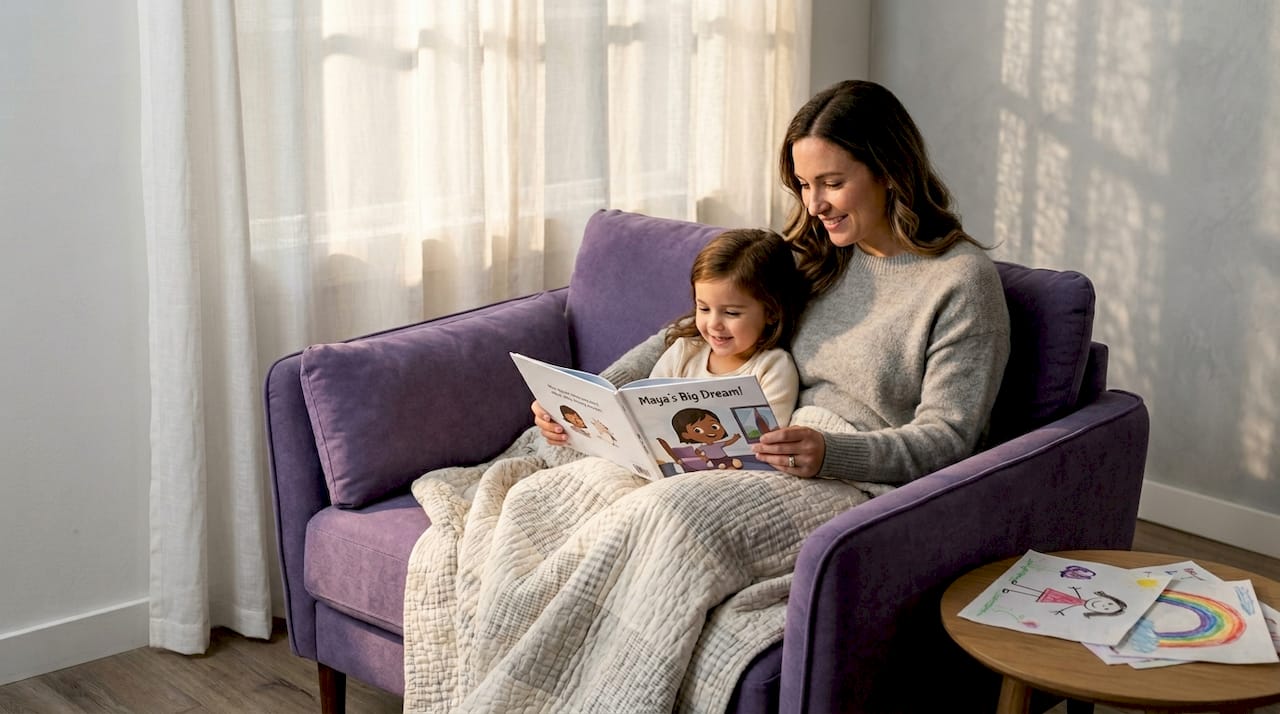
Personalized children's books are built around the idea that personally meaningful stories enhance belonging and identity, which translates directly into greater confidence during reading and beyond. When children feel seen in a story, they are far more likely to engage with it, ask questions about it, and carry its lessons forward.
Here is what identity-centered storytelling actually does for a child:
- Makes them feel important and worth writing about
- Reduces the anxiety of trying new things because the story models success
- Strengthens the belief that challenges are something they can overcome
- Builds a connection between reading and positive self-image
Stories that use storylines reflecting children's identity are especially effective at encouraging kids to engage socially too. A child who sees themselves as brave in a story is more likely to try being brave in real life.
From the sense of identity, let's explore how personalized storytelling actively builds communication skills and self-expression.
2. Boost communication skills through relatable storytelling
One of the less obvious but genuinely important ways personalized stories boost confidence is through language development. When a child hears a story about themselves, they want to retell it. They want to explain it to their sibling, their grandparent, anyone who will listen. That retelling is practice, and practice builds skill.
Storytelling in children develops vocabulary, emotional understanding, and speaking clarity while boosting imagination and confidence. A child who can sequence a story, explain a character's feelings, and describe how a problem was solved is developing the same skills used in public speaking, classroom participation, and social interaction.
Key benefits for communication development include:
- Sequencing ability: Retelling a familiar story helps kids practice "first, then, next, finally" thinking
- Emotional vocabulary: Naming what the story character felt helps children name their own feelings
- Expressive confidence: Talking about a story that features them removes the fear of saying the wrong thing
- Active listening: Children pay closer attention when the story feels personal and relevant
Pro Tip: After reading, ask your child to retell the story in their own words. Don't correct them. Let them lead. That open-ended narration builds confidence faster than any worksheet.
When learning about making personalized books for your child, it helps to think about which communication strengths you most want to develop, so you can guide the storytelling conversations that follow.
Next, we look at how personalized books create ongoing engagement that deepens confidence over time.
3. Repeated reading of personalized books strengthens memory and learning
Most parents read a new book once, then move on. But with personalized books, children almost always ask to hear the same story again. That natural pull toward repetition is actually one of the most valuable things about how to develop confidence with custom books.
Repeated exposure through re-read with recall of personalized stories strengthens memory and learning, leading to lasting confidence boosts. Each time a child hears the story, they retain more of its vocabulary, its emotional messages, and its problem-solving models.
Here is how to make the most of those repeat reads:
- Pause and recall: Stop at key moments and ask, "What do you think happens next?" Children who predict correctly feel capable and smart.
- Change the tone: Try reading with different voices or emotions. It keeps the story fresh while deepening comprehension.
- Connect to real life: After reading, point to a moment in the story that mirrors something from your child's actual day. "Remember when you did something brave at school today, just like in your book?"
- Ask open questions: Avoid yes/no questions. "How did the main character feel when..." invites thought and expression.
- Let the child read back: Even if they are only pretending to read from memory, that act builds enormous confidence in their ability to be a reader.
Pro Tip: Keep the book somewhere accessible, not on a high shelf. When children can grab their personalized book on their own, it becomes something they own, not just something read to them.
Building on reading routines, we consider how personalized books create meaningful parent-child conversations that enhance confidence.
4. Serve as a safe script for parent-child conversations about emotions
One of the most underestimated benefits of personalized books is how naturally they open the door to talking about emotions. Bringing up feelings directly can feel awkward for young children. But through a story? It becomes easy.
Reading can be used to improve mental health and wellbeing, and personalized books in particular serve as a script for emotion-labeling and solution brainstorming that connects story strategies to a child's real life. That connection amplifies confidence.
Using parent-child reading strategies alongside a personalized book turns each storytime into a kind of gentle emotional coaching session. And the evidence on reading and wellbeing makes a strong case for that approach.
What this looks like in practice:
- Emotion labeling: "Your character looked nervous before the big moment. Have you ever felt nervous like that?"
- Solution modeling: "What do you think they could do differently?" This teaches flexible problem-solving.
- Validation through story: When the story character overcomes fear, it normalizes the idea that fear is okay and beatable.
- Bonding through shared narrative: Reading together builds trust, and trust makes children more willing to open up about real feelings.
The impact of custom books on self-image is closely tied to these emotional conversations. The story becomes a shared language between you and your child.
Next, let's look at how personalized books sustain children's motivation to read and engage.
5. Increase motivation to read by making stories personally engaging
Here is a simple truth about reading motivation: children read more when they enjoy what they are reading. And children almost universally enjoy reading about themselves.
High-interest, personally relevant books increase reading motivation, normalize reading at home, and improve literacy outcomes. That is a significant chain of cause and effect. More motivation leads to more reading, which leads to better skills, which builds confidence.
Benefits of personally engaging stories for reading habits:
- Children request the book repeatedly rather than needing to be prompted
- Reading becomes associated with pleasure and identity, not obligation
- Increased reading volume improves vocabulary and comprehension naturally
- Higher reading competence directly supports academic confidence
If you are looking for gift ideas, our book gift guide covers options that prioritize engagement over novelty. The goal is a book your child will actually want to open again and again.
With motivation addressed, let's compare personalized books to template-based alternatives.
6. Personalized books versus template books: actual differences that matter
Not all personalized books are equal. There is a real and meaningful difference between a book that simply drops your child's name into a pre-written script, and one that builds an original story around your child's actual traits, appearance, and interests.
| Feature | Template book | Original personalized book |
|---|---|---|
| Story | Generic, fixed plot | Written around your child's details |
| Illustrations | Stock images with name added | Based on your child's real photos |
| Engagement | Moderate, fades quickly | High, because the child sees themselves |
| Confidence impact | Limited | Stronger due to genuine recognition |
| Reread value | Low | High, children return to it often |
The key differences worth knowing:
- Template books swap out a name and sometimes a few details. The story, the illustrations, and the arc are the same for every child who buys it.
- Original personalized books are built from scratch. The character looks like your child. The traits in the story match theirs. That level of accuracy makes the emotional connection far deeper.
Understanding personalized vs template books before buying means you get a product that delivers on its confidence-building promise rather than one that provides a quick novelty hit.
Understanding these differences helps us choose the right personalized storybook for confidence building.
7. Choosing personalized books that truly boost confidence: key criteria
Now that you know how personalized books enhance self-esteem, the next step is knowing what to look for. Not every product on the market delivers what it promises. Here is a practical checklist to help you pick well.
- Original story, not a name swap. The plot should reflect your child's personality and interests, not a one-size-fits-all adventure.
- Real photo illustrations. The character in the book should actually look like your child. Recognition drives emotional connection.
- Age-appropriate language. The text should challenge your child slightly without frustrating them. A story that is too easy bores, too hard discourages.
- Interactive prompts. Look for stories that invite questions and conversations rather than passive listening.
- Reread potential. A good personalized book should have enough depth that repeated readings reveal new details or conversation points.
| Criteria | Why it matters |
|---|---|
| Original story | Builds genuine ownership and emotional investment |
| Photo-based illustrations | Strengthens recognition and self-image |
| Age-appropriate language | Keeps the child challenged but confident |
| Emotional themes | Opens doors to meaningful conversations |
| Reread value | Maximizes long-term confidence impact |
Pro Tip: Before ordering, ask the provider exactly how the story is personalized. If the answer is "we add your child's name," that is a template book. If the answer involves original story generation based on your child's details and photos, that is the real deal.
For a full walkthrough of the process, our guide to making personalized books covers what to expect step by step.
Why personalized books are more than just gifts: a parent's insight
Here is an honest take: most personalized gifts are novelty items. The child loves them for a week, and then they go on a shelf. A truly personalized book is different, but only if you treat it that way.
The parents who get the most out of these books are the ones who use them intentionally. They read the book multiple times. They pause at emotional moments and ask questions. They connect the story's lessons to real situations their child is facing. That is not extra effort. That is good parenting wrapped around a great tool.
What we have seen, and what the research backs up, is that children who feel seen in their stories develop a stronger sense of ownership over their own narrative. They start to think of themselves as protagonists, not bystanders. That is a meaningful shift in how a child approaches school, friendships, and challenges.
The personalized children's books that deliver on confidence are the ones built with real specificity: your child's face, their traits, their story. Generic personalization gives a momentary thrill. True personalization builds something that lasts.
There is also a bonding dimension that is easy to overlook. When you sit with your child and read a story that is genuinely about them, you are communicating something that no toy or gadget can: you are worth a story. That message lands deeper than most parents realize.
Discover personalized books that put your child at the center
If boosting confidence through reading is your goal, Adventures Of makes it surprisingly straightforward. Using AI technology, it generates completely original stories and illustrations based on your child's real photos and personal details. No templates. No stock characters. Just a story that is genuinely, unmistakably about your child.
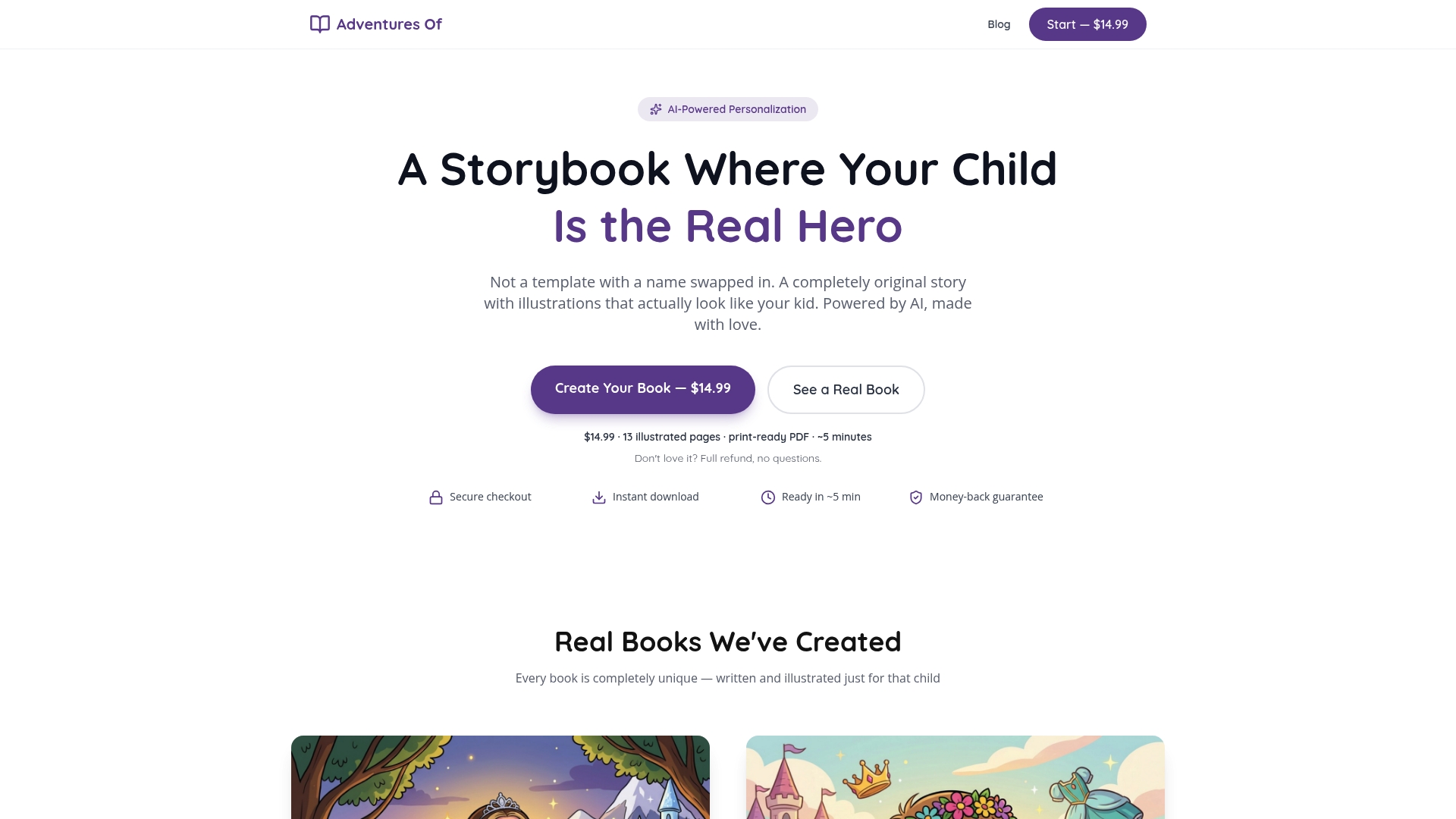
The whole process takes about five minutes, and you get a print-ready digital file you can download instantly. Whether you are looking for birthday gift books, a milestone keepsake, or custom baby books for a new arrival, Adventures Of covers meaningful occasions with stories that children return to again and again. Browse the full range of personalized children's books and see how easy it is to give a gift that genuinely builds confidence.
Frequently asked questions
How do personalized books help build a child's confidence?
By placing the child as the story's hero, personalized books strengthen identity and encourage engagement. Personally meaningful stories enhance belonging and identity, which builds confidence over time.
Can reading personalized books improve emotional skills?
Yes, personalized books provide a comfortable way to discuss feelings and model problem-solving. Reading improves mental health and wellbeing, and personalized stories give caregivers a ready-made script for emotion-labeling conversations.
What makes Adventures Of personalized books different from others?
Adventures Of creates fully original stories with illustrations drawn from your child's real photos, making it a genuinely unique experience rather than a simple name swap.
How often should personalized books be read to boost confidence effectively?
Regular re-reading with active recall and open-ended questions strengthens both memory and confidence. Repeated exposure to personalized stories with child-led discussion enhances learning and produces lasting confidence gains.